Who were the twelve apostles of Jesus really? Beyond the stained-glass windows and Sunday school flannel boards, these were flesh-and-blood men with careers, flaws, and fascinating backstories.
First Things First: Definition of Disciple
The word “disciple” comes from the Greek mathetes, meaning a learner or pupil. Think of it less like a fan and more like an apprentice someone who commits to imitating their teacher’s entire way of life. The Latin equivalent, discipulus, carries the same weight.
This wasn’t unique to Christianity. Plato had disciples. Aristotle studied under Socrates. Zeno of Citium gathered followers of Stoic philosophy around him. Seneca the Younger mentored younger thinkers in the same tradition. Discipleship in antiquity meant total dedication intellectual, moral, even physical proximity to your teacher.
In ancient Jewish society, a rabbi’s disciples didn’t just memorize texts. They watched how he ate, how he treated strangers, how he prayed. Biblical Greek terminology makes this relational depth clear. A mathetes wasn’t a student who took notes. He was someone transformed by the teacher-student relationship itself.
Disciple vs. Apostle
Here’s where people get tripped up. All apostles were disciples, but not all disciples were apostles. The Greek word apostolos means “one who is sent out” a commissioned messenger. A disciple learns; an apostle goes.
Jesus had hundreds of disciples during his ministry. The Twelve were his inner circle. But “apostle” carries the added meaning of apostolic authority and mission. After the resurrection, these men became messengers of Christ sent specifically to preach the Kingdom of God to Jews and Gentiles alike.
Who Were Jesus’ 12 Disciples?
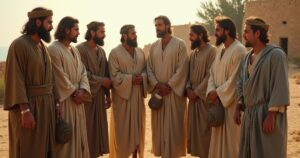
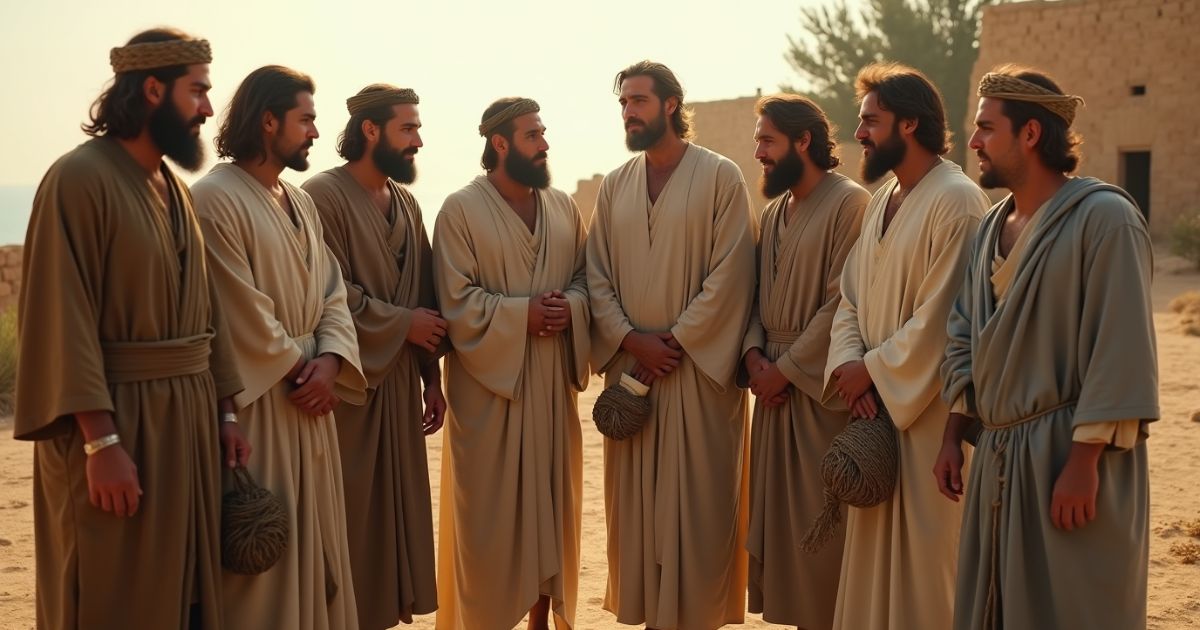
Jesus’ inner circle disciples were ordinary men no philosophers, no priests, no Roman elites. Mostly Galilean fishermen, one despised tax collector, one political revolutionary. The original 12 followers of Jesus were chosen not for their credentials but for their availability and willingness.
Here’s the full list:
| # | Name | Also Known As | Profession |
|---|---|---|---|
| 1 | Simon Peter | Cephas, Petros | Fisherman |
| 2 | Andrew | Andrew the Apostle | Fisherman |
| 3 | James son of Zebedee | Son of Thunder | Fisherman |
| 4 | John the Apostle | Beloved Disciple | Fisherman |
| 5 | Philip the Apostle | Philip of Bethsaida | Unknown |
| 6 | Bartholomew | Nathanael | Unknown |
| 7 | Thomas the Apostle | Doubting Thomas | Unknown |
| 8 | Matthew the Apostle | Levi | Tax Collector |
| 9 | James son of Alphaeus | James the Less | Unknown |
| 10 | Thaddaeus | Judas son of James | Unknown |
| 11 | Simon the Zealot | Simon the Canaanite | Political activist |
| 12 | Judas Iscariot | The Betrayer | Treasurer |
The 12 Disciples of Jesus’ Names in Each Gospel
Interestingly, the Synoptic Gospels don’t perfectly agree on every name. The Gospel of Matthew, Gospel of Mark, Gospel of Luke, and Gospel of John each present slightly different variations. Here’s how the lists compare:
| Matthew 10:2-4 | Mark 3:16-19 | Luke 6:14-16 | Acts of the Apostles 1:13 |
|---|---|---|---|
| Simon Peter | Simon Peter | Simon Peter | Simon Peter |
| Andrew | James (Zebedee) | Andrew | John |
| James (Zebedee) | John | James | James |
| John | Andrew | John | Andrew |
| Philip | Philip | Philip | Philip |
| Bartholomew | Bartholomew | Bartholomew | Thomas |
| Thomas | Matthew | Matthew | Bartholomew |
| Matthew | Thomas | Thomas | Matthew |
| James (Alphaeus) | James (Alphaeus) | James (Alphaeus) | James (Alphaeus) |
| Thaddaeus | Thaddaeus | Simon the Zealot | Simon the Zealot |
| Simon the Zealot | Simon the Zealot | Judas son of James | Judas son of James |
| Judas Iscariot | Judas Iscariot | Judas Iscariot | (vacant post-betrayal) |
Notice that Thaddaeus appears in Matthew and Mark but is replaced by “Judas son of James” in Luke and Acts most scholars believe these are the same person.
Read More: 70 Types of Christian Crosses
What Did the Disciples Do for a Living?
The professions of the apostles tell us a lot about early Christianity’s appeal. Jesus didn’t recruit from temples or academies. He walked along the Sea of Galilee and called fishermen mid-cast.
Simon Peter, Andrew, James, and John were all fishermen from Bethsaida in Galilee or nearby Capernaum. Fishing wasn’t a casual hobby it was grueling, physically demanding work. These men knew how to manage boats, navigate weather, and lead teams. Practical skills, every one of them.
Matthew the Apostle was a tax collector in Roman Judea easily the most controversial recruit. Tax collectors in Judea worked for the Roman Empire, often skimming profits and betraying their own communities. Jews despised them. Choosing Matthew was a deliberate provocation by Jesus, and a powerful signal about grace.
Simon the Zealot belonged to the Zealot movement in Judaism a fierce nationalist faction that resisted Roman occupation, sometimes violently. Having both Matthew (a Roman collaborator) and Simon (a Roman resister) in the same group? That’s extraordinary. It’s like putting a IRS agent and an anti-government activist in the same room and asking them to become brothers.
Judas Iscariot served as keeper of the common purse the treasurer of the Twelve. As John 12:6 bluntly notes, he helped himself to the funds. His profession gave him opportunity; his character determined what he did with it.
Was There a Hierarchy Among the Disciples?
Absolutely. Simon Peter, James son of Zebedee, and John the Apostle formed an unmistakable inner circle within the inner circle. They’re the three present at the Transfiguration of Jesus. They’re the three Jesus takes deeper into the Garden of Gethsemane. They’re the pillars of the early church.
Peter was the undeniable leader the Aramaic word Cephas and the Greek Petros both mean “Rock,” referencing Matthew 16:18 where Jesus says, “Upon this rock I will build my church.” Apostolic succession in the early church traces directly back to Peter’s leadership role.
James and John, nicknamed “Sons of Thunder” (Boanerges), were bold and sometimes brash. They once asked Jesus for the best seats in the Kingdom. Ambitious? Yes. Committed? Absolutely Acts 12:1-2 records James becoming the first of the Twelve martyred.
The remaining disciples Philip, Bartholomew/Nathanael, Thomas, James son of Alphaeus, Thaddaeus, Simon the Zealot formed what you might call the supporting cast. Less documented, equally essential to the apostolic mission.
Did Jesus Really Exist?
This question comes up more than you’d think. The historical evidence for the Twelve rests on the same foundation as evidence for Jesus himself. Bart D. Ehrman no friend to traditional Christianity and one of the most respected New Testament scholars alive argues firmly that Jesus was a real historical figure. Multiple independent sources, including non-Christian Roman historians like Tacitus, reference his existence and execution under Pontius Pilate.
First Corinthians and Second Corinthians, written by Paul the Apostle within decades of the crucifixion, reference resurrection appearances witnessed by the Twelve and hundreds of others. That’s early, primary-source testimony. The Acts of the Apostles further records the disciples’ post-resurrection activity in remarkable detail.
Who Were the Other Disciples?
Beyond the Twelve, Jesus had a much larger group of followers. Luke 10 describes Jesus sending out seventy-two disciples on a mission double the inner circle. Women also traveled with Jesus and supported his ministry financially, including Mary Magdalene, Joanna, and Susanna.
Mary Magdalene is actually one of the most significant disciples in the New Testament. She’s present at the crucifixion, at the burial, and is the first to witness the resurrection. Some early Christian traditions give her extraordinary prominence.
What About Judas Iscariot?
Judas is Christianity’s most notorious traitor. For thirty pieces of silver, he identified Jesus to the Roman authorities with a kiss in the Garden of Gethsemane. The betrayal of Jesus set the crucifixion in motion.
What drove him? Scholars have debated this for centuries. Greed? Disillusionment? A twisted attempt to force Jesus’s hand? The Gospels don’t give us a clean answer. What they do tell us is that Judas later returned the silver and died by suicide overcome by guilt, according to Matthew’s account.
His replacement, Matthias the Apostle, was chosen by lot from among Jesus’s broader followers in Acts 1 restoring the Twelve to their symbolic number, echoing the twelve tribes of Israel.
How Did the 12 Disciples of Jesus Die?
The martyrdom of the apostles is one of early Christianity’s most compelling historical threads. These men didn’t die for a comfortable belief they died for something they claimed to have personally witnessed.
| Disciple | Reported Fate |
|---|---|
| Simon Peter | Crucified upside-down in Rome under Nero |
| Andrew | Crucified on an X-shaped cross in Greece |
| James (Zebedee) | Beheaded by Herod Agrippa (Acts 12:1-2) |
| John the Apostle | Exiled to Patmos; only one to die of old age |
| Philip | Crucified or stoned in Phrygia |
| Bartholomew | Flayed and beheaded in Armenia |
| Thomas | Speared to death in India (Acts of Thomas) |
| Matthew | Martyred in Ethiopia (tradition varies) |
| James (Alphaeus) | Stoned or sawn in two |
| Thaddaeus | Martyred in Persia |
| Simon the Zealot | Martyred in Persia alongside Thaddaeus |
| Judas Iscariot | Suicide (Matthew 27) |
Roman persecution under Nero accelerated early Christian martyrdom in Rome particularly. Peter’s death is perhaps the most symbolic crucified upside-down at his own request, insisting he wasn’t worthy to die the same way as Jesus.
FAQ’s
Who were the 12 disciples and what were their jobs?
The twelve disciples of Jesus included fishermen (Peter, Andrew, James, John), a tax collector (Matthew), a political zealot (Simon), and a treasurer (Judas). The remaining six had unknown occupations but were likely craftsmen or tradesmen from Galilee and surrounding regions.
Who is the billionaire LDS apostle?
This question sometimes surfaces in searches for “apostles.” In the LDS (Latter-day Saint) tradition, the church maintains a Quorum of Twelve Apostles distinct from the biblical Twelve. Jeff T. Alma has been referenced in this context. However, the LDS apostles are a separate institution from Jesus’ original disciples and shouldn’t be conflated with New Testament teachings.
What are the characteristics of each of the 12 disciples?
- Peter Bold, impulsive, deeply loyal despite his denials
- Andrew The quiet connector who brought others to Jesus
- James (Zebedee) Fiery and ambitious; first martyr of the Twelve
- John Reflective, theologically deep; wrote the Gospel of John
- Philip Practical, methodical, slow to grasp symbolic meaning
- Bartholomew/Nathanael Initially skeptical but genuinely faithful
- Thomas Analytical, demanding proof, ultimately confessing powerfully
- Matthew Detail-oriented; his Gospel is the most structured
- James (Alphaeus) Little historical information survives
- Thaddaeus Asked only one recorded question in the Gospels
- Simon the Zealot Passionate nationalist who channeled zeal into mission
- Judas Iscariot Administratively gifted but fatally compromised
Which of the 12 disciples was a physician?
None of the Twelve are identified as physicians. Luke, often called “the beloved physician,” wrote the Gospel of Luke and Acts of the Apostles but wasn’t one of the original twelve disciples of Jesus. He was a companion of Paul the Apostle and a later convert.
Conclusion: Who Were the Twelve Disciples of Jesus?
The twelve disciples of Jesus weren’t saints plucked from heaven. They were fishermen who smelled like fish, a tax collector nobody trusted, and a revolutionary who wanted Rome gone. They argued over status, fell asleep when they should have prayed, and ran when danger came.
And yet after the resurrection, something changed them completely. They preached across the Roman Empire, most dying violently for their testimony. That transformation is the real story behind every name in the list.
Whether you’re approaching this as a believer, a history enthusiast, or simply curious, the lives of the original 12 followers of Jesus offer something rare: a window into ancient Christian history that is simultaneously intimate and world-shaking. These weren’t legends. They were people and their story reshaped civilization.