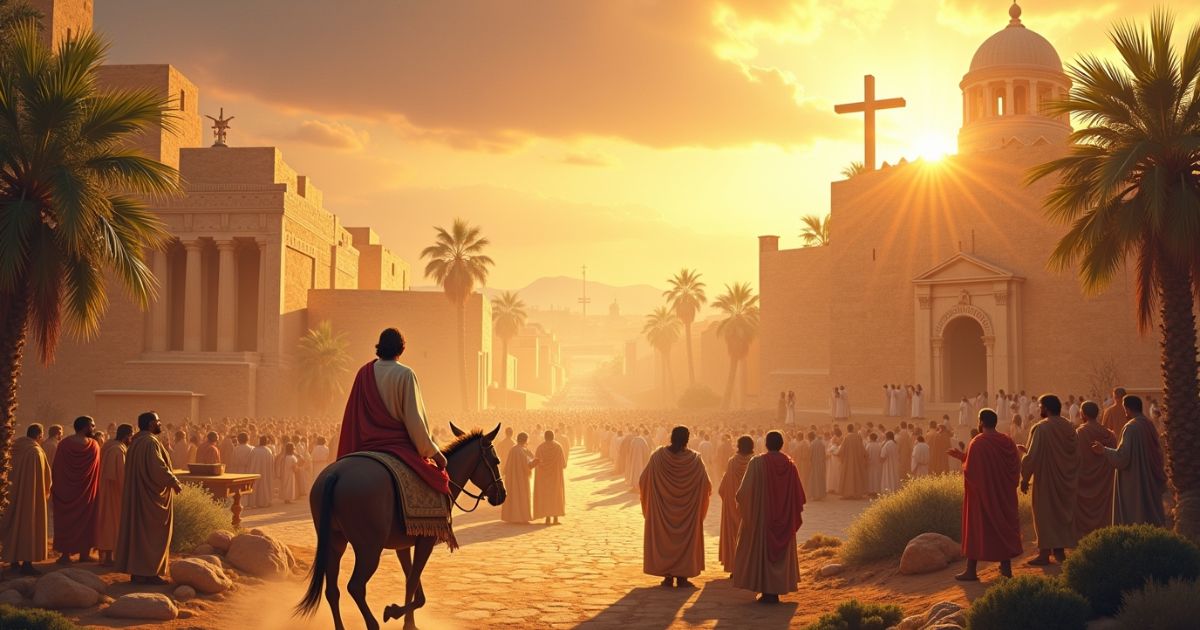
The streets of Jerusalem erupted with shouts. Palm branches waved frantically overhead. A humble carpenter from Nazareth rode toward the Temple on a young colt, fulfilling ancient words spoken centuries before. This triumphal entry marked the beginning of history’s most significant week Holy Week.
Understanding the timeline of Passion Week transforms how you experience Easter. It’s not just about chocolate eggs or spring celebrations. It’s about Christ’s suffering, redemption, and the ultimate victory over death. Let’s walk through each day together, examining what happened and why it matters for your Christian faith practice today.
What Are the 7 Days of Holy Week?
Holy Week spans from Palm Sunday through Resurrection morning. Each day carries profound meaning. The events unfold with prophesy fulfillment at every turn, revealing God’s plan for salvation through Jesus’ crucifixion and triumph.
The seven days include: Palm Sunday’s jubilant arrival, Monday’s temple confrontation, Tuesday’s controversial teachings, Wednesday’s silent preparation, Thursday’s Last Supper, Friday’s brutal execution, and Saturday’s tomb silence. Then Sunday explodes with resurrection joy.
Day 1: Palm Sunday – The King Arrives
Scripture: Matthew 21:1–11, Mark 11:1–11, Luke 19:28–44, John 12:12–19
Jesus departed Bethany with His disciples. He’d spent the previous day with Mary, Martha, and Lazarus the man He’d raised from death. Now He prepared for His triumphal entry into Jerusalem.
The Mount of Olives provided the staging ground. Jesus instructed two apostles to fetch a colt. Zechariah 9:9 had declared this moment: “Rejoice greatly, Daughter Zion! See, your king comes to you, righteous and victorious, lowly and riding on a donkey.”
Crowds recognized the messianic prophecy unfolding before their eyes. They shouted “Hosanna!” a cry meaning “save us now.” Palm branches carpeted the road. Cloaks spread across the path. The people welcomed their King of Israel.
Yet Jesus wept. He knew their enthusiasm would turn violent within days. He understood the cross awaited Him, not a throne. The Pharisees demanded He silence His followers. Jesus replied that if people stayed quiet, stones themselves would cry out.
Day 2: Monday – Righteous Anger Unleashed
Scripture: Matthew 21:12–17, Mark 11:15–18, Luke 19:45–48
Monday brought confrontation. Jesus entered the Temple of Jerusalem with purpose burning in His eyes. What He found ignited holy fury.
The court of Gentiles meant for prayer had become a marketplace. Money changers exploited worshipers. Merchants sold animals at inflated prices. Malachi 3:1–3 had warned that the Lord would suddenly come to His temple to purify it.
Jesus overturned tables. Coins scattered everywhere. He drove out the corrupt vendors. “My house will be called a house of prayer,” He declared, “but you’ve made it a den of robbers.”
The high priests seethed with rage. They began plotting His death. Yet crowds hung on His every word. Children sang praises in the temple courts. The religious elite couldn’t touch Him yet.
This cleansing of the Temple demonstrated Jesus’ authority. It showed His commitment to true worship over religious performance.
Day 3: Tuesday – Teaching and Controversy
Scripture: Matthew 21:23—24:51, Mark 11:27—13:37, Luke 20:1—21:36
Tuesday witnessed intense verbal sparring. Religious leaders challenged Jesus’ authority constantly. He responded with parables that exposed their hypocrisy.
He taught about vineyard tenants who killed the owner’s son. He discussed wedding banquets and foolish bridesmaids. He confronted Pharisees about taxes, resurrection, and the greatest commandment.
A poor widow dropped two small coins into the temple treasury. Jesus pointed her out. She’d given more than wealthy donors, He explained, because she gave everything she had.
On the Mount of Olives that evening, Jesus delivered His Olivet Discourse. He prophesied Jerusalem’s destruction and His eventual return. Peter, Thomas, and the other apostles listened intently, not fully grasping the gravity of coming events.
This day showcased Jesus as the ultimate teacher. His wisdom silenced critics. His compassion elevated the humble.
Day 4: Wednesday – Silent Preparation
Scripture: Mark 14:1, John 12:1
Wednesday remains somewhat mysterious. Scripture provides few details about this Sabbath-like pause. Some call it “Spy Wednesday” because Judas likely finalized his betrayal arrangement.
Jesus probably rested in Bethany with close friends. The calm before the storm settled over the group. Meanwhile, religious authorities schemed. They wanted Jesus arrested away from festival crowds.
Thirty pieces of silver changed hands. The price of a slave. Isaiah 53:7 had foretold that the Messiah would be “led like a lamb to the slaughter.”
This quiet day reminds us that spiritual preparation often happens in stillness. Before taking up the cross, Jesus gathered strength.
Day 5: Thursday – Love’s Final Meal
Scripture: Matthew 26:17–30, Mark 14:12–26, Luke 22:7–23
Thursday began with Passover preparations. Jesus sent disciples into Jerusalem to find the upper room. There, He would share His final meal with the twelve.
Evening arrived. Jesus reclined with His apostles. He broke bread: “This is my body given for you.” He lifted the cup: “This is my blood of the covenant, poured out for many for the forgiveness of sins.”
The Lord’s Supper instituted a memorial we still observe. Jesus transformed Passover symbolism the sacrificial lamb, the deliverance from bondage into a new covenant meal.
He washed their feet, modeling substitutionary service. He predicted Peter’s denial. He warned of betrayal. John 13 through 17 preserves Jesus’ intimate teachings that night.
After singing hymns, they walked to the Garden of Gethsemane across the Kidron Valley. There, Jesus prayed with such intensity that His sweat became like blood. “Father, if you’re willing, take this cup from me; yet not my will, but yours be done.”
An angel appeared to strengthen Him. His disciples slept. Then torches approached. Judas arrived with Roman soldiers and temple guards. A kiss marked the Savior for arrest.
Day 6: Friday – The Cross and the Tomb
Scripture: Matthew 27, Mark 15, Luke 22:66—23:56, John 18:28—19:37
Friday brought unimaginable horror and ultimate hope. Jesus endured six trials three Jewish, three Roman. He stood before Annas, Caiaphas, the Sanhedrin, Pilate, Herod, and Pilate again.
Isaiah 53:7 had predicted His silence: “He was oppressed and afflicted, yet he did not open his mouth.” False witnesses testified against Him. The innocent Christ received condemnation while the guilty went free.
Soldiers mocked Him. They placed a crown of thorns on His head. They beat Him savagely. Then came Golgotha, the Place of the Skull.
Nine o’clock Friday morning, they crucified Him. Nails pierced His hands and feet. They lifted the cross between two criminals. Darkness covered the land from noon until three.
Psalm 22:6–8 and Matthew 27:39–44 describe mockers hurling insults: “He saved others, but he can’t save himself!” Yet through this atoning death, Jesus accomplished our redemption and deliverance.
“It is finished,” He declared. Then He surrendered His spirit.
A rich man named Joseph of Arimathea requested the body. Matthew 27:57–60 and Isaiah 53:9 reveal that the Messiah would be buried in a wealthy person’s grave. They laid Jesus in a new tomb carved from rock. A massive stone sealed the entrance.
Day 7: Saturday – Waiting in the Tomb
Saturday brought eerie silence. Jesus rested in death. His followers hid in fear. The Pharisees stationed guards at the tomb, fearing disciples might steal the body.
This day represents the “already but not yet” tension. Victory was secure but not yet revealed. Sin and salvation hung in balance, though the outcome was certain.
Resurrection Sunday – Death Defeated
Scripture: Matthew 28:1–10, Mark 16:1–8, Luke 24:1–49, John 20
Before dawn Sunday, women approached the tomb with burial spices. The earth shook. An angel rolled away the stone. Mary Magdalene and other women discovered the grave empty.
“He is not here; he has risen!” the angel proclaimed. Fear and joy overwhelmed them. Jesus appeared to Mary in the garden. She initially mistook Him for the gardener.
Peter and John ran to investigate. They found only grave clothes. Later that day, Jesus appeared to disciples on the road to Emmaus. He revealed Himself to the gathered apostles in the upper room.
The Resurrection validated everything Jesus claimed. Matthew 20:28 explains He came “to give his life as a ransom for many.” His rising proved the ransom was accepted.
Why This Timeline Changes Everything
Holy Week isn’t ancient history it’s your story. Luke 9:23 calls you to “take up their cross daily and follow me.” The same obedience to God Jesus demonstrated becomes your model.
Galatians 2:20 expresses the transformation: “I have been crucified with Christ and I no longer live, but Christ lives in me.” When you walk through Passion Week intentionally, you participate in His death and Resurrection.
Consider observing these days differently this year:
- Palm Sunday: Worship Jesus as King
- Monday: Examine your spiritual priorities
- Tuesday: Study Christ’s teachings deeply
- Wednesday: Rest and prepare your heart
- Thursday: Celebrate communion with gratitude
- Friday: Reflect on the cross and Christ’s suffering
- Saturday: Wait expectantly
- Sunday: Rejoice in resurrection power
The Easter Holy Week timeline reveals God’s love for humanity. Every prophecy from Isaiah 52:13—53:12 found fulfillment. Every promise came true. The biblical timeline of these seven days offers a roadmap for faithfulness, sacrifice, and ultimate victory.
You’re invited into this story. Not as a spectator, but as a participant whose life has been purchased by the sacrificial lamb. That’s what makes Holy Week truly holy.