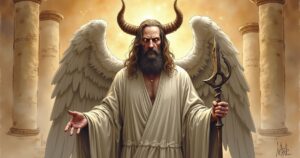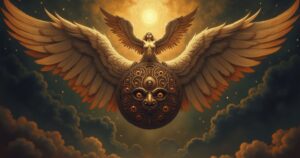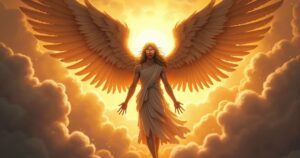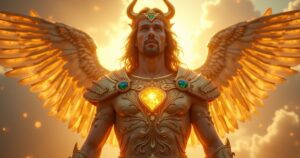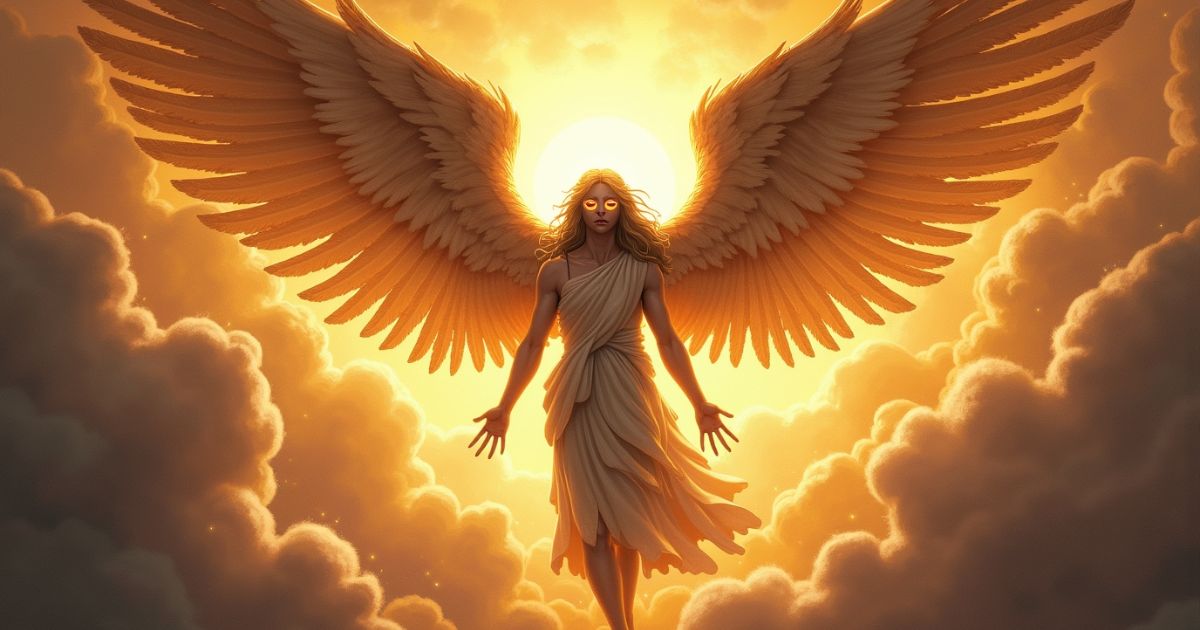
When you picture an angel, what comes to mind? Maybe a gentle figure in white robes with feathery wings and a golden halo? Here’s the truth: biblical angels look nothing like that. Scripture describes beings so overwhelming that their first words are almost always “Fear not.” We’re talking about creatures with multiple faces, wheels covered with eyes, and forms that shake the foundations of temples. Ready to discover what biblically accurate angels truly look like?
The Biblical Foundation of Angels
What Scripture Reveals About Angels
Scripture doesn’t present angels as comforting fairy-tale figures. These angelic beings in Scripture operate on a different plane entirely. They’re God’s messengers, but they’re also warriors, guardians, and executors of divine will.
Think about Hebrews 13:2. It tells us some have entertained angels without knowing it. These celestial beings walk among us disguised as ordinary travelers. Angels appearing as humans happens frequently throughout the Bible. But when they reveal their true nature? That’s when things get intense.
The Etymology and Meaning of ‘Angel’
The word “angel” comes from Greek angelos. It translates the Hebrew mal’akh. Both mean one thing: messenger. This etymology matters deeply. It describes what these beings do rather than what they are.
From the angel speaking to Hagar in the wilderness to Gabriel announcing Jesus’ conception, their fundamental identity centers on delivering God’s messages. Understanding angels primarily as messengers of God reshapes how we interpret their appearances. We should focus on the message, not the messenger.
Angels as Spiritual Beings and Ministering Spirits
According to Hebrews 1:14, angels are ministering spirits sent to serve those who will inherit salvation. They’re incorporeal by essence. Yet they can take visible forms when delivering God’s messages to humans.
Their service spans all of salvation history. Protecting God’s people in the Old Testament. Announcing Christ’s birth and resurrection in the New Testament. As spiritual beings, they operate within a hierarchy reflecting divine order. Each type fulfills distinct roles that together display God’s kingdom’s magnificence.
Contrasting Biblical Angels with Popular Culture
How Modern Media Misrepresents Angels
Contemporary media portrays angels as soft, comforting figures. White robes, two wings, gentle smiles. While Scripture doesn’t explicitly contradict these images many angels do appear in human form such depictions capture only a fraction of reality.
The seraphim and cherubim described in Isaiah and Ezekiel bear little resemblance to sanitized versions. Consider the cherubim. Often confused with chubby baby angels due to Renaissance artistic conventions. Biblical cherubim possess four faces, four wings, and bodies covered with eyes. They guard Eden’s entrance with flaming swords. Fierce protection, not gentle reassurance.
Why Angels Say ‘Fear Not’ in Scripture
“Do not be afraid.” “Fear not.” These phrases appear repeatedly when angels encounter humans. Luke 1:30, Luke 2:10, Matthew 28:5. This consistent reassurance reveals fundamental truth: angelic appearances overwhelm human sensibilities and inspire natural terror.
When angels reveal their true glory? The effect intensifies dramatically. The angel at Jesus’ tomb appeared with an aspect like lightning. Clothing white as snow. The guards shook and became like dead men. Terrifying angelic appearances demonstrate why reassurance proves necessary. Angels must calm their audience before delivering God’s message.
Angels as Warriors and Executors of Divine Judgment
Scripture presents angels not merely as gentle protectors but as powerful warriors. A single angel slaughtered 185,000 Assyrian soldiers in one night. Angels executing divine judgment with terrifying power unleashed in service of God’s purposes.
Angels in spiritual warfare appear throughout biblical narrative. They rescued Lot’s family from Sodom’s destruction. Opposed Balaam with deadly intent. Will accompany Christ at His return to execute final judgment. Their capacity for both protection and destruction reveals multifaceted angelic ministry.
Archangels: The Named Messengers of Heaven
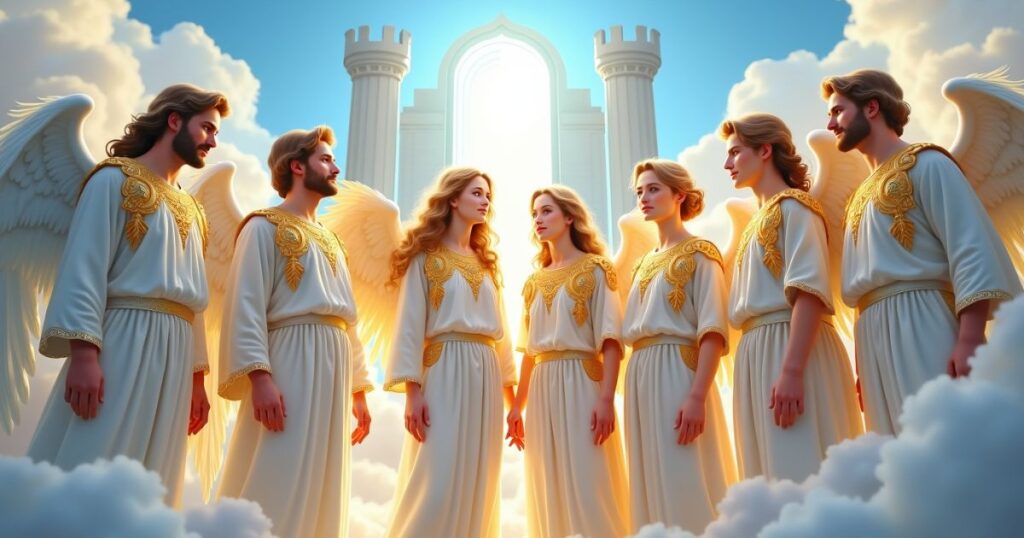
Michael: The Warrior Prince
Michael the archangel stands out immediately. His name means “Who is like God?” He appears in Scripture as a warrior-protector leading God’s angelic armies. Daniel 10:13 identifies him as “one of the chief princes” assisting in spiritual battles against demonic forces.
Jude 1:9 reveals Michael’s restraint and deference to divine authority. When contending with Satan over Moses’ body, Michael didn’t bring abusive condemnation. He said, “May the Lord rebuke you.” Even in opposing the adversary, Michael submits to God’s authority.
His ultimate triumph appears in Revelation. He leads heavenly armies against the dragon. Casts Satan from heaven.
Gabriel: God’s Chief Herald
Gabriel means “God is my strength.” He serves as heaven’s primary messenger for major divine announcements. In Daniel’s visions, Gabriel interprets prophetic revelations. This interpretive function continues in the New Testament.
Gabriel’s appearance to Mary in Luke 1:26-38 represents the culmination of his ministry. He announces that Mary will conceive the Son of God through the Holy Spirit’s power. News that would transform human history. Gabriel the angel demonstrates how archangels carry messages of cosmic significance.
The Unique Role of Named Angels
Only certain angels receive names in Scripture. Michael and Gabriel stand out through individual designation. Involvement in pivotal moments. This naming suggests permanence and specific assignment rather than generic function.
Their named status indicates proximity to God’s throne. Access to divine councils. When God determines to announce the Messiah’s conception or wage war against Satan’s rebellion, He dispatches these specifically named messengers.
Seraphim: The Fiery Worshipers at God’s Throne
The Six Wings and Their Symbolic Meaning
Isaiah’s vision in Isaiah 6:1-7 introduces seraphim with six wings. Each pair serves distinct purpose. Two wings cover their faces. Even these sinless beings cannot gaze directly upon God’s overwhelming radiance.
Two wings cover their feet. Humility and unworthiness even in exalted position. Only one pair enables flight. Their primary purpose centers on worship, not movement. This configuration emphasizes that readiness to serve flows from proper reverence.
The Threefold Holy Proclamation
The seraphim continuously cry “Holy, holy, holy is Yahweh of Armies!” This threefold repetition emphasizes the superlative nature of God’s holiness. In Hebrew, repetition intensifies meaning. Triple repetition represents ultimate intensification.
Many Christian theologians interpret this as foreshadowing the Trinity. Each “holy” representing Father, Son, and Holy Spirit. The declaration establishes that seraphim exist primarily to worship and proclaim God’s transcendent purity.
Seraphim’s Role in Purification
Beyond worship, seraphim participate in purification. When Isaiah cries out about his unclean lips, a seraph flies to him. Brings a burning coal from the altar. Touches it to Isaiah’s mouth. “Your iniquity is taken away, your sin forgiven.”
The burning coal symbolizes both judgment and cleansing. Their Hebrew name derives from sarap, meaning “to burn.” This dual function of worship and purification demonstrates that those nearest God’s holiness both proclaim it and mediate it.
Cherubim: The Multi-Faced Guardians of Holy Places
Cherubim Guarding the Garden of Eden
After humanity’s fall, God placed cherubim at Eden’s eastern entrance. Along with a flaming sword turning every direction. This assignment establishes cherubim as guardians rather than gentle companions.
The flaming sword emphasizes their warrior nature. Capacity for destruction. They don’t merely observe or warn. They actively prevent unauthorized access to sacred space. This guardianship reveals fundamental principle: God’s holiness cannot coexist with sin.
The Four Faces and Their Significance
Ezekiel’s vision describes cherubim with four faces: a cherub, a human, a lion, an eagle. Each represents different aspects of creation. The human face symbolizes intelligence. The lion represents wild strength and royal authority. The ox embodies patient labor. The eagle signifies heavenly perspective.
Together, these four faces demonstrate that cherubim embody the fullness of created life. The multiple faces suggest omnidirectional vision. Symbolizing vigilance and the impossibility of approaching sacred space undetected.
Cherubim on the Ark of the Covenant
God commanded Moses to place two golden cherubim on the mercy seat of the Ark of the Covenant. Their wings spread upward, overshadowing the cover where God’s presence would dwell.
When Moses entered the tent of meeting, God’s voice spoke from between the two cherubim. This positioning demonstrates that cherubim frame the space where heaven touches earth. Where the transcendent God condescends to communicate with His people.
Eyes Symbolizing God’s Omniscience
Cherubim are covered with eyes throughout their entire bodies. Backs, hands, wings. This remarkable feature symbolizes God’s omniscience. His all-seeing nature penetrating every corner of creation.
The sound of cherubim’s wings resembles God’s voice when He speaks. Thunder-like sounds heard even in outer courts. Their every movement echoes with weight of divine presence.
Living Creatures and Ophanim: The Most Mysterious Angels
Ezekiel’s Vision of the Living Creatures
In Ezekiel 1:4-28, the prophet witnesses four living creatures emerging from stormy wind. Great cloud with flashing lightning. These beings possess human likeness yet transcend human form. Four faces, four wings, feet like calves’ hooves gleaming like burnished bronze.
Living creatures move with perfect coordination. Going straight in whatever direction the Spirit determines. Their appearance resembles burning coals of fire. Lightning flashing among them. They dart back and forth like flashes of light.
The Wheel Angels: Ophanim Explained
Beside each living creature, Ezekiel sees a wheel. These wheels sparkle like beryl. Appear as “a wheel within a wheel.” Intersecting at right angles. Their rims stand high and awesome. Covered completely with eyes all around.
The wheels move in perfect harmony with living creatures. When creatures rise, wheels rise. This synchronization reveals that spirit of living creatures dwells in wheels. Unity of purpose and movement.
Wheels Within Wheels Covered With Eyes
“Wheels within wheels” suggests complexity beyond human comprehension. Intersecting wheels enable movement in any direction. Representing God’s ability to act without limitation. The eyes covering their rims symbolize divine omniscience extending everywhere.
Daniel’s vision describes God’s throne with wheels of burning fire. Connecting Ophanim imagery to divine judgment and holiness. They represent God’s all-seeing providence. His capacity to move throughout His creation without hindrance.
The Relationship Between Living Creatures and Cherubim
In Ezekiel 10:20, the prophet identifies living creatures as cherubim. This identification has generated theological discussion. Whether they’re identical beings or related but distinct orders.
Living creatures in Revelation blend features of both cherubim and seraphim. Six wings like seraphim. Covered with eyes like cherubim. They continuously proclaim “Holy, holy, holy.” This blending suggests angelic categories may overlap.
General Angels: The Messengers Throughout Scripture
Angels Appearing in Human Form
Throughout Scripture, angels frequently appear as ordinary men. Abraham encounters three men. Doesn’t immediately recognize them as angels. Offers hospitality, washing their feet, preparing meals.
Two angels arrive at Sodom appearing as men. Lot invites them into his home. The men of Sodom seek to assault these visitors. Completely unaware of their angelic nature.
The Mighty Acts Angels Perform
Beyond delivering messages, angels perform mighty acts. They rescue Lot’s family from Sodom’s destruction. Release apostles from prison. Strengthen Jesus in Gethsemane. These interventions reveal angels as active participants.
Angels also execute judgment with devastating effectiveness. Single angel destroyed 185,000 Assyrian soldiers overnight. Angels struck down Herod Agrippa for accepting worship.
Angels Holding Swords as Warriors
Angels frequently appear holding swords. The angel opposing Balaam stood with drawn sword. Ready to strike. This warrior imagery recurs throughout Scripture. From cherubim guarding Eden to angels who will accompany Christ at His return.
These swords represent both judgment and protection. Angels serve as enforcers of divine will. Protecting God’s people. Executing judgment against those opposing His purposes.
Read More: The Historically Accurate Jesus
Angels in the Life and Ministry of Christ
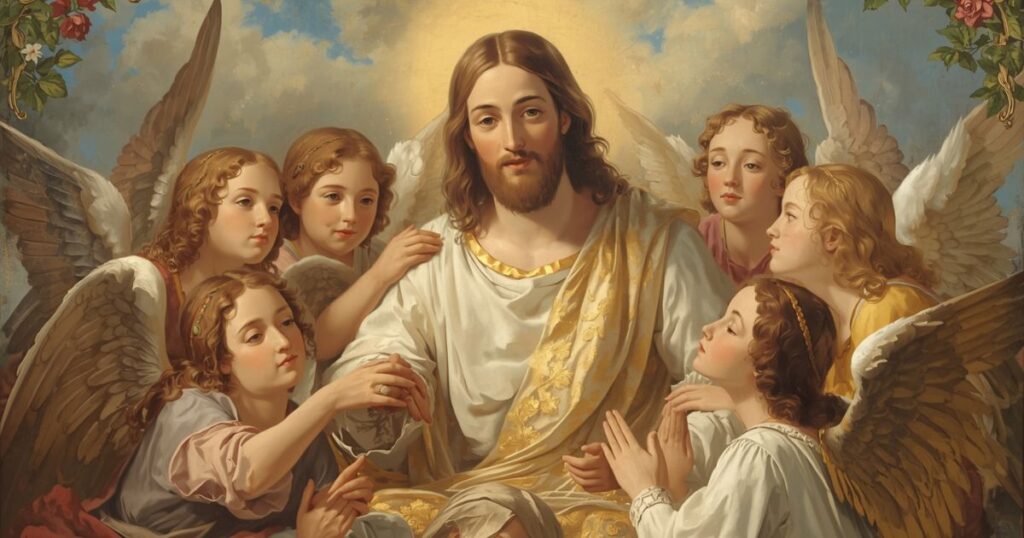
Angelic Announcements of Jesus’ Birth
Gabriel’s announcement to Mary represents the culmination of angelic involvement in redemptive history. The angel declares Mary will conceive through Holy Spirit’s power. Bear the Son of God.
Angels also appear to Joseph in dreams. Reassuring him about Mary’s pregnancy. Warning him to flee to Egypt. At Jesus’ birth, an angel appears to shepherds. God’s glory shining around them. A multitude of heavenly host then appears, praising God.
Angels Ministering to Jesus During His Earthly Life
After Jesus resists Satan’s temptations in the wilderness, angels come and serve Him. This ministry demonstrates that even the Son of God received angelic assistance. During His anguished prayer in Gethsemane, an angel strengthens Him.
These instances reveal angels minister to Jesus not because He lacks power. Because He has taken on human nature. Their service honors His humanity while acknowledging His divinity.
Angels at the Resurrection and Ascension
At Jesus’ tomb, an angel descends from heaven. Causes great earthquake. His appearance resembles lightning. Clothing white as snow. He rolls back stone and sits upon it. Guards shake with fear.
Angels announce “He is not here, for he has risen.” This proclamation of resurrection represents most important announcement in salvation history. At Jesus’ ascension, two angels appear promising His return.
Jesus’ Teaching About Angels and Judgment
Jesus frequently taught about angels’ role in coming judgment. He declared the Son of Man will send out His angels. Gather everything causing sin and all doing evil.
Most significantly, Jesus promised when Son of Man comes in His glory, all holy angels will accompany Him. Angels will participate in final judgment.
Angelic Activity in Acts and the Early Church
Angels Guiding the Spread of the Gospel
An angel directs Philip to the desert road. Leading him to encounter the Ethiopian eunuch. This divine guidance results in the eunuch’s conversion. Similarly, an angel appears to Cornelius. Instructs him to send for Peter. Opens gospel to Gentiles.
These interventions reveal angels as active participants in church’s mission. They guide believers to those prepared to receive gospel.
Angels Executing Divine Judgment
An angel strikes down Herod Agrippa because he accepted worship. He is eaten by worms and dies. Swift divine judgment executed through angelic agency. This judgment reveals angels enforce God’s exclusive right to worship.
Paul’s Theological Insights About Angels
Paul’s letters provide theological insights. Angels are immortal. Incorporeal spirits. They don’t marry. These characteristics distinguish angels from humans.
Paul also warns some angels are evil. Having followed Satan in rebellion. This acknowledgment of fallen angels shapes Christian understanding of spiritual warfare.
Angels in the Book of Revelation
Seven Angels With Seven Trumpets
Seven angels stand before God. Receiving seven trumpets. These angels execute progressive judgments upon earth. Four angels hold back four winds. Controlling natural forces under God’s direction.
An angel seals God’s servants on their foreheads. Protecting them before judgment falls. Their precise execution reveals ordered, purposeful nature of divine judgment.
Angels Pouring Out God’s Wrath
Angels pour out bowls of God’s wrath in Revelation 16. Bringing plagues upon earth. These judgments demonstrate angels’ role as executors of divine justice.
Yet even in judgment, angels act under divine authority. They await God’s command before pouring out each bowl.
Michael’s War Against the Dragon
War breaks out in heaven. Michael and his angels fighting against dragon and his angels. Satan and his forces are defeated. Cast down to earth. Losing their place in heaven.
This cosmic warfare demonstrates spiritual conflict extends beyond earthly battles. Michael’s victory confirms Satan’s ultimate defeat is assured.
The Angel Binding Satan
An angel descends from heaven with key to abyss. Great chain. He seizes dragon, binds him for thousand years. Casts him into abyss. This binding demonstrates angelic power over even chief of fallen angels.
The angel’s ability to bind Satan reveals divine authority supersedes all created power.
The Biblical Truth About Guardian Angels
What Scripture Actually Teaches About Personal Protection
Scripture promises angelic protection but doesn’t explicitly teach each person has individually assigned guardian angel. Psalm 91:11-12 promises God will command His angels concerning those dwelling in His shelter. Context suggests general divine care.
Matthew 18:10 provides strongest hint. Jesus speaking of children having “their angels.” Yet this phrase remains ambiguous. Potentially referring to angels collectively watching over children as group.
Communal Versus Individual Angelic Ministry
Throughout Scripture, angels clearly protect God’s people. Usually in response to specific situations. Not as permanently assigned guardians. An angel shut lions’ mouths to protect Daniel. Angels freed Peter from prison.
Hebrews 1:14 describes all angels as ministering spirits sent to serve those inheriting salvation. This collective description suggests angels serve believers as group.
Angels Assigned to Nations and Groups
Scripture more clearly teaches angels are assigned to nations and groups. Michael stands as great prince protecting Israel as nation. This national assignment demonstrates angels can have specific responsibilities.
Angels will gather believers from four winds at Christ’s return. Demonstrating collective ministry to all who inherit salvation.
Satan’s Fall and the Origin of Fallen Angels
Satan as a Fallen Cherub
Most Christian theologians believe Satan was originally high-ranking angel. Possibly cherub. Ezekiel 28:12-17 describes perfect guardian cherub in Eden who fell through pride. Traditionally interpreted as referring to Satan before rebellion.
The description emphasizes Satan’s original perfection. Extraordinary beauty and wisdom. Positioned on God’s holy mountain. Created perfect, he corrupted himself through pride.
The Meaning of ‘Satan’ and ‘Lucifer’
“Satan” derives from Hebrew. Means “adversary” or “accuser.” “Lucifer” comes from Latin Vulgate’s translation. Rendering “morning star” as Lucifer. Meaning “light-bearer.”
These names reveal different aspects. As adversary, he opposes God’s purposes. As fallen morning star, he represents tragedy of being created in light who chose darkness.
Biblical Passages Describing Satan’s Rebellion
Jesus declares He saw Satan fall like lightning from heaven. Revelation 12:9 identifies Satan as dragon cast to earth with his angels. Confirming he led other angels in rebellion.
Isaiah 14:12-15 describes fall of “morning star.” Who said “I will ascend to heaven.” Repeated “I will” statements reveal willful rebellion. Desire to usurp God’s authority.
Pride as the Root of Angelic Rebellion
Ezekiel 28:17 states “Your heart was lifted up because of your beauty.” Pride in his own beauty and wisdom led Satan to corruption. 1 Timothy 3:6 warns against appointing new converts lest they become conceited.
These passages establish pride as root of Satan’s rebellion. Rather than accepting position as created being, he sought equality with God.
Other Fallen Angels: Demons and Spiritual Rebellion
The Sons of God in Genesis Six
Genesis 6:1-4 describes “sons of God” taking human wives. Producing Nephilim. Ancient Jewish and early Christian interpretation understood this as angels violating divine boundaries.
Jude 6 describes angels who abandoned their proper dwelling. This passage describes unique transgression beyond Satan’s rebellion.
Angels Bound in Chains of Darkness
Jude 6 describes angels kept in everlasting chains under darkness. 2 Peter 2:4 reinforces this. God cast sinning angels down to Tartarus.
These passages reveal not all fallen angels remain free. Some are already bound. Awaiting final judgment.
Demons and Unclean Spirits in the New Testament
New Testament frequently mentions demons and unclean spirits. In Mark 1:23-24, demon recognizes Jesus as Holy One of God. Demons possess people. Cause physical and spiritual torment.
Matthew 25:41 refers to eternal fire prepared for devil and his angels. While Scripture never explicitly states demons are fallen angels, this has been predominant Christian interpretation.
Common Misconceptions About Biblical Angels
The Cherubim Versus Putti Confusion
Biblical cherubim are powerful guardians. Four faces, four wings, bodies covered with eyes. Putti are chubby, childlike figures from classical mythology. Having no biblical basis.
During Renaissance, artists began using putti in religious contexts. Over centuries, this artistic convention became popular image. Completely divorced from biblical description.
Why Angels Are Not Deceased Humans
The belief deceased humans become angels has no biblical foundation. Hebrews 12:22-23 distinguishes between angels and “spirits of righteous made perfect.” Angels are created beings. Humans are made in God’s image.
Humans who die in Christ await resurrection in glorified human bodies. Not transformation into angels. They will be “like angels” in certain respects. But they remain human.
Understanding the Four Faces Symbolism
Four faces of cherubim may be literal physical features. Or symbolic representations of different aspects. Human face represents intelligence. Lion represents wild strength. Ox represents patient labor. Eagle represents heavenly perspective.
Whether Ezekiel saw actual multiple faces or described spiritual realities through available imagery remains debated. Both interpretations acknowledge cherubim embody comprehensive awareness.
Summary: The Magnificent Reality of Biblical Angels
Biblically accurate angels reveal themselves as far more diverse, powerful, and complex than popular culture suggests. Scripture unveils rich hierarchy of angelic beings. From six-winged seraphim proclaiming God’s holiness to multi-faced cherubim guarding sacred spaces.
Primary types include archangels like Michael and Gabriel. Seraphim worshiping near God’s throne. Cherubim protecting holy places. Living creatures from Ezekiel’s vision. Ophanim symbolizing divine omniscience. General angels appearing as ordinary humans.
Angels play crucial roles throughout salvation history. Announcing births including Christ’s. Rescuing God’s people. Executing judgment. Engaging in spiritual warfare. Accompanying Jesus at His incarnation, resurrection, and promised return.
Understanding biblically accurate angels transforms our perspective on spiritual realm. Reality extends far beyond physical world. Into spiritual dimensions filled with beings whose primary purpose is glorifying God and serving His purposes on earth.