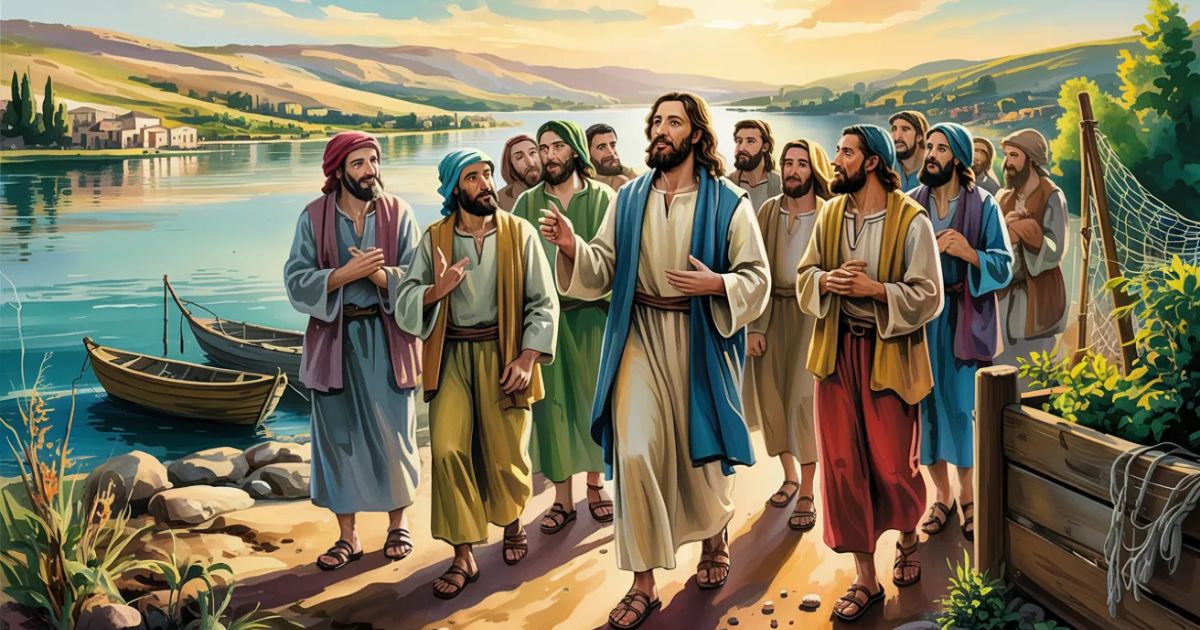
Ever wondered who actually walked beside Jesus daily? Not the sanitized Sunday school versions the real men. Fishermen with calloused hands. A tax collector everyone despised. A political radical. These weren’t polished saints. They were ordinary guys thrust into extraordinary circumstances.
Let’s dive deep into their world.
First Things First: Definition of Disciple
What’s a disciple, really? We toss the word around casually. But two thousand years ago? It meant something radically different.
The entire New Testament was written in Greek. The biblical Greek word we translate as “disciple” is mathetes. Our English word comes from Latin discipulus. These days, people think a disciple just follows charismatic leaders. Wrong.
Look back at ancient Greece. A mathetes was a student of philosophy. Plato had disciples. Aristotle too. Frederick William Danker notes the word meant “one who engages in learning through instruction from another, pupil, an apprentice.”
But there’s more to it.
Roman philosopher Seneca Jesus’ contemporary wrote about Cleanthes, disciple of Stoic philosopher Zeno:
“Cleanthes could not have been the express image of Zeno, if he had merely heard his lectures; he also shared in his life, saw into his hidden purposes, and watched him to see whether he lived according to his own rules.”
Pierre Hadot explains disciples didn’t just attend lectures. They lived day-to-day with teachers. Following examples. Becoming living reflections of masters.
This makes perfect sense with the 12 disciples of Jesus. New Testament stories show them constantly beside him. Learning, yes but also imitating his lifestyle completely.
Disciple vs. Apostle
Here’s where people get confused. What’s an apostle?
The twelve apostles of Jesus are also called disciples. The Greek word apostolos means “one who is sent, a messenger.” Jesus sent them to preach. That’s the difference.
Luke 10 mentions 70 apostles Jesus dispatched. They were followers. The twelve disciples formed Jesus’ inner circle. Paul never met the earthly Jesus. He’s never called a disciple. But he considers himself an apostle sent by the resurrected Christ.
Get it? Follower vs disciple matters here.
Who Were Jesus’ 12 Disciples?
The Synoptic Gospels Matthew, Mark, Luke mostly agree. The Gospel of John? Different story. It never lists the twelve clearly. It mentions different names entirely.
The 12 Disciples of Jesus’ Names in Each Gospel:
| Matthew | Mark | Luke | John |
|---|---|---|---|
| Simon Peter | Simon Peter | Simon Peter | Simon Peter |
| Andrew, Peter’s brother | Andrew | Andrew, Peter’s brother | Andrew, Peter’s brother |
| James, son of Zebedee | James, son of Zebedee | James | James |
| John, James’ brother | John, brother of James | John | John (possibly “disciple whom Jesus loved”) |
| Philip | Philip | Philip | Philip |
| Bartholomew | Bartholomew | Bartholomew | Nathanael (traditionally Bartholomew) |
| Thomas | Thomas | Thomas | Thomas (Didymus) |
| Matthew, the tax collector | Matthew/Levi | Matthew/Levi | Not mentioned |
| James, son of Alphaeus | James, son of Alphaeus | James, son of Alphaeus | Not mentioned |
| Thaddaeus (Lebbaeus) | Thaddaeus | Judas, son of James | Judas (not Iscariot) |
| Simon the Canaanite | Simon the Cananaean | Simon the Zealot | Not mentioned |
| Judas Iscariot | Judas Iscariot | Judas Iscariot | Judas son of Simon Iscariot |
Common names across all four? Simon Peter, Andrew, James, John, Philip, Bartholomew, Thomas, and Judas Iscariot. The rest appear sporadically.
What Did the Disciples Do for a Living?
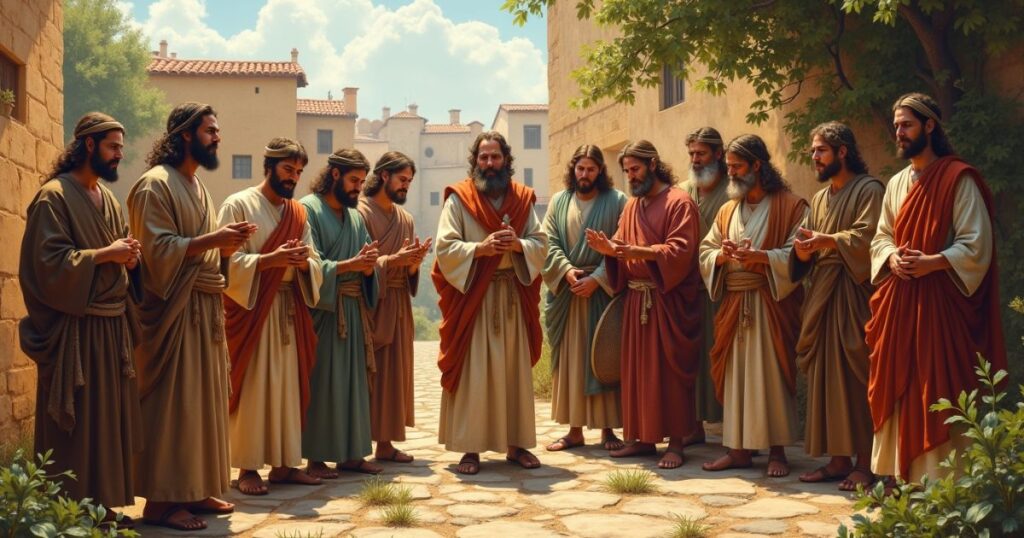
Jesus’ first recruits? Two pairs of brothers.
Simon Peter and Andrew. James and John. All four were fishermen in Galilee. They knew each other well. According to the Gospels, all four abandoned nets immediately. Left families behind. Followed Jesus without hesitation.
Another disciple sometimes Matthew, sometimes Levi worked as a tax collector. Jews considered this profession sinful. He collected money for hated Romans. When Jesus called Matthew the tax collector? He quit instantly.
Other disciples’ occupations remain murky. We can guess.
Philip came from Bethsaida in Galilee. Same fishing town. Possibly connected to that trade. Nothing’s confirmed though. Thomas also called Didymus stays mysterious. The Acts of Thomas (third-century text) claims he was a carpenter. But that’s centuries late. Historically useless.
Simon the Zealot’s title suggests politics. The Zealots radically opposed Roman rule. Not really an occupation. More like revolutionary affiliation.
Judas Iscariot managed the group’s money. The Gospel of John confirms this (John 12:6; 13:29). He was the keeper of the common purse. Why him? Matthew handled money as a tax collector. Seems odd Judas got treasurer duties. Unless his background uniquely qualified him? We’re speculating. But it’s fun.
Was There a Hierarchy Among the Disciples?
Jesus chose twelve. But three got special treatment.
Peter, James, and John formed the inner circle. They experienced things others didn’t. Paul’s letters call them pillars of the Church. These three witnessed Jesus’ Transfiguration alone. They accompanied him to Gethsemane before arrest.
Jesus gave them nicknames. Showed closeness. He called Simon “Cephas” Aramaic for “rock.” All four Gospels translate this to Greek Petros. Matthew 16:18 explains Peter is the “rock” for building the Church.
James and John? Jesus nicknamed them “sons of thunder.” The Gospels never explain why. Fiery personalities? Quick tempers? Mystery remains.
In 1 Corinthians 15:5, Paul writes something fascinating. After resurrection, Jesus “appeared to Cephas, then to the Twelve.” But Judas was gone. Shouldn’t Paul say “the eleven”?
Scholars think “The Twelve” became a titular designation. It transcended literal counting. Like the Big Ten conference paradoxically includes fourteen teams. Still called Big Ten.
Why I Am Not a Christian (WINC)
Dr. Bart D. Ehrman whose perspective opens this article offers critical historical-critical scholarship on the New Testament disciples. His departure from Christianity stems from rigorous textual analysis. Understanding historical Jesus requires examining early Christian tradition honestly.
Read More: Biblically Accurate Angels
Who Were the Other Disciples?
Mark our earliest Gospel shows Jesus choosing most disciples from larger follower groups. Matthew and Luke use Mark. They tell similar stories. Matthew/Levi gets called separately.
In John, Jesus calls Philip. Then Philip recruits his brother Nathanael. That name doesn’t appear in Synoptic Gospels. Tradition links Nathanael with Bartholomew. Despite naming these disciples, the Gospels say little else.
Our earliest written reference? Paul’s first letter to Corinthians (1 Corinthians 15:3-5):
“For I handed on to you as of first importance what I in turn had received: that Christ died for our sins in accordance with the scriptures and that he was buried and that he was raised on the third day in accordance with the scriptures and that he appeared to Cephas, then to the twelve.”
This indicates early Church beliefs. Jesus had special relationship with Peter. Peter saw resurrected Jesus first. The resurrection appearances to the Twelve followed.
What About Judas Iscariot?
All four Gospels mention Judas Iscariot. Yet scholars have minimal historical information. In 2 Corinthians 11:23-24, Paul writes about Jesus being “handed over.” Could mean betrayal. Strangely, Paul doesn’t name the betrayer.
Was Judas Iscariot a literary invention?
Bart D. Ehrman argues otherwise. Judas probably existed. He was Jesus’ follower. And yes he betrayed him. Multiple sources attest this. Likely based on fact.
The betrayal of Jesus story appears consistently. Historical reliability of Judas gains credibility through multiple attestations. Gospel accounts differ in details. But the core narrative holds.
After betrayal? Judas commits suicide from guilt. Acts tells what happened next. The eleven disciples drew lots. They needed Judas’ replacement. The lot fell to Matthias who became the twelfth disciple.
How Did the Disciples Die?
Tradition claims all disciples except Judas were martyred. Only James son of Zebedee’s death appears in New Testament. Acts 12:1-2 records:
“About that time King Herod laid violent hands upon some who belonged to the church. He had James, the brother of John, killed with the sword.”
Peter’s martyrdom probably occurred during Nero’s persecution of Christians in Rome. The martyrdom of apostles became legendary. But historical documentation remains sparse.
Apostolic martyrdom traditions grew over centuries. Stories became embellished. Separating fact from legend? Nearly impossible now.
The Acts of the Apostles mentions James’ execution. Everything else? Later church tradition. Some credible. Some fantastical.
Conclusion: Who Were the Twelve Disciples of Jesus?
So what’s a disciple? In ancient Greece, disciples were students. Imitators of philosophers. They didn’t just learn teachings. They learned to live like masters.
Who were Jesus’ disciples? All four Gospels name Peter, Andrew, James, John, Philip, Bartholomew/Nathanael, Thomas, and Judas Iscariot. Matthew/Levi appears in three.
Disciples’ professions? Peter, Andrew, James, John fishermen. Matthew/Levi collected taxes. Others remain uncertain.
How did they die? Tradition says eleven were martyred. Only James’ death gets Biblical documentation. Judas died by his own hand.
These weren’t superhuman saints. They were regular men. Flawed. Fearful. Yet they walked daily with someone extraordinary. And that changed everything.
The original disciples of Jesus left fishing nets. Abandoned tax booths. Risked everything. Their story continues inspiring billions. Not because they were perfect. But because they were profoundly, beautifully human.