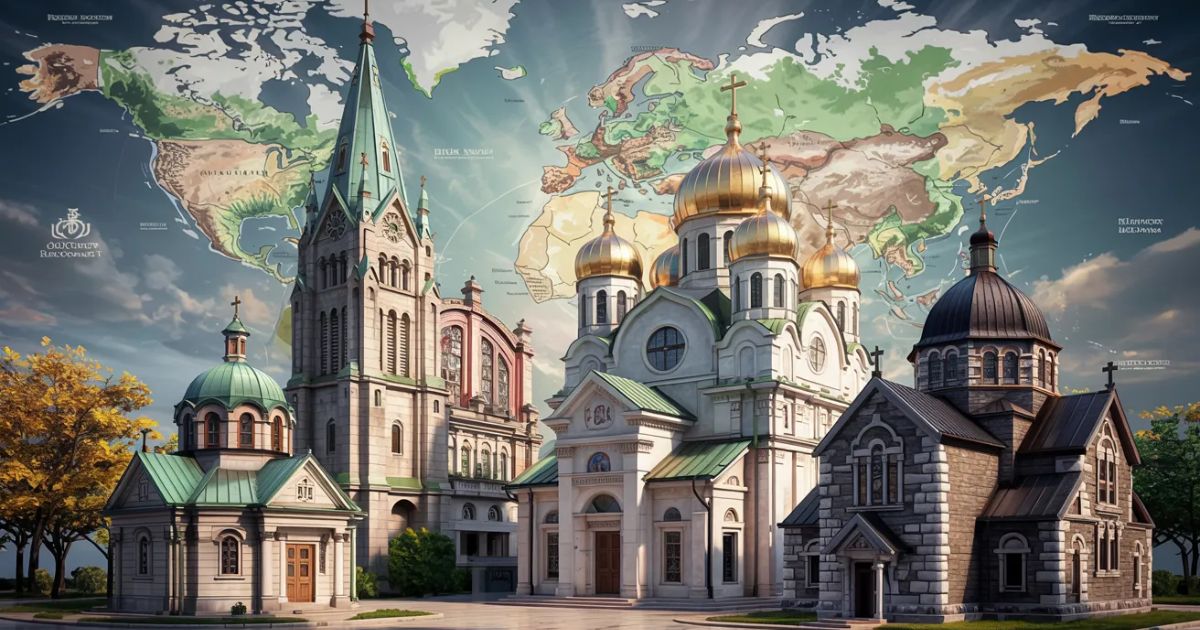
Ever wondered why your neighbor’s church looks different from yours? Or why some Christians cross themselves while others don’t? You’re not alone. Christianity the world’s largest religion has split into thousands of distinct traditions, each with unique beliefs, practices, and histories.
This isn’t just theological trivia. Understanding these divisions helps us grasp how faith adapts across cultures and centuries. Let’s dive into the fascinating world of Christian denominations.
What Are Christian Denominations?
Christianity started small. Really small. In the 1st century, it was merely a minor Jewish sect in Palestine. Nobody predicted it would become the globe’s most widespread faith.
But here’s the thing: Christianity grew explosively. And with growth came disagreement.
Merriam-Webster defines a denomination as “a religious organization whose congregations unite around shared beliefs and practices.” Sounds simple, right? The reality is far messier.
Historians Mary J. Weaver and David Brakke nail it: Christians differ substantially in doctrine, practice, and structures. These differences didn’t emerge randomly. They arose from specific historical contexts power struggles, theological debates, cultural shifts.
Paula Fredriksen observes something crucial. The wide range of interpretations in late 1st-century Christianity wasn’t a bug. It was a feature. As the movement spread beyond its Jewish roots, it adapted instinctively. The early Church continuously updated its teachings, reshaping traditions about Jesus for each new generation.
How many Christian denominations exist today? Brace yourself. Estimates suggest more than 45,000 distinct groups worldwide. That’s not a typo.
Non-denominational churches add another layer of complexity. These independent congregations reject formal ties to established Christian traditions. They emphasize individual Scripture interpretation and flexible worship styles. This freedom creates even more diversity within modern Christianity.
Of course, covering all 45,000 is impossible. Instead, we’ll highlight the major branches that shaped Western civilization and global Christianity.
Did Peter Hate Paul?
Before exploring denominations, let’s address a juicy question. Did Christianity’s founding figures actually get along?
Dr. Bart D. Ehrman’s course “Paul and Jesus: The Great Divide” tackles this head-on. The relationship between Peter and Paul was complex possibly contentious. Their theological differences sparked debates that echo through centuries.
Paul taught faith in Jesus as the path to salvation. Jesus preached repentance to prepare for God’s Kingdom. Were they co-founders of Christianity? Or theological rivals? The answer shapes how we understand early Christian diversity.
This tension matters. It shows that disagreement isn’t new. From the apostolic age onward, Christians debated core beliefs.
List of 46 Christian Denominations
Here’s our comprehensive breakdown of Christianity’s major branches and notable sub-groups:
#1 – Catholic Church
- #1.1 – Roman Catholic Church
- #1.2 – Eastern Catholic Churches
- (a) Maronite Catholic Church
- (b) Melkite Greek Catholic Church
- (c) Ukrainian Greek Catholic Church
- (d) Syro-Malabar Catholic Church
#2 – Eastern Orthodoxy
- (a) Greek Orthodox Church
- (b) Russian Orthodox Church
- (c) Serbian Orthodox Church
- (d) Bulgarian Orthodox Church
- (e) Romanian Orthodox Church
- (f) Georgian Orthodox Church
- (g) Antiochian Orthodox Church
- (h) Orthodox Church in America
#3 – Protestantism
- #3.1 – Lutheranism
- (a) Evangelical Lutheran Church in America
- (b) Lutheran Church–Missouri Synod
- (c) Wisconsin Evangelical Lutheran Synod
- #3.2 – Calvinism
- (a) Presbyterian Church
- (b) Reformed Church in America
- (c) Christian Reformed Church
- #3.3 – Anglicanism
- (a) Church of England
- (b) Episcopal Church (U.S.)
- (c) Anglican Church in North America
- #3.4 – Baptists
- (a) Southern Baptist Convention
- (b) American Baptist Churches U.S.A.
- (c) National Baptist Convention
- #3.5 – Methodism
- (a) United Methodist Church
- (b) African Methodist Episcopal Church
- (c) Free Methodist Church
- #3.6 – Pentecostalism
- (a) Assemblies of God
- (b) Church of God
- (c) United Pentecostal Church International
- (d) International Church of the Foursquare Gospel
- #3.7 – Other Notable Protestant Movements
- (a) Anabaptists
- #3.8 – Restorationists
- (a) Churches of Christ
- (b) Disciples of Christ
- (c) Christian Church
- (d) Adventists
- (e) Quakers
#4 – Oriental Orthodoxy
- #4.1 – Coptic Orthodox Church
- #4.2 – Armenian Orthodox Church
- #4.3 – Ethiopian Orthodox Church
- #4.4 – Syriac Orthodox Church
- #4.5 – Malankara Orthodox Syrian Church
#5 – Assyrian Church of the East
- #5.1 – Assyrian Church of the East
- #5.2 – Ancient Church of the East
- #5.3 – Chaldean Syrian Church
This list represents the major Christian sects that shaped history. Each carries unique theological positions and worship traditions.
Roman Catholicism
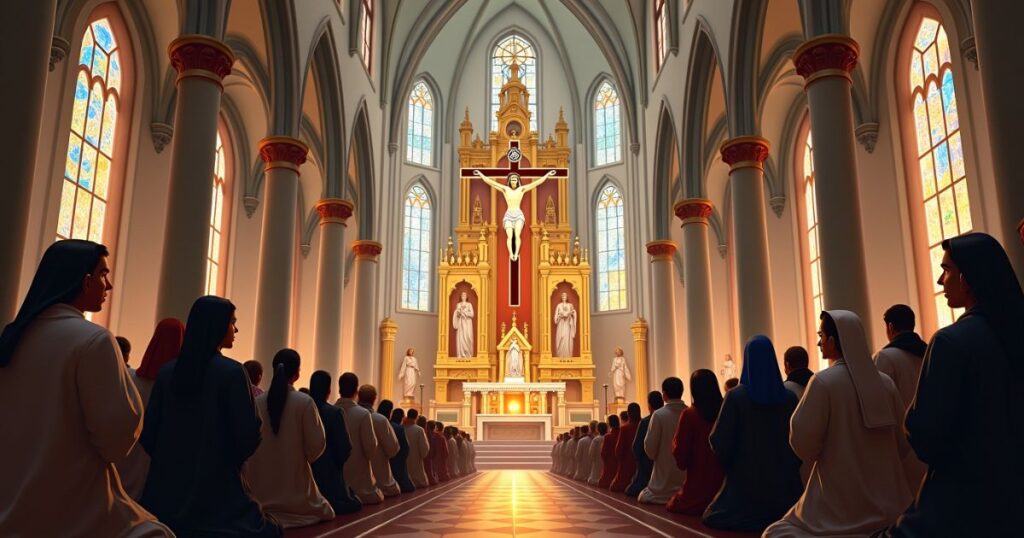
The Roman Catholic Church dominates global Christianity. With over 1 billion members, it’s the largest Christian denomination.
Catholics trace their lineage to St. Peter. They claim an unbroken apostolic succession from the apostles to today’s Pope. However, historians offer a different perspective. Roman Catholicism gradually took shape over several centuries, particularly during the 4th and 5th centuries.
This period was transformative. The papacy rose to prominence. Key doctrines were formalized through ecumenical councils Nicaea (325 C.E.), Constantinople, Ephesus, and Chalcedon (451 C.E.). These councils defined Christian orthodoxy, addressing controversies about the Trinity and Christ’s nature.
Catholic Hierarchy and Papal Authority
What sets Catholicism apart? Its hierarchical structure. The Pope serves as supreme spiritual authority. He’s considered Peter’s successor, governing the Church with unique authority.
The Catechism of the Catholic Church explains it clearly: “The Church is apostolic. She’s built on a lasting foundation: ‘the twelve apostles of the Lamb.’ Christ governs her through Peter and other apostles, present in their successors the Pope and college of bishops.”
This papal primacy distinguishes Catholic tradition from other Christian churches.
The Seven Sacraments
Sacraments form Catholicism’s spiritual core. These seven rites baptism, confirmation, Eucharist, penance, anointing of the sick, holy orders, and matrimony channel God’s grace from birth to death.
Joseph Ratzinger (Pope Benedict XVI) emphasized their importance: “Church and sacrament stand or fall together. A Church without sacraments would be empty organization. Sacraments without Church would be rites without meaning.”
Scripture and Tradition
Here’s where Catholicism diverges sharply from Protestant Christianity. Catholics uphold both Scripture and tradition as authoritative sources.
Richard P. McBrien clarifies the Catholic view: “Scripture is itself a product of Tradition. You don’t first have Scripture, then Tradition. Tradition comes before, during, and after Sacred Scripture’s writing.”
This dual-source approach shapes Catholic beliefs and practices fundamentally.
Eastern Orthodoxy
The year 1054 marks Christianity’s Great Schism a divorce lasting over a millennium. Relations between Eastern and Western Christianity severed completely. This wasn’t sudden. Centuries of growing estrangement led to the split.
Tim Dowley notes that disruptions within the Roman Empire during the 5th century widened the rift. Political disagreements especially regarding Church-state relationships and papal authority combined with theological disputes like the filioque controversy to create irreparable division.
Rejecting Papal Authority
Eastern Orthodoxy doesn’t recognize the Pope’s supremacy. Orthodox Christians view him as one bishop among equals, not the universal Church’s supreme head.
Timothy Ware explains: “Orthodoxy isn’t just Roman Catholicism minus the Pope. It’s something quite distinct from any Western religious system. Yet those examining this ‘unknown world’ discover much that’s different yet curiously familiar.”
Divine Liturgy and Mystical Worship
Orthodox worship is sensory and immersive. The Divine Liturgy especially the Liturgy of St. John Chrysostom centers Orthodox spiritual life. It emphasizes communal prayer and divine mystery.
Icons play a crucial role. Orthodox believers venerate these holy images as communication channels with saints and Christ. This isn’t idolatry. It’s rooted in Incarnation theology. By becoming human, Christ sanctified material creation, making it worthy for divine representation.
Hesychasm: The Quiet Path
Here’s something fascinating. Hesychasm is an ancient mystical practice in Eastern Orthodoxy. The Greek word means “quiet.” This contemplative prayer technique achieves inner silence and divine connection beyond words.
Mount Athos monks in Greece preserve this tradition. Drawing from Dionysius the Areopagite’s writings (c. 480-550 C.E.), hesychasm describes experiencing God as a “dark cloud” beyond understanding. Through this practice, monks seek theosis divinization preparing them for God’s glory.
Ware summarizes the Orthodox view: “Church and sacraments are means appointed by God whereby we acquire the sanctifying Spirit and transform into divine likeness.”
Eastern Europe, Russia, and parts of the Middle East remain Orthodoxy’s strongholds, where it shaped culture through the Byzantine Empire and Ottoman occupation.
Protestantism
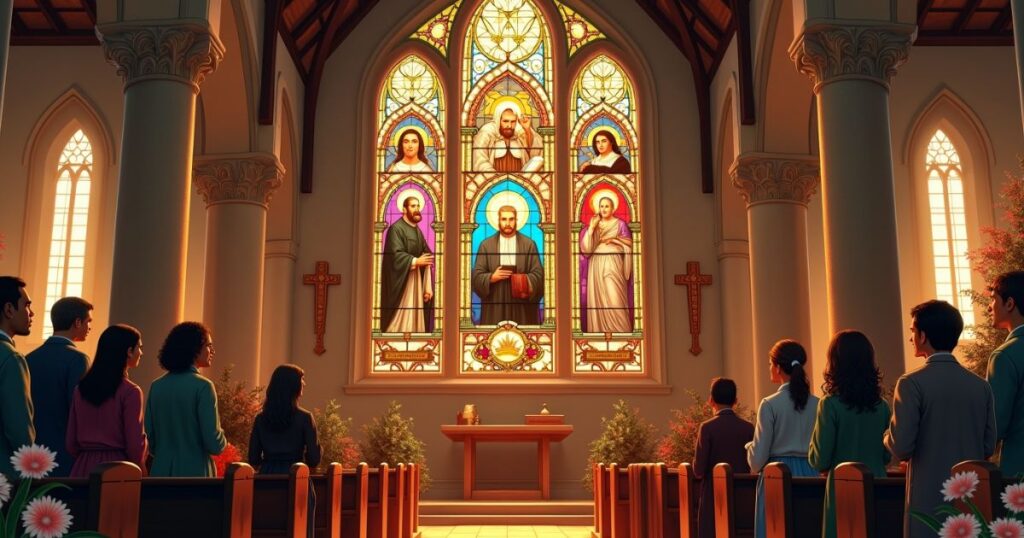
The Protestant Reformation didn’t emerge from religious apathy. Ironically, it arose from intense religiosity and widespread concern for the Church’s future.
John van Engen describes the paradox perfectly. Late 15th-century Catholicism displayed contradictory features widespread corruption alongside vigorous renewal.
On one hand: anticlerical sentiment, simony (buying church offices), and immoral clergy. Pope Alexander VI (r. 1492–1503) epitomized this decadence. He fathered several children, practiced blatant nepotism, and lived lavishly.
On the other hand: fervent lay piety, grassroots reform, and flourishing personal devotion. Medieval laity invested massively paying for churches, donating masses, financing preachers.
Martin Luther’s Revolutionary Stand
Martin Luther, an Augustinian monk, ignited the Protestant Reformation in 1517. He nailed his 95 Theses to Wittenberg’s church door, challenging indulgence sales.
The Leipzig Disputation (June 1519) proved pivotal. Luther declared sola scriptura Scripture alone holds ultimate authority, not popes or councils. This theological assertion had profound institutional implications, undermining Catholic hierarchy.
When threatened with excommunication in 1520, Luther doubled down. He published three landmark treatises:
- Address to the Christian Nobility – calling secular leaders to reform
- The Babylonian Captivity of the Church – attacking sacramental theology
- The Freedom of a Christian – articulating justification by faith alone (sola fide)
At the Diet of Worms (April 1521), summoned to recant, Luther famously refused: “Here I stand, I can do no other.” Charles V condemned him as a heretic. Declared an outlaw, Luther went into hiding but continued translating the Bible into German.
Core Protestant Principles
Sola scriptura and sola fide distinguish Protestant Christianity fundamentally. The Bible is the sole authority. Salvation comes through faith alone, not works. This struck at Catholic sacramental theology’s heart.
Protestants also rejected transubstantiation the belief that bread and wine literally become Christ’s body and blood during communion.
Protestant Diversity
Protestantism fragmented quickly. Lutheran churches spread through Germany. Calvinism theology took root in Switzerland. The Anglican Communion emerged in England. Baptist churches, Methodist churches, and the Pentecostal movement added more variety.
Today, the Pew Research Center documents thousands of Protestant denominations. This diversity makes Protestantism one of the most dynamic forms of Christianity globally.
| Protestant Branch | Key Characteristic | Notable Denominations |
|---|---|---|
| Lutheranism | Scripture authority, justification by faith | ELCA, Missouri Synod |
| Calvinism | Predestination, Reformed theology | Presbyterian, Reformed Churches |
| Anglicanism | Via media (middle way) | Church of England, Episcopal |
| Baptist | Believer’s baptism, local autonomy | Southern Baptist Convention |
| Methodism | Holiness, social justice | United Methodist Church |
| Pentecostalism | Spiritual gifts, charismatic worship | Assemblies of God |
Read More: The Historically Accurate Jesus
Oriental Orthodoxy
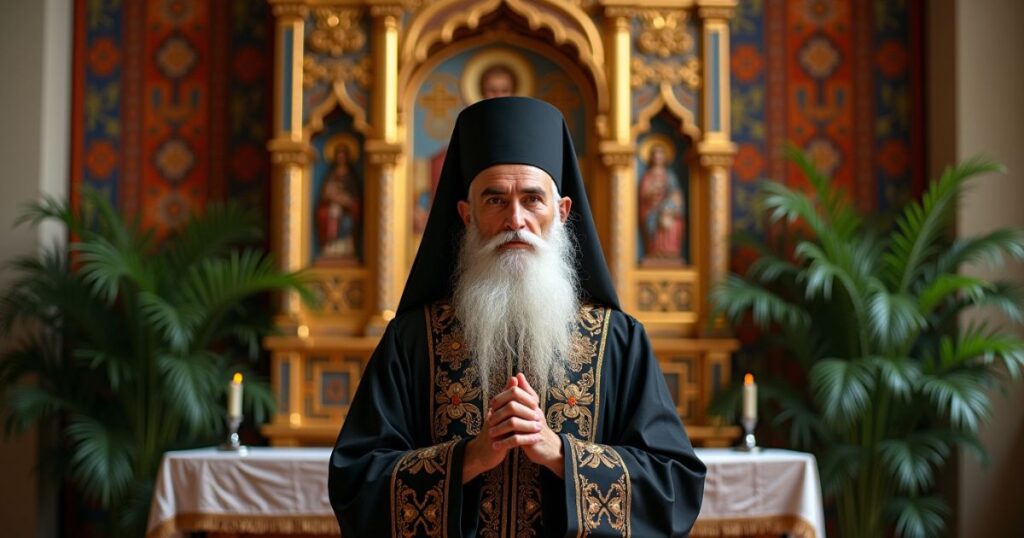
Christological controversies of the early 5th century birthed Oriental Orthodoxy. The Council of Chalcedon (451 C.E.) proved pivotal.
The majority adopted the Chalcedonian Definition Christ exists in two natures (divine and human) united in one person. But Leo D. Davis notes: “Like Nicaea’s Creed one hundred twenty-five years before, Chalcedon’s definition wasn’t the end. It intensified controversy.”
Miaphysitism vs. Chalcedonian Doctrine
Oriental Orthodox Churches rejected Chalcedon’s formulation. They adhered to miaphysitism Christ’s divinity and humanity unite in one nature “without confusion, without change, without division, without separation.”
This theological distinction created what Timothy Ware calls “the first stage in separation” within Eastern Christianity. Political and cultural factors mattered too. Oriental Orthodox Churches existed on the Byzantine Empire’s periphery Egypt, Armenia, Ethiopia, Syria where populations resisted Byzantine dominance.
Rich Liturgical Traditions
Oriental Orthodox liturgy is characteristically elaborate. Rituals are symbolic and extensive. Prayers are lengthy. Ancient liturgical languages persist like Ge’ez in the Ethiopian Orthodox Church.
Icon veneration and sacramental life especially the Eucharist as Christ’s real presence remain central to devotional practices.
| Oriental Orthodox Church | Region | Liturgical Language |
|---|---|---|
| Coptic Orthodox Church | Egypt | Coptic |
| Armenian Orthodox Church | Armenia | Classical Armenian |
| Ethiopian Orthodox Church | Ethiopia | Ge’ez |
| Syriac Orthodox Church | Middle East | Syriac |
| Malankara Orthodox Syrian Church | India | Syriac/Malayalam |
The Assyrian Church of the East
The Assyrian Church of the East claims apostolic origins, tracing roots to St. Thomas’s legendary missionary work. By the 4th century, it established itself in Mesopotamia far from Rome and Constantinople.
Christine Chaillot explains the challenges: “In Persia, Zoroastrianism was the state religion. This led to widespread Christian persecution from 338 to 363, then sporadically until 379. These persecutions stemmed partly from distrust of Persian Christians’ loyalty vis-à-vis Western Christianity.”
Despite persecution, the Church survived and thrived.
Dyophysitism and the Nestorian Controversy
Theologically, the Assyrian Church embraces dyophysitism Christ’s divine and human natures are distinct yet united. While maintaining these natures unite in one person, critics perceived it as attributing too much independence to each nature.
The Church rejected the Council of Ephesus (431 C.E.), primarily for procedural reasons. Decisions were rushed. Key Eastern theological voices lacked representation.
This rejection led to the “Nestorian” label, associating the Church with Nestorius, condemned at Ephesus. But contemporary scholarship reveals this misinterpretation. Sebastian P. Brock states: “The association between the Church of the East and Nestorius is tenuous. Calling that church ‘Nestorian’ is historically misleading, incorrect, and highly offensive.”
Syriac Liturgy and Modern Presence
Syriac an Aramaic dialect serves as the Church’s liturgical language. This connects worshippers to Christ’s own language.
Today, the Assyrian Church maintains small but dedicated communities in the Middle East, India, Americas, Europe, and Australia. Despite centuries of persecution, it preserves unique theological and liturgical traditions.
Conclusion
Reflecting on Christianity’s diversity reveals something profound. Faith isn’t monolithic. It’s a living tapestry woven from theological debate, cultural adaptation, and historical challenges.
From Roman Catholicism’s papal authority and sacramental richness to Eastern Orthodoxy’s mystical liturgy, from Protestantism’s reforming zeal to Oriental Orthodoxy’s ancient traditions, each branch offers a unique window into Christianity’s enduring universality.
The question “What kind of God do Christians believe in?” can’t be answered simply. Global Christianity encompasses billions of believers across thousands of traditions. Each interprets Scripture, worships, and understands Christ’s nature differently.
Yet commonalities persist. All Christians affirm Jesus’s centrality. All wrestle with the Trinity doctrine. All seek to follow Christ’s teachings, however differently interpreted.
Understanding these Christian belief systems doesn’t just satisfy intellectual curiosity. It fosters empathy, reduces prejudice, and reveals faith’s remarkable adaptability across cultures and centuries.
Whether you’re exploring your own tradition more deeply or understanding your neighbor’s faith, this journey through Christianity’s denominations illuminates how one movement became the world’s most diverse religion.
The beauty lies not in uniformity but in diversity countless expressions of one fundamental truth that transcends borders, ethnicities, and social divides.