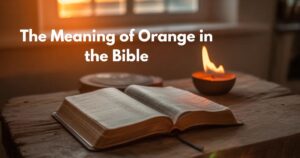
Orange doesn’t appear by name in Scripture. Yet its essence blazes through nearly every significant moment where God reveals Himself. From Moses at the burning bush to Pentecost’s tongues of fire, this color carries profound spiritual weight even without direct mention.
Is Orange Mentioned in the Bible?
The Absence of the Word but Not the Color
The Bible never uses “orange” explicitly. Hebrew, Aramaic, and Greek lacked precise terms for this hue. Ancient languages categorized colors differently than we do today. Biblical Hebrew used adom for red, covering everything from scarlet to amber tones. Yet orange’s visual presence saturates Scripture.
Think about it: Fires don’t burn pure red. They glow with amber, gold, and orange. Ancient metallurgists knew this. So did prophets describing divine visions.
Where Orange Appears Symbolically
Orange emerges wherever fire meets divine presence. Exodus 3:2 describes the burning bush—a flame that doesn’t consume. That’s not cartoon-red fire. It’s the warm, living glow of sustained combustion. Acts 2:3 at Pentecost mentions “tongues as of fire” resting on believers. Fire produces orange hues naturally when burning steadily.
Ezekiel 1:4 paints an extraordinary vision: “a great cloud with brightness around it and fire flashing forth continually.” The amber light surrounding God’s throne radiates warmth and energy. Daniel 10:6 describes an angelic being with arms and feet “like burnished bronze”—glowing metal fresh from the forge, displaying orange-gold intensity.
Symbolism of Orange in Biblical Contexts
Fire and Divine Presence
Holy fire represents God’s immediate presence throughout Scripture. The burning bush demonstrates this perfectly. Moses encounters God not in stillness but in blazing energy. Yet nothing turns to ash. The fire sustains rather than destroys.
Hebrews 12:29 declares, “Our God is a consuming fire.” This isn’t metaphorical decoration. It describes divine nature: purifying, powerful, transforming. Orange captures this perfectly it’s fire’s living color, energy made visible.
Purification and Judgment
Malachi 3:2–3 speaks of God as “a refiner’s fire.” Refiners don’t use gentle warmth. They employ intense heat that glows orange, separating impurities from precious metal. This process demands extreme temperatures, producing that characteristic amber-orange glow.
Biblical judgment imagery consistently employs fire. Matthew 13:39 references harvest and fire together. Revelation 14:15 connects reaping with divine timing. Both evoke autumn’s orange-gold palette harvest season, when labor yields reward or reveals what’s worthless.
Transition and Endurance
Orange sits between red’s passion and yellow’s joy. It embodies spiritual transition the space where faith faces testing. Romans 5:3–4 teaches that “suffering produces endurance, and endurance produces character.” That’s orange territory: not the crisis (red) or the victory (gold), but the sustained burn between them.
Consider burnished bronze in Scripture. Bronze doesn’t gleam orange naturally. It requires sustained heating and working. The process itself matters. Similarly, faith develops through persistent pressure, not instant transformation.
Color Symbolism in Jewish and Early Christian Traditions
Tabernacle and Temple Colors
Exodus 26:1 describes tabernacle curtains using blue, purple, and scarlet. Exodus 27:1–8 details the bronze altar central to sacrifice and purification. Bronze glows orange when heated, creating visual theology every observer understood.
The High Priest’s breastplate (Exodus 28:17–20) featured twelve gemstones. Several display orange tones: carnelian, chrysolite, and jacinth. These weren’t decorative choices. Each stone carried symbolic weight, representing Israel’s tribes before God.
Ancient Near Eastern seals and jewelry frequently used carnelian. Its warm orange-red hue symbolized vitality and protection. Wearing it meant carrying visual reminders of divine care.
Early Church Interpretations
Origen saw divine pedagogy in Scripture’s imagery. Fire teaches through experience, not abstract concepts. Gregory of Nyssa emphasized purification through trials. Augustine connected divine illumination with transformative light the kind that changes what it touches.
A.W. Tozer later wrote extensively about God’s consuming nature. Oswald Chambers reflected on spiritual grit developed through endurance. Both drew from biblical fire imagery, though neither explicitly named orange.
Early Christian art gradually incorporated warm hues to represent divine energy. Mosaics and icons began using amber and gold tones for holy fire, creating visual theology that spoke without words.
Read More: Holy Week Timeline
Gemstones, Metals, and Fiery Imagery
Fiery Gemstones in Revelation
Revelation 21:20 lists foundations of the New Jerusalem. Among them: jacinth and chrysolite. Jacinth ranges from orange to reddish-brown. Chrysolite (modern peridot) displays olive to golden-orange tones. These weren’t random selections.
The eternal city showcases divine glory through visible splendor. Each stone contributes unique color and meaning. Together they create a visual symphony of God’s character. Orange tones specifically suggest enduring warmth neither harsh nor dim.
Ancient Roman jewelry prized these stones highly. Their durability matched their beauty. Wearing them signified status and discernment. God’s city employs them as foundational elements permanent, essential, glorious.
Bronze and Burnished Metal
Daniel 10:6 and Revelation 1:15 both describe divine beings with bronze-like features. Burnished bronze doesn’t merely shine. It radiates heat’s characteristic glow. Fresh from the forge, it pulses with orange-gold light.
This imagery communicates divine strength and purity. Bronze undergoes intense refinement. The resulting metal resists corrosion and endures millennia. Similarly, faith refined through trials develops lasting strength.
Bronze altar symbolism reinforces this. Where sacrifice occurred, bronze glowed orange from sustained fire. The metal itself testified to transformation through heat exactly what purification requires spiritually.
Modern Christian Reflections on Orange
Spiritual Endurance
Contemporary believers recognize orange’s connection to sustained faith. It’s not dramatic red passion or triumphant golden joy. It’s the steady burn between crisis and victory. The daily choice to continue when results remain invisible.
Faith tested through trials develops resilience. Orange captures this perfectly. It’s fire that doesn’t extinguish persistent, warm, reliable. The color of marathon runners, not sprinters.
The Holy Spirit and Revival
Pentecost’s flames (Acts 2:3) likely displayed orange tones. Real fire does. The Azusa Street Revival (1906–1915) participants described spiritual fire. They meant divine energy manifesting visibly, producing transformation that endured beyond emotional moments.
Pentecostal traditions emphasize Holy Spirit as flame. This isn’t metaphor only. It describes experiential reality: God’s presence generating spiritual momentum, purifying motives, igniting passion for holiness.
Psychological and Cultural Layers
Orange as Energy, Not Chaos
Color psychology associates orange with energy, enthusiasm, and determination. Unlike red’s aggression, orange suggests focused vitality. Spiritually, this parallels divine presence that energizes without overwhelming.
Orange balances warmth with approachability. It invites rather than demands. God’s refining fire purifies but doesn’t destroy those who submit willingly.
Cross-Cultural Notes (Without Syncretism)
Hindu and Buddhist traditions use orange for renunciation. Saffron robes symbolize detachment from worldly concerns. While Christians shouldn’t adopt these meanings directly, acknowledging orange’s cross-cultural spiritual associations enriches understanding.
Biblical orange emphasizes transformation through engagement, not escape. Fire refines gold by burning away impurities, not by avoiding heat. The color represents divine closeness during difficult processes.
Key Verses That Visually Reflect Orange Themes
Several passages evoke orange imagery powerfully:
- Exodus 3:2 – Burning bush blazes without consuming
- Ezekiel 1:4 – Amber light surrounds divine throne
- Malachi 3:2–3 – Refiner’s fire purifies like orange-glowing metal
- Acts 2:3 – Tongues as fire rest on believers
- Daniel 10:6 – Arms like burnished bronze gleaming with heat
- Revelation 1:15 – Feet like bronze glowing in furnace
- Hebrews 12:29 – Our God remains consuming fire
Each verse connects divine presence with fire’s warm, transformative glow. The color orange embodies these encounters visually.
Conclusion: Why Orange Matters Spiritually
Orange represents divine presence during transformation. It’s the color of sustained purification, endurance through trials, and faith that doesn’t quit. While Scripture never names it directly, orange blazes throughout biblical narrative wherever God meets humanity through fire.
Understanding orange’s biblical significance enriches worship and deepens devotion. It reminds believers that God’s refining fire burns not to destroy but to purify. The color itself becomes a visual prayer: “Transform me through sustained grace.”
Next time you see sunset’s orange glow or fire’s warm flames, remember: you’re witnessing creation’s testimony to divine character. Enduring, purifying, transforming orange tells God’s story without words.