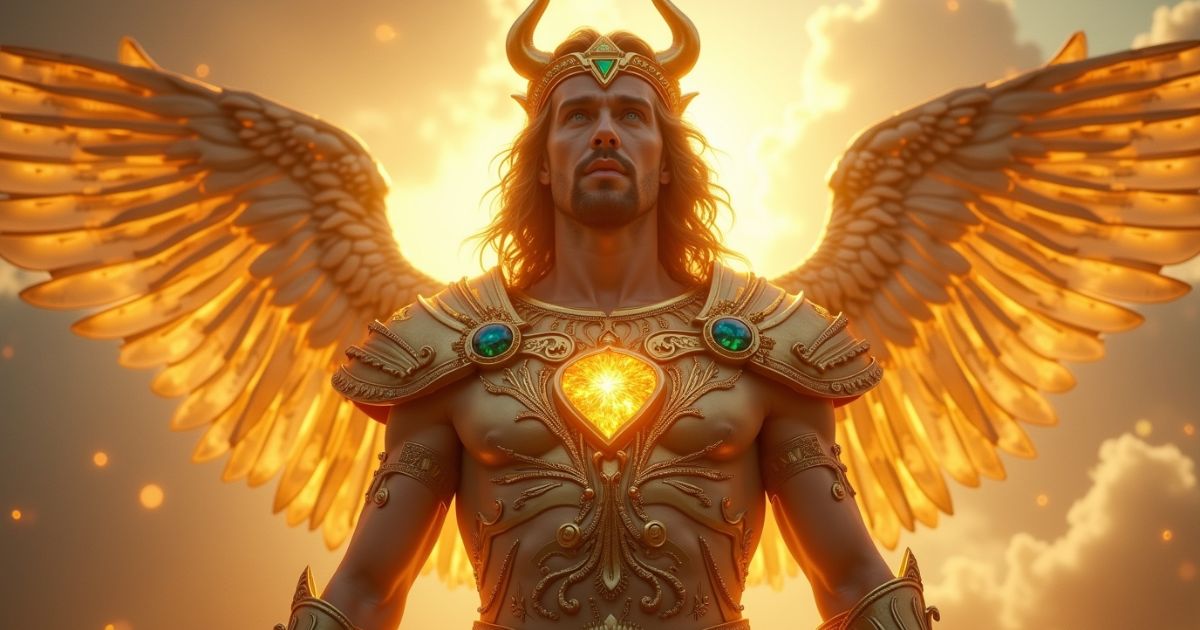
For centuries, the figure of Lucifer has dominated religious imagination. Yet most people know him through cultural filters not Scripture. The biblically accurate Lucifer differs dramatically from Halloween costumes. Red skin, pitchforks, and bat wings don’t appear anywhere in Hebrew texts. What you think you know? It’s probably wrong.
Let’s separate fact from fiction.
Biblically Accurate Understanding of Lucifer’s Identity
Understanding the biblical Lucifer requires linguistic archaeology. You can’t just read modern translations. The Hebrew original tells a different story than centuries of artistic license.
Common Misconceptions About Lucifer in Modern Culture
Walk into any costume shop in October. Red devils everywhere. Horns. Tails. Pitchforks. None of it biblical.
The automatic equation of Lucifer with Satan? Pure tradition. Isaiah 14:4 establishes context clearly: this passage taunts the King of Babylon. A human ruler. Not exclusively an angelic being.
Victorian theater gave us the red devil. Gounod’s opera Faust (1859) dressed the devil in red for stage visibility. That choice stuck. Now it’s everywhere from cartoons to advertisements.
Medieval European imagination crafted the horns and hooves. These features borrowed from pagan depictions of Pan. Not from Hebrew Scripture. Zero biblical foundation.
Here’s what culture gets wrong:
- Automatic Lucifer-Satan identification stems from interpretation, not explicit text
- Physical features originated in medieval art, not ancient manuscripts
- Red coloring came from 19th-century theater productions
- Demonic possession narratives confused the original pride-focused message
What Scripture Actually Reveals About Lucifer
Scripture stays surprisingly quiet about Lucifer specifically. Isaiah 14:12 stands alone. It’s the only verse in most English translations using “Lucifer” as a name.
The passage employs cosmic metaphor grand imagery illustrating a king’s dramatic downfall. Morning stars fall. Pride crumbles. Power evaporates.
Ezekiel 28:12-17 provides complementary details, though it addresses the King of Tyre. This text describes an anointed cherub of stunning beauty. Perfect wisdom. Adorned with precious stones. Walking among fiery stones on God’s holy mountain.
Whether these passages describe the same entity? Scholars debate it. Whether that entity is primarily angelic or human? Also debated.
The Hebrew Original: Helel and Its True Meaning
Hebrew matters here. Immensely.
Helel (הֵילֵל) appears exactly once in the entire Hebrew Bible. Isaiah 14:12. That’s it. The root word halal means “to shine” or “to boast.”
The complete phrase? “Helel ben Shachar” literally “shining one, son of dawn.” Ancient Near Eastern readers recognized this immediately. Venus. The morning star. That celestial body outshining all others before sunrise.
| Hebrew Element | Meaning | Significance |
|---|---|---|
| הֵילֵל (Helel) | Shining one | Root: to shine/boast |
| בֶּן־שָׁחַר | Son of dawn | Morning star reference |
| Frequency | Once | Isaiah 14:12 only |
| Context | King of Babylon | Human ruler imagery |
Venus provides the perfect metaphor. Brilliant glory that proves temporary. Derivative light not self-sustaining. It shines by reflecting the sun, then fades when greater light appears.
Jerome’s Latin Vulgate and the Birth of ‘Lucifer’
Translation creates theology sometimes. The late 4th century proves this.
Jerome translated the Hebrew Bible into Latin. When he encountered “Helel” in Isaiah 14:12, he chose “Lucifer.” This Latin word combines “lux” (light) and “ferre” (to bear). Light-bearer. Light-bringer.
Romans already used “Lucifer” for Venus in its morning appearance. Poetry depicted it as a torch-bearer heralding dawn. Jerome’s translation was linguistically accurate both “Helel” and “Lucifer” referenced the morning star.
But here’s the problem. He used “Lucifer” as a proper name. Not merely a descriptive title. That decision echoed through centuries. It embedded this Latin term into Western Christian consciousness permanently.
King James Translation and English Christian Tradition
Fast forward to 1611. King James Bible translators faced a choice.
They retained Jerome’s Latin “Lucifer” instead of translating it into English. “Morning star” would’ve worked. “Day star” too. They kept “Lucifer.”
“How art thou fallen from heaven, O Lucifer, son of the morning!”
Capitalization reinforced interpretation this described a specific fallen angel. Not celestial imagery for a human king’s downfall.
Modern translations diverge sharply:
| Translation | Isaiah 14:12 Rendering | Approach |
|---|---|---|
| King James Version | Lucifer | Preserves Latin tradition |
| New International Version | Morning star | Translates Hebrew meaning |
| English Standard Version | Day star | Prioritizes original context |
| New American Standard | Star of the morning | Direct Hebrew translation |
Only KJV and NKJV preserve “Lucifer” as a proper name. They maintain English-speaking Christian tradition while potentially obscuring Hebrew context.
Biblically Accurate Description of Lucifer’s Appearance

Scripture describes original magnificence in detail. Post-fall appearance? Total silence. That gap created space for artistic speculation and wild exaggeration.
Lucifer’s Pre-Fall Glory According to Ezekiel
Ezekiel’s prophecy offers comprehensive portraiture. Ezekiel 28:12-15 calls him “the seal of perfection.” Full of wisdom. Perfect in beauty.
The Hebrew phrase “chotem taknit” suggests a model. A pattern of completeness. This entity embodied the highest expression of divine craftsmanship.
Nine specific precious stones adorned him:
- Carnelian (red-orange brilliance)
- Topaz (golden yellow)
- Emerald (deep green)
- Chrysolite (golden-green)
- Onyx (layered black-white)
- Jasper (opaque variations)
- Sapphire (celestial blue)
- Turquoise (sky blue-green)
- Beryl (sea-green transparency)
All set in gold. Imagine that. Multi-faceted brilliance reflecting light infinitely. A walking, dazzling display of divine artistry.
His designation? Anointed guardian cherub. Highest rank among cherubim those beings guarding God’s holiness. Serving in His immediate presence.
| Aspect | Biblical Description | Meaning |
|---|---|---|
| Status | Seal of perfection | Model of completeness |
| Wisdom | Full of wisdom | Intellectual perfection |
| Beauty | Perfect in beauty | Aesthetic magnificence |
| Adornment | Nine precious stones | Multi-faceted brilliance |
| Position | Anointed guardian cherub | Highest angelic rank |
| Location | Holy mountain of God | Intimate divine proximity |
The Morning Star Imagery in Isaiah’s Prophecy
Isaiah employs different imagery celestial rather than physical. The morning star metaphor in Isaiah 14:12-15 emphasizes position and trajectory.
Venus shines as the last star visible before sunrise. It announces the coming day. Herald of dawn. This suggests a role of prominence among created beings.
But here’s the kicker. Venus fades when greater light appears. The sun overwhelms it completely. Temporary glory measured against overwhelming brightness.
This astronomical pattern becomes theological metaphor:
- Created glory, however magnificent, cannot sustain itself
- Dependence on the Creator’s light determines survival
- Derivative brilliance reflected, not generated
- Inevitable decline when measured against the Source
Does Lucifer Possess Physical Form After His Fall
Scripture’s post-fall silence contrasts sharply with pre-fall details. The New Testament indicates Satan exists as a spirit being. Ephesians 6:12 clarifies our struggle: “not against flesh and blood, but against rulers, authorities, powers of this dark world.”
No inherent physical form. Yet fallen angels apparently retain manifestation abilities.
2 Corinthians 11:14 warns: “Satan himself masquerades as an angel of light.” He can appear beautiful. Trustworthy. Perhaps resembling his original glory.
Genesis records angels appearing human-like. Revelation 12:3 describes symbolic appearance as a great red dragon seven heads, ten horns.
| Manifestation | Biblical Reference | Purpose |
|---|---|---|
| Angel of light | 2 Corinthians 11:14 | Deception |
| Serpent | Genesis 3 | Temptation |
| Human-like | Genesis 18:2, 19:1 | Angelic pattern |
| Great red dragon | Revelation 12:3 | Symbolic judgment |
What Biblical Silence Tells Us Lucifer Is Not
Understanding what Scripture doesn’t say matters enormously. The Bible never describes Lucifer with:
- Red skin
- Horns
- A pitchfork
- A tail
These theatrical additions emerged from European folklore. Renaissance drama. Not Hebrew or Greek texts.
Bat-like wings? Dante’s Inferno (1320), not biblical descriptions. Ezekiel 10 depicts cherubim with multiple faces and wings nothing bat-like.
Goat-like features conflate pagan Pan imagery with biblical angelology. No scriptural warrant whatsoever.
The association of Lucifer with flames? That confuses hell’s judgment with its future inhabitant’s personal form.
The biblically accurate Lucifer before his fall possessed extraordinary beauty. Wisdom. Radiant glory. Likely beyond human comprehension to fully envision.
Critical Distinction Between Lucifer and Satan in Scripture
Christian tradition frequently equates these names. Automatically. Yet careful examination reveals Scripture maintains distinctions that merit attention.
Biblical Evidence Supporting Their Distinction
Etymological and contextual differences suggest distinct emphases. “Lucifer” appears exactly once in the King James Bible. It translates Hebrew “Helel” a title describing brightness and glory.
Contrast that with “Satan.” This Hebrew word (שָׂטָן) appears 58 times across Scripture. It means “adversary” or “accuser.”
In the Hebrew Bible, “the satan” often appears with the definite article. This suggests a role or office not necessarily a personal name.
Job 1:6-12 and Zechariah 3:1-2 present “the satan” as a divine council member. Testing human faithfulness. Serving an accusatory function. This differs markedly from the prideful cherub in Ezekiel 28.
| Aspect | Lucifer (Isaiah/Ezekiel) | Satan (Job/NT) |
|---|---|---|
| Etymology | Light-bearer (positive) | Adversary (negative) |
| Frequency | Once | 58 times |
| Context | Fall from glory | Testing/accusing |
| Pre-fall role | Anointed guardian cherub | Not described |
| Downfall cause | Internal pride | N/A |
| Visual imagery | Morning star, gems | Lion, serpent, dragon |
How Christian Tradition Merged These Figures
The Lucifer-Satan identification developed gradually through interpretation. Not explicit biblical statement.
Origen of Alexandria (c. 185-254) stands among the first to allegorize Isaiah 14:12. He argued the language transcended human kings. It described Satan’s fall from heaven.
Medieval theology solidified this interpretation. It wove Isaiah 14, Ezekiel 28, and Revelation 12:7-9 into unified narrative. Angelic rebellion. One complete story.
Literary works amplified this tradition. Dante’s Inferno (1320) and Milton’s Paradise Lost (1667) presented “Lucifer” as Satan’s pre-fall name so compellingly. The equation embedded itself in popular imagination permanently.
The King James Bible’s retention of “Lucifer” as a proper name made identification seem biblically explicit. Despite Hebrew’s different implications.
Protestant Reformers’ Rejection of the Equation
Major Protestant Reformers explicitly rejected the Lucifer-Satan equation. This surprises many people.
John Calvin wrote regarding Isaiah 14:12: “The exposition of this passage, which some have given, as if it referred to Satan, has arisen from ignorance: for the context plainly shows these statements must be understood in reference to the king of the Babylonians.”
Martin Luther similarly considered it “a gross error to refer this verse to the Devil.”
These reformers committed to grammatical-historical interpretation. They recognized Isaiah 14:16 explicitly asks: “Is this the man who made the earth tremble?” The phrase “Is this the man” indicates human ruler address. Using cosmic imagery to amplify dramatic reversal.
Modern biblical scholars largely concur. They view the traditional equation as interpretive tradition not textual necessity.
Why This Theological Distinction Matters Today
Recognizing Lucifer-Satan distinction affects multiple interpretation dimensions.
Hermeneutical integrity requires respecting original context. When Isaiah 14:12 primarily addresses human kings whose pride mirrors cosmic rebellion? It serves as universal warning. About hubris’s dangers. More applicable than exclusively angelic rebellion stories.
Doctrinal clarity benefits from precision. The New Testament never uses “Lucifer” to refer to the adversary. Jesus speaks of “Satan” in Luke 10:18 and Luke 22:31. “The devil” in Matthew 4:1. “The evil one” in Matthew 13:19.
Never “Lucifer.”
This usage pattern should inform Christian understanding. And terminology.
Biblically Accurate Account of Lucifer’s Fall and Significance
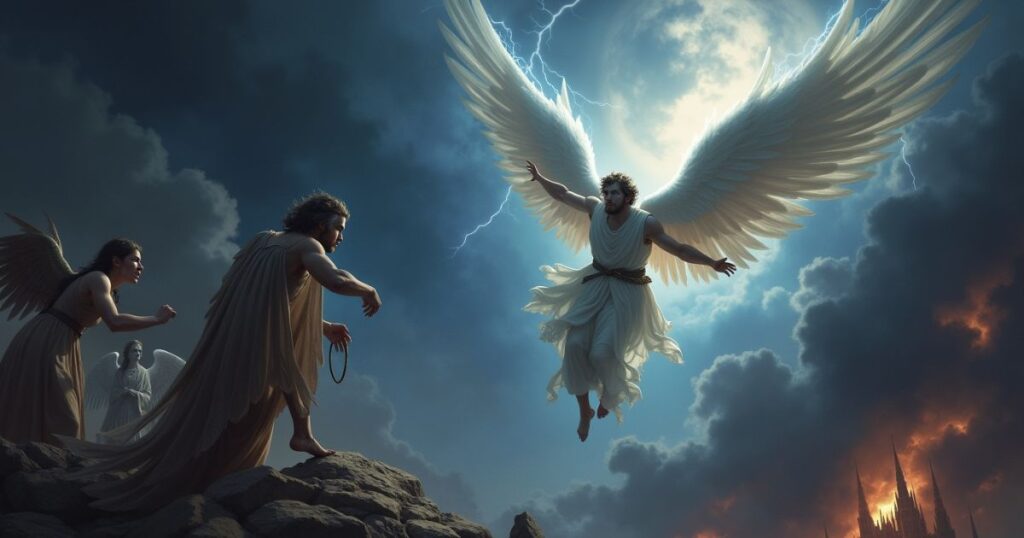
Lucifer’s fall from divine favor represents Scripture’s most profound exploration of pride. Free will. And catastrophic consequences of rebellion against God.
The Narrative of the Fallen Angel in Scripture
Scripture presents Lucifer’s story as progression. Perfection to corruption.
Ezekiel 28:12 establishes original state: “the seal of perfection, full of wisdom and perfect in beauty.” An anointed guardian cherub positioned on God’s holy mountain.
The text emphasizes: “You were perfect in your ways from the day that you were created.” Flawless moral character. Complete alignment with divine will.
The turning point? Ezekiel 28:15: “until unrighteousness was found in you.”
This marks the moment iniquity arose within perfect creation. Corruption emerged internally not through external temptation.
Ezekiel 28:16 describes expulsion: “I have cast you as profane out of God’s mountain. I have destroyed you, covering cherub, from the middle of the stones of fire.”
| Stage | Description | Reference |
|---|---|---|
| Creation | Perfect in ways | Ezekiel 28:15a |
| Corruption | Unrighteousness found | Ezekiel 28:15b |
| Pride emerges | Heart became proud | Ezekiel 28:17 |
| Rebellion | Five “I will” statements | Isaiah 14:13-14 |
| Expulsion | Cast from God’s mountain | Ezekiel 28:16 |
| Final state | Brought to Sheol’s depths | Isaiah 14:15 |
Lucifer’s Five ‘I Will’ Declarations of Pride
Isaiah 14:13-14 records five specific declarations. Each reveals progressive prideful ambition. Moving from subtle to blatant rebellion.
- “I will ascend to heaven” – Desire to rise to highest realm
- “I will raise my throne above the stars of God” – Claiming authority over angelic beings
- “I will sit enthroned on the mount of assembly” – Grasping divine council’s seat
- “I will ascend above the tops of the clouds” – Reaching for divine glory’s region
- “I will make myself like the Most High” – Ultimate blasphemy claiming God-equality
Notice the pattern. Each statement escalates. The sequence intensifies from spatial ascent to ultimate identity claim.
The climax? Making himself like God Himself. That’s the ultimate blasphemy.
The Nature of Sin: Pride in God-Given Perfection
Ezekiel 28:17 provides the diagnosis: “Your heart became proud on account of your beauty, and you corrupted your wisdom because of your splendor.”
Tragedy unfolds here. The very gifts God bestowed became sin’s occasion. Lucifer’s perfection rather than serving as eternal service foundation became a stumbling block.
The text indicates he “corrupted” his wisdom. He still possessed intellectual capacity. But he twisted it toward self-exaltation instead of truth.
This corruption arose internally. Not from external temptation like human sin following serpent deception. It emerged from misusing freedom inherent in perfect state.
Beauty meant to reflect God’s glory became self-worship object. Wisdom intended for divine service became prideful scheming tool.
Catastrophic Consequences of Angelic Rebellion
Consequence of Lucifer’s rebellion appears in multiple passages. Emphasizing dramatic reversal.
Ezekiel 28:16 records expulsion: “I drove you in disgrace from the mount of God, and I expelled you, guardian cherub, from among the fiery stones.”
Isaiah 14:15 describes descent: “brought down to the realm of the dead, to the depths of the pit.” From highest heaven to lowest degradation.
Public humiliation compounds reversal. Isaiah 14:16 portrays observers: “Is this the one who shook the earth and made kingdoms tremble?”
Loss of glory becomes complete. Isaiah 14:11 declares: “Your pomp is brought down to Sheol, the sound of your harps; maggots are laid as a bed beneath you, and worms are your covers.”
The Scope of Rebellion: One-Third of Angels
Revelation 12:3-4 describes cosmic rebellion of significant scope. “An enormous red dragon with seven heads and ten horns” whose “tail swept a third of the stars out of the sky.”
Stars often symbolize angels in Scripture. Verse 9 identifies this dragon as “that ancient serpent called the devil, or Satan.”
Many interpreters understand this: one-third of the angelic host joined rebellion.
If this passage describes Lucifer’s fall? It magnifies catastrophe’s scope dramatically. His rebellion wasn’t solitary. He persuaded substantial portions of heaven’s angels. To join insurrection against God.
This demonstrates pride and deception’s persuasive power. And rebellion’s contagious nature once rooted.
Proverbs 16:18 warns: “Pride goes before destruction, and an arrogant spirit before a fall.” A principle illustrated at cosmic scale. By Lucifer’s catastrophic descent.
Artistic Evolution of Lucifer’s Image Throughout History
Artistic representations transformed dramatically across centuries. Reflecting cultural anxieties more than scriptural description. Theological emphases. Aesthetic sensibilities.
Early Medieval Period: The Ethereal Blue Angel
Early medieval art emphasized Lucifer’s pre-fall glory. Portraying him as ethereal blue angel. Divine beauty. Perfection.
Byzantine and early medieval artists (beginning 6th century) used blue coloring to signify heavenly origin. Truth. Divine favor. In their iconography.
Lucifer appeared with delicate features. Flowing robes. Sometimes radiant halos. Visually indistinguishable from other angels. Except contextual placement in rebellion scenes.
The famous 6th-century mosaic at Sant’Apollinare Nuovo in Ravenna, Italy, shows angelic figures. In celestial blue. Representing divine court before the fall.
This pure appearance symbolized divine craftsmanship before corruption. Visual theology emphasizing evil wasn’t created evil. It became corrupted through choice.
High Medieval Transformation to Grotesque Forms
As the High Middle Ages progressed (14th century)? Lucifer’s image darkened significantly.
The Black Death. Widespread social upheaval. Intensified focus on hell and judgment. All influenced artistic representations.
Works began portraying him grotesque. Transitional figure between angel and demon. Often with bat-like wings. Features indicating corrupted state.
These depictions found inspiration in narratives like Dante’s Inferno (1320). Which described Satan frozen in ice. At hell’s lowest point. With three faces weeping. Bat-like wings.
The Codex Gigas (c. 1229) one of largest medieval manuscripts contains full-page illustration. “The devil” with red horns. Green face. Red talons. Sharp teeth. Two tongues.
Renaissance Romanticization: Milton’s Tragic Rebel
John Milton’s Paradise Lost (1667) revolutionized Lucifer’s image completely.
He transformed him from grotesque monster to tragic, charismatic military leader. Milton portrayed him as Adonis-like figure. Compelling beauty even in rebellion. Possessing dignity. Eloquence. Complex motivations.
His famous line? “Better to reign in Hell than serve in Heaven.”
This transformed Lucifer from cautionary tale into anti-hero. Exploring freedom themes. Tyranny. Individual choice.
This literary portrayal profoundly influenced subsequent artists. William Blake (1757-1827) illustrated Paradise Lost. Images of Satan as muscular, handsome figure. God-like physique. Suggesting power and beauty even in damnation.
Gustave Doré (1832-1883) created dramatic engravings. For Dante’s Inferno and Milton’s works. Depicting Lucifer/Satan with majestic, terrible beauty. Fallen prince rather than mere monster.
Victorian Era Through Modern: The Theatrical Red Devil
The 19th century saw the theatrical “red devil” image popularization. Complete with horns. Tail. Pitchfork.
This imagery arose from stage productions. Like Gounod’s opera Faust (1859). Where the devil appeared in red costumes. For dramatic stage visibility.
This theatrical convention repeated across countless productions. Embedded itself in popular culture permanently.
By the 20th century? The red devil became default Halloween costume. Far removed from biblical description. And earlier artistic traditions.
Modern depictions vary wildly. Horror films present grotesque, monstrous forms. Contemporary Christian art returns to angelic imagery. Emphasizing the fall. Fantasy literature creates original interpretations. Ranging from sophisticated tempters to cosmic villains.
Contrasts Between Artistic and Biblical Portrayals
The gap between biblical texts and artistic portrayals reveals how cultural fears shaped visual representations. And theological allegories.
Scripture emphasizes perfect beauty. Wisdom. Tragic pride. Artists crafted visuals overly influenced by era anxieties.
The Bible describes “seal of perfection” covered with precious stones. Medieval art rarely depicted specific gemstones accurately.
Ezekiel describes “corrupted wisdom” intellectual and moral descent. Artistic works focus on physical destruction. External monstrosity.
The transition from angelic feathered wings to demonic bat-wings? No scriptural basis. Arising instead from Dante’s literary invention.
This evolution occurred due to:
- Theological need for visual distinction
- Cultural fears about demons and Satan’s influence
- Limited biblical details leaving gaps for interpretation
- Pedagogical function for largely illiterate populations
- Literary influence eclipsing original biblical imagery
Theological Insights from a Biblically Accurate Lucifer
Lucifer’s narrative raises profound questions. About free will. Evil’s origin. Pride’s nature. Cosmic rebellion implications.
The Paradox of Created Perfection and Free Will
How could a perfect being choose evil? The answer lies in free will’s gift and risk.
God created Lucifer with genuine autonomy. Freedom to choose obedience or rebellion. Without this freedom? Lucifer would’ve been merely automaton. Incapable of authentic relationship. Genuine worship.
Yet this gift carries immense risk. Possibility of choosing good necessitates possibility of choosing evil.
Theologians distinguish between “perfection” (created without defect) and “confirmed in goodness” (tested and proven). Lucifer was created perfect. But not yet confirmed in righteousness through testing.
When faced with choice between humble service and proud self-exaltation? His character revealed itself. Perfection proved fragile.
The Origin of Evil Within a Perfect Being
Unlike human sin (entering through external temptation when serpent deceived Eve)? Lucifer’s sin arose from within.
No one tempted him. Corruption emerged from his own heart. As he contemplated his glory.
Ezekiel 28:15 marks turning point: “You were perfect in your ways from the day that you were created, until unrighteousness was found in you.”
This demonstrates evil isn’t substance. Or created thing. It’s privation. Turning away from good. Corruption of original perfection.
Lucifer didn’t become opposite being. He became corrupted version of what he was created to be.
Evil emerged as he redirected worship. From Creator to creation. From God to self.
Pride’s Specific Temptation: Giftedness and Position
Lucifer’s sin provides clearest biblical case study. Of pride in purest form.
Ezekiel 28:17 specifies: “Your heart became proud on account of your beauty, and you corrupted your wisdom by reason of your splendor.”
The gift became idol. The tool became end. This warns everyone blessed with talent. Intelligence. Beauty. Opportunity. These gifts are stewardships. Not possessions.
As guardian cherub on God’s holy mountain? Lucifer held highest created rank. Rather than seeing this as responsibility? He saw it as deserving proof.
Proximity to God’s throne made him covet the throne itself.
Church history provides repeated examples. Those closest to sacred things falling into worst corruption. Clergy who abuse office. Worship leaders who perform rather than worship. Theologians who trust intellect over revelation.
Cosmic Implications: Corrupting Others and Spiritual Warfare
Lucifer’s rebellion had consequences beyond personal fall.
Revelation 12:4 indicates one-third of angelic beings followed him. Demonstrating personal sin rarely remains personal. It metastasizes. Drawing others into destruction.
His pride became contagious. His deception persuasive.
The fallen Lucifer now operating as Satan and demons continues active opposition. To God’s purposes. The beautiful guardian became the adversary. The covering cherub became the accuser.
What he cannot possess? He seeks to destroy.
1 Peter 5:8 warns: “Your adversary, the devil, walks around like a roaring lion, seeking whom he may devour.”
Lucifer’s fall inaugurated cosmic conflict. That continues until God’s final judgment. With humans now occupying contested space.
Lessons for Humanity: Humility and Dependence on God
While Lucifer’s story describes angelic being? Scripture presents it as warning to humans. Particularly those in power positions. And privilege.
Lucifer forgot his dependent status. Mistaking derived glory for inherent glory. Humans face same temptation. Seeing achievements as self-made. Rather than God-enabled.
The antidote to Lucifer’s pride? Humility. Not false modesty. But accurate self-assessment.
Romans 12:3 instructs: “Do not think of yourself more highly than you ought, but rather think of yourself with sober judgment.”
This sober judgment acknowledges both God-given gifts. And total dependence on the Giver.
Lucifer’s five “I will” statements resulted in complete reversal. Prideful ambition self-destructs.
Unlike humans (who receive repentance opportunity through Christ)? Fallen angels receive no redemption. Matthew 25:41 describes “eternal fire prepared for the devil and his angels.”
Summary: The Biblically Accurate Lucifer
The biblically accurate Lucifer emerges from Scripture as a figure of unparalleled beauty, wisdom, and tragedy. Understanding him requires careful attention to limited biblical texts primarily Isaiah 14:12-15 and Ezekiel 28:12-17.
“Lucifer” appears only once in the King James Bible. Translating Hebrew “Helel” (shining one). In a passage addressing the King of Babylon. Using cosmic imagery.
Ezekiel presents him as “seal of perfection.” Anointed guardian cherub adorned with nine precious stones. Walking among fiery stones on God’s holy mountain.
Pride in his beauty and wisdom led to corrupt ambition. Isaiah 14:13-14 records five “I will” declarations. Expressing desire to ascend above God’s throne. Make himself like the Most High.
Result? Expulsion from heaven. Catastrophic fall from glory to degradation.
While Christian tradition equates Lucifer with Satan? Scripture itself makes no explicit identification. Protestant Reformers like Calvin and Luther rejected this connection.
Scripture provides no post-fall appearance description. As spirit being, he possesses no fixed physical form. Though he can manifest variously.
Popular red devil image has no biblical basis. Arising from medieval art. Theatrical tradition.
Visual representations transformed dramatically. From ethereal blue angels in early medieval art. To grotesque demons in High Middle Ages. To romanticized rebels in Milton’s Paradise Lost. To theatrical red devils in Victorian opera.
Lucifer’s fall demonstrates even perfect created beings with free will can choose rebellion. His pride taking credit for God-given beauty and wisdom serves as universal warning. Against self-exaltation.
His story reminds humanity: all created beings depend on their Creator. Attempting independence from God leads to catastrophe.
The passage from morning star to fallen adversary reveals pride’s trajectory. Unchecked by humility. A celestial mirror showing the path every human must avoid.