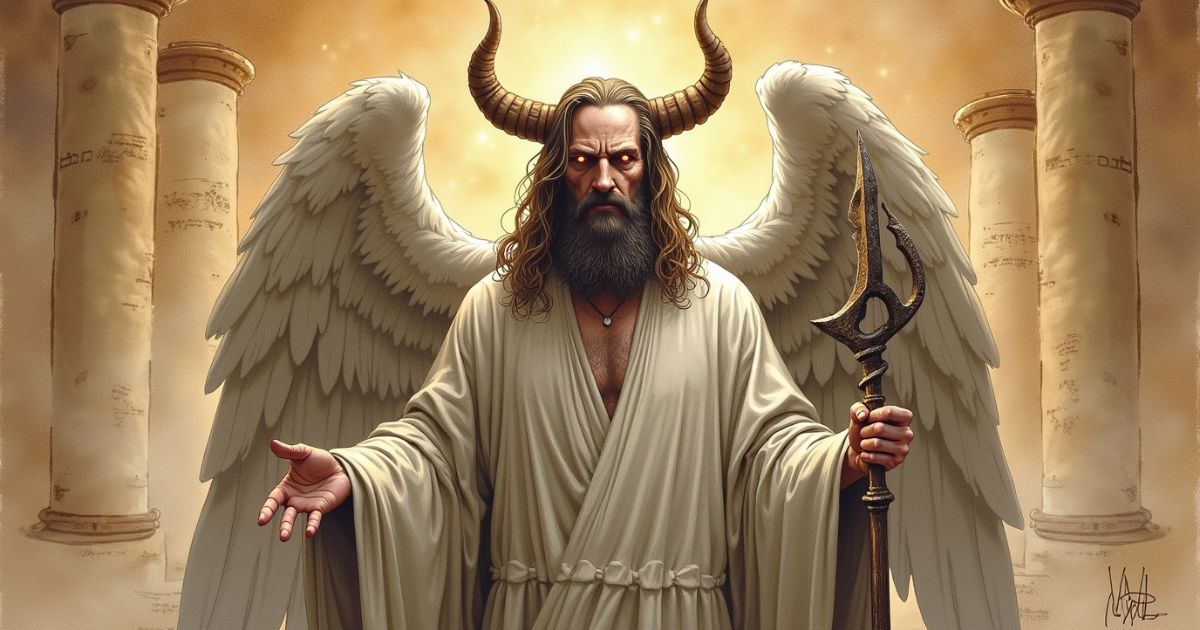
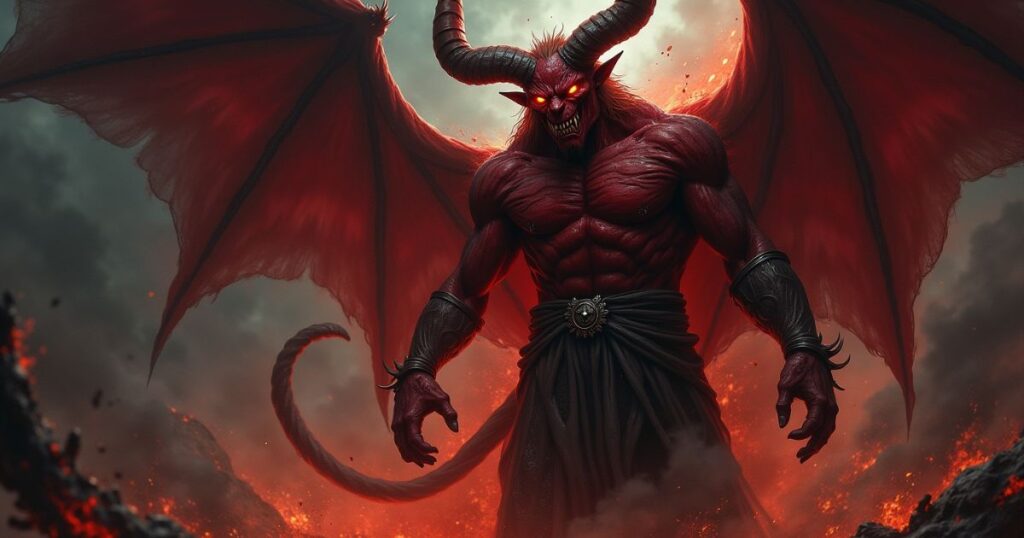
You’ve probably seen the classic image: red skin, horns, pitchfork, bat wings. That’s Satan, right? Wrong. The biblical description of Satan bears almost no resemblance to this theatrical costume. When you dig into what Scripture actually says, you’ll discover something far more unsettling than medieval artwork ever captured.
Most people assume they know who Satan is. They’ve absorbed centuries of artistic license, literary embellishment, and cultural mythology. But here’s the catch: the Bible itself provides minimal physical description while obsessing over character and function. Let’s strip away the accumulated layers and examine what Scripture genuinely reveals about this adversarial figure.
Understanding the Biblically Accurate Satan in Scripture
The Hebrew Concept of Ha-Satan
The term “Ha-Satan” literally translates to “the Adversary.” Notice that definite article? It’s crucial. This isn’t a personal name it’s a job description, a role within God’s heavenly court.
Job 1:6-12 gives us the clearest picture. Satan shows up when “the sons of God came to present themselves before the LORD.” He’s part of the divine council, functioning as a prosecutor. When God points to Job’s righteousness, Satan challenges the motivation: “Does Job fear God for nothing?”
Here’s what blows most people’s minds: Satan can’t do anything without explicit divine permission. God grants authority over Job’s possessions but forbids physical harm. Satan operates within strict boundaries. He’s not some autonomous rebel waging independent warfare he’s a tester of faith working under management.
The Old Testament consistently portrays Ha-Satan as subordinate. Testing human righteousness? Check. Exposing false piety? Absolutely. Running an independent evil empire? Not even close.
Satan’s Transformation Across Biblical Texts
Scripture doesn’t contradict itself regarding Satan. It expands the portrait, adding layers of complexity.
Genesis 3:1-5 introduces the ancient serpent who deceives Eve through subtle questioning. “Did God actually say…?” This manipulation introduces sin through casting doubt on God’s goodness. Revelation 12:7-9 later identifies this serpent explicitly with Satan, creating narrative continuity from Eden to apocalypse.
The metaphorical identities multiply: serpent, dragon, lion, accuser, angel of light. Each captures different facets of the threat. Deception. Predation. Accusation. Chaos. These roles weave together a multifaceted adversary whose complexity defies simplistic categorization.
1 Peter 5:8 warns about the “roaring lion seeking someone to devour.” John 8:44 calls him “the father of lies.” Revelation depicts the great dragon waging cosmic warfare. Different images, consistent character: opposition through deception.
Distinct Roles Across Old and New Testaments
The intensity increases from Old to New Testament. Job presents a courtroom adversary. The Gospels reveal an active tempter manipulating Scripture itself during Christ’s wilderness testing.
Jesus faces three strategic temptations in Matthew 4:1-11. Physical need after forty days of fasting. Manipulation of Psalm 91:11-12 to encourage testing God’s protection. A political shortcut bypassing the cross through Satan worship.
Notice the progression: legitimate need, scriptural distortion, ultimate blasphemy. Satan’s tactics grow bolder, yet he still operates within divinely established parameters. Even this direct assault on the Son of God unfolds because “Jesus was led up by the Spirit into the wilderness to be tempted.”
The New Testament intensifies without fundamentally altering Satan’s subordinate status. He prowls, but cannot compel. He tempts, but cannot override human agency. His power remains derivative, exercised only within boundaries God permits.
Characteristics of the Biblically Accurate Satan
Satan’s Functions and Symbolic Significance
Zechariah 3:1-2 shows Satan bringing accusations against Joshua the High Priest. This forensic function tests covenant community righteousness, distinguishing genuine faith from superficial religiosity.
The rebel imagery in passages traditionally linked to Satan Isaiah 14 and Ezekiel 28 warns against pride’s destructive consequences. Whether originally addressing human kings or angelic beings, their application to Satan emphasizes how exalting oneself above God leads inevitably to downfall.
Pride corrupts wisdom. Beauty transforms into ruin. Splendor becomes ash. These patterns reveal Satan’s character trajectory more than any physical description ever could.
Satan’s primary functions include:
- Prosecuting righteousness in God’s heavenly court
- Deceiving through subtle manipulation of truth
- Tempting humans away from divine obedience
- Accusing believers before God’s throne
- Testing faith to expose its authenticity
Biblical Descriptions and Metaphorical Imagery
Here’s what shocks most readers: Scripture deliberately obscures Satan’s physical appearance. Ezekiel 28:12-17 mentions original perfection and beauty, yet focuses on pride’s corrupting influence rather than literal features.
The great dragon symbolizes chaos and destructive power. The roaring lion represents relentless predatory pursuit. The serpent embodies cunning deception. The angel of light warns against attractive evil.
These varied images resist consolidation into single visual representation. That’s intentional. Scripture prioritizes function over form, warning believers to recognize deception regardless of packaging. Evil rarely announces itself clearly but masquerades as righteousness.
2 Corinthians 11:14 states explicitly: “Satan disguises himself as an angel of light.” Appearance means nothing. Character reveals everything.
The Adversary’s Operational Boundaries
Despite fearsome imagery, Satan operates within strict divine constraints. The Job narrative establishes the pattern: request permission, receive specific authorization with clear limits, cannot exceed boundaries God establishes.
Luke 4:1-13 shows the wilderness temptation occurring because the Spirit led Jesus there. Divine orchestration, not autonomous satanic initiative. Even Satan’s most direct assault on God’s Son unfolds within permitted parameters.
This framework governs all satanic activity throughout Scripture. Satan must ask. God authorizes. Boundaries exist. Exceeding them? Impossible.
Critical limitations include:
- Cannot act without God’s explicit permission
- Operates within divinely established boundaries only
- Lacks power to compel sin or override agency
- Remains subordinate despite apparent opposition
Deception as Primary Tactic
Paul’s warning about Satan disguising himself as an angel of light reveals his fundamental strategy. Evil doesn’t appear as obvious evil. It’s attractive, reasonable, even righteous-seeming.
The Genesis serpent doesn’t announce wickedness. It asks subtle questions casting doubt on God’s goodness while promising enlightenment. “You will be like God, knowing good and evil.”
Christ’s temptation demonstrates this sophisticated deception. Satan quotes Psalm 91:11-12 during the second temptation, manipulating Scripture itself to serve deceptive ends. Surface-level biblical language conceals poisonous intent.
The father of lies operates through half-truths, context manipulation, and appealing distortions. Obvious falsehoods? Too easy to spot. Subtle twisting of divine truth? That’s the real danger.
Biblical Versus Cultural Depictions of Satan
Literary and Artistic Influences on Satan’s Image
Milton’s Paradise Lost fundamentally reshaped Western imagination. Satan becomes a tragic figure whose rebellion against tyranny evokes sympathy. “Better to reign in hell than serve in heaven” presents the adversary as charismatic military leader.
This romanticization contradicts Scripture’s consistent portrayal. The biblical Satan operates under divine authority, not against it. He’s deceiver and accuser, not freedom fighter.
Medieval artists borrowed from pagan imagery. Pan’s goat features. Baal’s horns. Composite monsters designed to evoke fear. Effective for teaching? Absolutely. Scripturally founded? Not remotely.
Major cultural influences corrupting biblical accuracy:
- Milton’s tragic rebel characterization
- Medieval borrowing from Pan and Baal
- Dante’s bat wings from Babylonian mythology
- 1859 Faust opera establishing red coloration
Historical Development of Visual Representations
Ancient Hebrew texts provided zero physical description. Function mattered. Appearance didn’t.
The sixth-century Ravenna mosaic showed an ethereal blue angel. Still maintaining angelic quality despite representing evil. By late medieval period, depictions had become increasingly monstrous.
The Smithfield Decretals incorporated cloven hooves, tails, webbed hands borrowed from various animals. Dante’s fourteenth-century Inferno contributed bat wings. Renaissance strengthened goat associations through Matthew 25:31-46’s sheep-goat separation. Theatrical productions established red coloration through 19th-century opera.
Each era added layers. Each addition moved further from Scripture. The accumulation created detailed iconography with zero biblical foundation.
Modern Media’s Portrayal of the Adversary
Contemporary media frequently presents Satan as sympathetic anti-hero. Television series strip away supernatural elements entirely, focusing on psychological or symbolic interpretations reducing Satan to metaphor for human evil.
This cultural Satan challenges religious hypocrisy, represents individual autonomy against authority, or embodies sophisticated philosophical evil. Culturally relevant? Perhaps. Biblically accurate? Absolutely not.
The biblical emphasis on Satan’s subordination to God’s sovereignty disappears. Equal opposing forces replace divine sovereignty. Dualistic struggle supplants permitted testing within boundaries.
Key Differences Between Scripture and Culture
Scripture presents an adversary operating under God’s permission, testing human faithfulness within strict boundaries. Culture depicts autonomous rebel waging independent warfare, often portrayed sympathetically as freedom fighter.
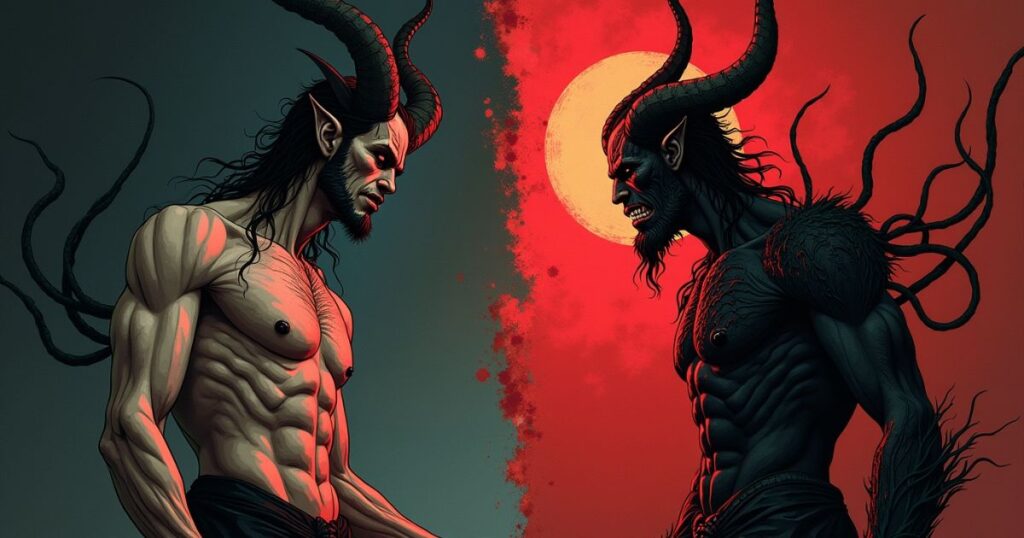
Biblical Satan: Subtle, angelic, or ambiguous appearance
Cultural Satan: Horned, grotesque, fiery, red-suited monstrosity
Biblical Satan: Deceptive and cunning character
Cultural Satan: Charismatic and openly defiant personality
Biblical Satan: Subordinate to divine authority
Cultural Satan: Independent force rivaling God’s power
The contrast reveals fundamental theological differences with profound practical implications.
The Lucifer Debate: Biblically Accurate Analysis
Etymology and Translation History
Here’s a shocker: “Lucifer” appears nowhere in the original Hebrew Bible. It derives from Jerome’s Latin Vulgate translation of Isaiah 14:12, where “Helel ben Shachar” (shining one, son of dawn) became “Lucifer.”
In Latin, this term simply meant “light-bearer” referring to Venus as morning star. Zero inherently evil connotations. The connection to Satan emerged through later theological interpretation, not original textual meaning.
The Hebrew used common astronomical language describing the morning star’s appearance before sunrise. This metaphorical usage for earthly rulers who rose to prominence only to fall was typical in ancient Near Eastern literature.
Isaiah 14: Addressing Babylon’s King
Careful reading reveals explicit identification. Isaiah 14:4 states clearly: “you will take up this proverb against the king of Babylon.” The chapter employs poetic imagery describing a tyrannical earthly ruler’s downfall.
Isaiah 14:16 emphasizes: “Is this the man who made the earth to tremble?” Explicitly identifying a human subject. The repeated emphasis on “the man” cannot be reconciled with theories describing an angelic being.
The hubris in verses 13-14 “I will ascend into heaven” and “I will be like the Most High” represents typical ancient Near Eastern royal pretension to divine status. Not literal angelic rebellion.
Contextual evidence includes:
- Explicit identification: king of Babylon (14:4)
- Human identity emphasized: “the man” (14:16)
- Hyperbolic language typical of prophetic literature
- No mention of angelic or supernatural nature
Ezekiel 28: The Tyre Connection
Ezekiel 28:2 opens with God instructing Ezekiel to address “the prince of Tyre,” emphasizing “you are but a man, and no god.”
The passage employs hyperbolic imagery. The king as having been “in Eden, the garden of God” and as an “anointed guardian cherub.” Yet maintains human identification throughout.
Ezekiel 28:19 concludes: “you will exist no more.” Past-tense finality describing completed historical event, not ongoing spiritual existence. Both Isaiah 14 and Ezekiel 28 sit within larger prophetic sections addressing various nations and rulers, using cosmic imagery as literary device.
Development of the Satan-Lucifer Association
The connection emerged primarily through interpretations by early Church Fathers including Origen and Tertullian in second and third centuries. Reading these texts typologically, they saw prefigurements of Satan’s rebellion in earthly kings’ pride and downfall.
By medieval period, this interpretive tradition had solidified into standard Christian teaching. Development occurred alongside elaborating Christian angelology and demonology, heavily influenced by intertestamental literature like the Book of Enoch.
These non-canonical texts provided detailed narratives of angelic rebellion absent from Scripture itself. The cumulative effect created robust tradition despite questionable scriptural foundation.
Jesus’s Statement on Satan’s Origin
John 8:44 provides crucial evidence. Jesus declares Satan “was a murderer from the beginning” and “does not stand in the truth, because there is no truth in him.”
“From the beginning” suggests Satan’s nature was consistently evil from origin. If Satan was created as glorious angel who later fell, there would have been a truthful, non-murderous period. Jesus’s statement indicates no such transition.
This either challenges the fallen angel narrative or requires interpreting “the beginning” as some point after creation but before human history. A reading requiring added content not present in text.
Theological Understanding of the Biblically Accurate Satan
Satan’s Function in Biblical Narratives
Job establishes Satan’s primary function as tester of faith operating within divine council. God points to Job’s righteousness. Satan challenges whether devotion stems from genuine love or transactional calculation.
The Genesis serpent introduces sin through subtle manipulation, questioning God’s word and casting doubt on divine goodness. Revelation 12:9 retrospectively identifies this serpent with Satan, creating narrative continuity from humanity’s fall through cosmic spiritual warfare.
Each appearance serves to test, accuse, or tempt. Always within boundaries God establishes. Always for purposes that ultimately serve redemptive ends.
Detailed Examination of Key Passages
Matthew 4:1-11 reveals Satan’s tactical sophistication. First temptation appeals to legitimate physical need after forty days of fasting. Second manipulates Scripture itself, quoting Psalm 91 to encourage testing God’s protection. Third offers political shortcut to messianic mission.
Jesus’s consistent response “It is written” demonstrates Scripture’s power when rightly applied against deceptive manipulation. Each temptation defeated not through power displays but through submission to God’s word.
This pattern establishes the model for believers facing satanic deception: biblical knowledge, spiritual discernment, unwavering trust in God’s provision.
Interpretations Across Christian Traditions
Orthodox Christianity emphasizes Satan as fallen angel who through pride distanced himself from divine light. Iconography portrays him as dark and shadowy, symbolizing estrangement from heavenly grace.
Catholic thought situates Satan within broader spiritual combat context, emphasizing daily resistance through repentance and sacramental grace. Protestant traditions stress Satan as deceiver whose influence pervades spiritual and earthly dimensions.
Non-denominational churches often balance literal and symbolic interpretations, focusing on Christ’s triumph as source of hope for believers facing ongoing spiritual warfare.
Comparative Religious Perspectives on the Biblically Accurate Satan
Jewish Understanding of Ha-Satan
Jewish theology maintains Ha-Satan as title indicating role within God’s heavenly court rather than personal name. This prosecutor tests human righteousness and exposes false piety while remaining subordinate to divine authority.
No rebellion narrative exists. Angels in Jewish thought lack free will and cannot rebel against God. Rabbinic literature sometimes identifies Satan with yetzer hara, the evil inclination representing internal human struggle with temptation.
This psychological interpretation understands “Satan” as symbolic of humanity’s capacity for wrongdoing rather than external demonic entity. Emphasis remains on human moral responsibility and God’s singular sovereignty.
Islamic Conception of Iblis
Islamic tradition presents Iblis as jinn created from smokeless fire rather than fallen angel created from light. Unlike angels who lack free will, jinn possess capacity for choice.
Iblis’s refusal to bow to Adam when commanded by Allah stemmed from pride: “I am better than him. You created me from fire and created him from clay.”
For this disobedience, Iblis was expelled from paradise but granted respite until the Day of Judgment. During this period, he’s permitted to tempt humans. Islamic theology maintains strict monotheism, emphasizing Iblis operates only by Allah’s permission.
Cross-Tradition Comparative Analysis
All three Abrahamic faiths present an adversarial figure who tests human faithfulness. Yet differ fundamentally on nature and origin.
Judaism maintains Satan as role without rebellion narrative. Christianity traditionally views Satan as fallen angel, though alternative interpretations exist. Islam presents Iblis as jinn with free will who disobeyed through pride.
Despite differences, all three traditions emphasize divine sovereignty over evil, rejecting dualistic frameworks presenting equal opposing forces.
Zoroastrian Influence on Development
Satan’s development from divine court prosecutor in early Hebrew texts to cosmic force of evil in later writings likely reflects Zoroastrian influence during intertestamental period.
Zoroastrianism’s dualistic framework Ahura Mazda opposed by Angra Mainyu may have shaped evolving concepts of Satan as God’s cosmic opponent. Persian religious influence occurred during and after Babylonian exile in sixth century BCE.
Apocalyptic literature of intertestamental period shows increasingly elaborate demonology and more powerful, independent Satan figure. Understanding cross-cultural influences reveals how “biblically accurate Satan” depends significantly on which texts one prioritizes.
Read More: Lumon: Illuminating Your Path to Modern Brilliance
Scholarly Debate: Satan’s Angelic Origin
Traditional Fallen Angel Position
Majority position throughout Christian history holds Satan was created as glorious angel who rebelled through pride and was cast from heaven. This interpretation draws from Isaiah 14:12-15’s “fallen from heaven” language.
Ezekiel 28:12-17 describes being “perfect in your ways from the day you were created, till unrighteousness was found in you.” Luke 10:18 records Jesus stating “I saw Satan fall like lightning from heaven.”
Jude 6 and 2 Peter 2:4 reference angels who “did not stay within their own position of authority.” Traditional view emphasizes God created all things good, with evil emerging through misuse of free will.
Alternative Created Adversary View
Minority but growing scholarly position argues Satan was created from the beginning as adversary, functioning within God’s plan but never possessing originally righteous state.
John 8:44 states the devil “was a murderer from the beginning.” If Satan was once truthful, non-murderous angel, Jesus’s words would be misleading.
Careful contextual reading shows Isaiah 14 and Ezekiel 28 explicitly address human kings. Job presents Satan already fulfilling adversarial role with no backstory of former righteousness.
Theological Implications of Each Perspective
If Satan is fallen angel, evil originates from misuse of creaturely free will. Tragic element exists: something good corrupted. This preserves creaturely moral responsibility while raising questions about God’s foreknowledge.
If Satan was created as adversary, evil operates strictly within boundaries God established. No created good thing became evil. God’s creative work remains intact, though mystery of evil’s origin persists.
Neither position fully resolves the philosophical problem of evil. Both require accepting mystery regarding aspects of God’s purposes beyond human comprehension.
Tradition Versus Textual Analysis
This debate centers on relationship between church tradition and textual interpretation. Fallen angel narrative is deeply embedded in Christian theology, liturgy, art, and popular belief.
Modern textual criticism emphasizes reading passages in immediate literary and historical context. When Isaiah 14 and Ezekiel 28 are read within prophetic context as oracles against specific kingdoms, Satan connection appears imposed rather than inherent.
Different Christian communities answer differently, leading to varying conclusions about Satan’s origin.
Practical Applications for Believers
This debate affects how believers understand spiritual warfare, prayer, temptation’s nature, and God’s character. Viewing Satan as rebel waging autonomous war leads to spiritual warfare models emphasizing binding Satan.
Viewing Satan as agent within God’s sovereign plan emphasizes submission to God and resistance through faith. Nature of temptation shifts: external fallen angel or divinely permitted adversarial testing?
Understanding both perspectives enriches theological reflection and encourages careful, context-aware biblical interpretation.
Cultural Impact of the Biblically Accurate Satan
Influence on Religious Practices
Perception of Satan drives diverse religious practices across traditions. 1 Peter 5:8 comparing Satan to roaring lion inspires emphasis on vigilance and faith. During Lent, self-discipline mirrors Jesus Christ’s triumph over desert temptation.
2 Corinthians 11:14 highlighting Satan appearing as angel of light stresses need for discernment. Believers question motives and appearances guided by scriptural wisdom rather than cultural myths.
Catholic tradition employs exorcisms and resisting the evil one. Protestant emphasis falls on overcoming moral struggles. Orthodox Christianity emphasizes divine morality to combat sin.
Spiritual Warfare Approaches
Understanding Satan impacts how believers engage spiritual warfare. Those viewing Satan as defeated foe approach spiritual battles with confidence in God’s ultimate authority.
Protestant evangelical traditions emphasize active resistance through prayer, fasting, and invoking Christ’s authority. These practices draw from Ephesians 6:10-18’s armor of God and James 4:7’s instruction to resist the devil.
Catholic tradition approaches warfare sacramentally through baptism, Eucharist, and formal exorcism rites. Orthodox Christianity integrates warfare into liturgical life through Jesus Prayer, fasting, and icon veneration.
Contemporary Cultural Manifestations
Beyond religious circles, modern usage of Satan’s image has infiltrated art, literature, and media. Artistic representations often strip away scriptural complexity, recasting the ancient serpent into symbol of rebellion or freedom.
Movies and television present him sympathetically as misunderstood rebel. Sometimes portrayed as more moral than hypocritical religious figures. This inversion directly contradicts biblical portrayal.
Music and art shift between beautiful and fallen imagery. Political rhetoric uses Satan imagery to demonize opponents. These manifestations serve cultural commentary but bear little resemblance to Scripture’s adversary.
Psychological Effects of Satan Belief
Belief in Satan correlates with moral clarity through clear external evil source. Yet may reduce personal moral responsibility. Shared belief in common spiritual enemies strengthens community bonds but can increase hostility toward outsiders.
Believing Satan causes hardship provides explanatory comfort but may reduce motivation to address systemic problems. Understanding biblical Satan particularly Old Testament model of adversary operating under God’s sovereignty may offer healthier psychological framework than medieval depictions.
Synthesizing the Biblically Accurate Satan
The biblically accurate Satan emerges not as horned, red-suited devil but as complex spiritual entity whose appearance remains deliberately obscured. Scripture emphasizes function over form, character over physical features.
Ha-Satan operates as divine prosecutor within God’s heavenly court, testing human faithfulness under direct authorization. Job provides clearest example: Satan challenges righteousness but cannot act without God’s permission.
Progression through Scripture shows characterization developing from prosecutorial role to forceful opposition in New Testament. Physical descriptions remain minimal and metaphorical. Cultural depictions have strayed dramatically from biblical foundation.
The Lucifer controversy represents disconnect between popular belief and scriptural analysis. Scholarly debate over Satan’s origin remains unresolved. Cross-religious perspectives illuminate different understandings while sharing emphasis on divine sovereignty.
Ultimately, the biblically accurate Satan operates within God’s sovereign plan, tests human faithfulness through deception, and faces certain defeat through Christ’s victory. Understanding this figure requires returning to Scripture itself, reading passages in context, distinguishing between text and tradition. The biblical Satan remains mysterious, yet scriptural portrayal emphasizes his role as tempter, accuser, and defeated foe operating entirely within boundaries established by a sovereign God whose ultimate triumph remains assured.