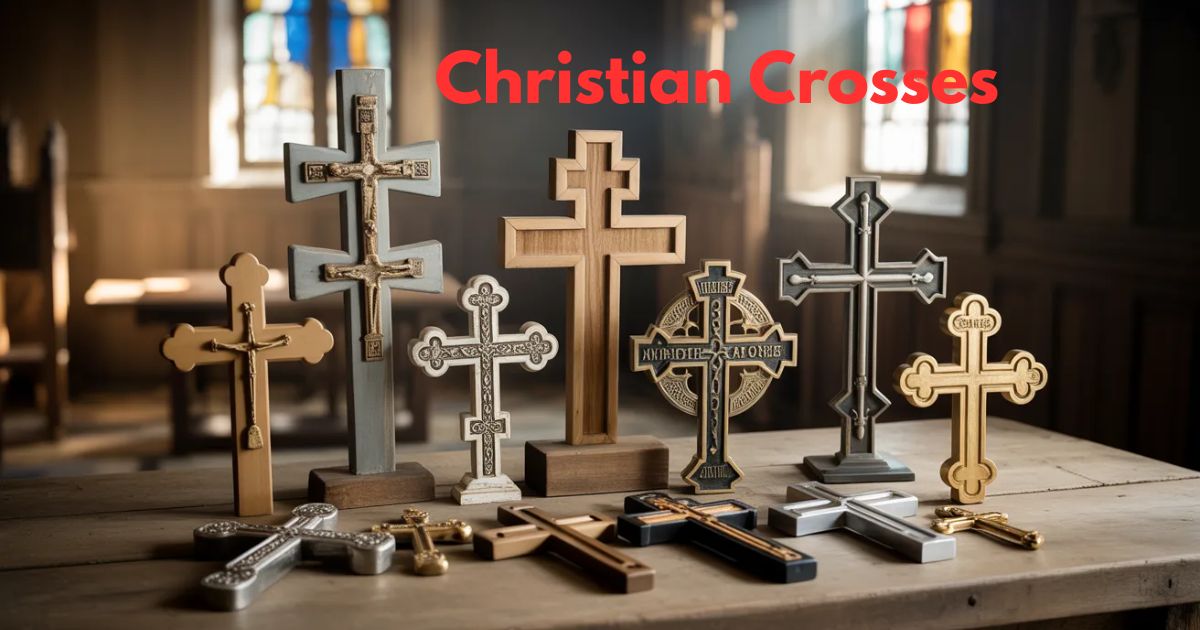
The cross stands as Christianity’s most recognizable symbol. Yet most believers only know one or two variations. Seventy distinct types exist worldwide, each carrying unique historical weight and spiritual significance.
This comprehensive guide explores Christian crosses from ancient Rome to modern churches. You’ll discover how emperors, saints, and entire nations shaped these sacred designs. Each cross tells its own story of faith, sacrifice, and devotion.
H2: Fundamental Christian Crosses
1. Latin Cross (✝)
The Latin Cross dominates Western Christianity. Its vertical beam extends longer than the horizontal, creating the iconic shape seen in Matthew 27 and throughout crucifixion accounts.
This Crux Immissa represents where Jesus died. Churches worldwide display it on steeples, altars, and jewelry. The design emerged in the 2nd century as Christianity spread beyond Jerusalem.
2. Greek Cross (+)
Four equal arms characterize this ancient design. Byzantine Empire artisans favored it in mosaics and architecture. Hagia Sophia features countless Greek Cross patterns in its stunning interior.
Eastern Rite Catholic Churches embraced this balanced form. It symbolizes the four corners of earth united under Christ. The symmetry reflects divine order and harmony.
3. Orthodox Cross (☦︎)
Three horizontal beams distinguish Eastern Orthodox crosses. The top represents the inscription “King of the Jews.” The slanted footrest recalls Luke 23:39–43 where one thief repented.
Russian and Serbian communities cherish this design. It appears on church domes across Eastern Europe. The Eastern Orthodox Church considers it their defining symbol since the 4th century.
Early Christian & Apostolic Crosses
4. Cross of Constantine (Chi-Rho ☧)
Emperor Constantine saw this symbol before his 312 AD victory. The Chi (Χ) and Rho (Ρ) form Christ’s Greek monogram. “In this sign, conquer” became his battle cry.
This early Christian symbol predates elaborate cross designs. Ancient Christian symbols like the Chi-Rho helped believers identify each other during persecution. Constantine’s conversion changed Christianity forever.
5. Staurogram (⳨)
The Staurogram blends Tau (Τ) and Rho, creating a mesmerizing visual pun. Early manuscripts used it as shorthand for “cross.” Scholars find it in 2nd-century texts.
This crucifixion symbol preceded the full cross image. Christians used coded symbols during Roman persecution. The Staurogram represents Christianity’s hidden survival years.
6. Iota-Chi Cross (ΙΧ)
Iota (Ι) and Chi form another Christogram. Egyptian Christians favored this compact design. The ICXC Christogram appears in Coptic art extensively.
Silk Road traders spread it eastward. Persia and India saw this cross variant early. It demonstrates Christianity’s rapid geographic expansion.
7. Ankh Cross (Crux Ansata) (☥)
Egypt’s ancient life symbol merged with Christianity. The Coptic Orthodox Church adopted it naturally. This Ankh cross meaning bridges pharaonic and Christian traditions.
Saint Anthony of Egypt likely saw this fusion. Copts interpreted the loop as eternal life through Christ. Cultural Christian identity shaped this unique adaptation.
8. Tau Cross (T-shaped)
The Hebrew tav inspired this simple design. Saint Francis of Assisi signed letters with it. The Franciscan Order made it their emblem.
Ezekiel 9:4 mentions marking believers’ foreheads. Early Christians connected this to baptism. The T-shape appears in prehistoric times symbolizing life.
9. Anchor Cross
Hope anchors the soul Hebrews 6:19 inspired this design. Catacombs display anchor crosses hidden among fish symbols. Persecuted Christians needed disguised imagery.
Sailors and coastal communities embraced it later. It represents stability through faith storms. This Christian devotion symbol remains popular in maritime churches.
10. Early Coptic Cross
Egypt developed distinctive cross styles in the 3rd century. Woven circles and elaborate patterns characterize Coptic designs. These liturgical symbols filled monastery walls.
The Coptic Orthodox Church preserved ancient Christian art. Their crosses blend African and Mediterranean aesthetics. Religious iconography reached stunning heights in Coptic manuscripts.
11. Golgotha Cross
Three steps represent Calvary’s hill. This Calvary Cross design reminds believers where Jesus died. Catholic and Orthodox churches favor this stepped variation.
The graded cross appears in medieval cross designs frequently. Each step symbolizes faith, hope, and love from 1 Corinthians 13:13. Pilgrims to Jerusalem recognize this form immediately.
Symbolic Crosses
12. Marian Cross
Four equal arms with M beneath honor Mary. This Marian Cross devotion grew during medieval times. John 19:25 describes Mary at the crucifixion.
Polish and Spanish Catholics particularly revere it. The design emphasizes Mary’s role in salvation. It appears in shrines and rosaries worldwide.
13. Papal Cross
Three horizontal bars denote papal authority. Only popes carry this during ceremonies. The Roman Catholic Church reserves it exclusively for the pontiff.
Pope Benedict VIII formalized its use in the 11th century. Each bar represents different spiritual jurisdictions. It’s Christianity’s ultimate hierarchical symbol.
14. Cross of Salem
A cross within a circle creates this distinctive emblem. Salem references Jerusalem’s ancient name. It symbolizes cosmic Christianity and eternal protection.
American frontier churches adopted it frequently. The circle represents God’s infinite nature. This design bridges ancient and modern Christianity.
15. Crucifix Cross
The crucified Christ figure makes crucifixes distinct. Catholic churches display them prominently. Protestants often prefer empty crosses emphasizing resurrection.
Medieval artists created intensely realistic versions. San Damiano Cross inspired Saint Francis’s conversion. The crucifix remains Christianity’s most powerful visual.
16. Byzantine Cross
Elaborate ornamentation defines Byzantine crosses. Gold leaf and jewels adorned imperial versions. Hagia Sophia showcased the empire’s artistic mastery.
Byzantine cross art influenced Orthodox traditions permanently. Mosaics featured intricate geometric patterns. Christian art reached unprecedented sophistication.
17. Cross with Drops
Five red drops represent Christ’s wounds. Medieval religious art emphasized blood symbolism. The Passion Cross tradition grew from this imagery.
Knights returning from crusades popularized it. Each drop marks crucifixion trauma: hands, feet, and side. It’s a visceral faith expression.
18. Globus Cruciger (♁)
A cross atop an orb symbolizes Christ ruling earth. Kings held this during coronations. The Globus Cruciger meaning represents divine kingship.
Byzantine emperors originated this combination. Western monarchs adopted it by the 9th century. It declares Christ’s sovereignty over temporal power.
19. Forked Cross (Crucifixus Dolorosus)
A Y-shaped cross depicts suffering intensely. Late medieval artists emphasized Christ’s agony. This Crucifixus Dolorosus emerged during the Black Death.
Plague victims identified with Christ’s pain. German and Flemish regions favored this design. It represents Christianity’s darkest contemplations.
20. Nail Cross
Three nails form this stark reminder. Coventry Cathedral’s WWII ruins display a famous version. British chaplain Richard Howard created it from roof beam nails.
The design emerged from wartime destruction. It symbolizes resurrection from devastation. Modern churches worldwide replicate this powerful statement.
21. Cross of Lorraine
Two horizontal bars distinguish this French symbol. Joan of Arc carried banners featuring it. Charles de Gaulle made it Free France’s emblem during WWII.
The design originated in 13th-century Lorraine. Medieval dukes used it heraldically. It represents French Catholic heritage strongly.
22. Patriarchal Cross
Similar to Lorraine but with symbolic differences. Archbishops carry this in processions. The Patriarchal Cross denotes high ecclesiastical rank.
Eastern European churches display it frequently. Hungary’s coat of arms features it prominently. It’s both religious and national identity.
23. Calvary Cross
Three graduated steps create this meaningful design. They represent faith, hope, and charity. The Calvary Cross steps also symbolize Golgotha’s levels.
Stone versions mark holy sites globally. Pilgrims to Jerusalem encounter these constantly. Sacrifice becomes tangible through this architecture.
24. Passion Cross
Red backgrounds emphasize suffering. The Passion Cross recalls Christ’s final hours. Mark 15 describes the crucifixion details.
Good Friday services feature this prominently. Catholic and Orthodox liturgies use it during Holy Week. The color red signifies blood and martyrdom.
25. Sun Cross
An ancient symbol predating Christianity. A cross within a circle marked seasons prehistorically. Early Christians adapted it symbolizing Christ as light.
The Sun Cross appears in prehistoric times across cultures. Christian missionaries reinterpreted pagan symbols strategically. It bridges ancient and new faith.
26. Resurrection Cross
A triumphant banner streams from this cross. 1 Corinthians 15:4 proclaims Christ’s resurrection. Easter celebrations feature this design prominently.
The Resurrection Cross symbolizes victory over death. White and gold colors predominate. It’s Christianity’s most joyful visual statement.
27. Basque Cross (Lauburu)
Four comma-shaped heads create this distinctive form. Basque regions treasure this ancient design. The Lauburu possibly predates Christianity.
It represents life’s cyclical nature. Basque Christians integrated it seamlessly. Cultural Christian heritage thrives in these adaptations.
28. Tree of Life Cross
Branches extend from cross arms. This design connects Eden’s tree to the cross. Medieval illuminated manuscripts featured elaborate versions.
The Tree of Life Cross symbolizes redemption’s completion. What caused humanity’s fall became salvation’s instrument. It’s theologically profound symbolism.
29. Methodist Cross and Flame
Red flames surround a cross. The United Methodist Church adopted this in 1968. It represents the Holy Spirit’s Pentecostal fire.
This modern design declares Methodist identity. The flame symbolizes evangelistic passion. Over 12 million Methodists recognize it globally.
Saint-Related Crosses
30. St. Peter’s Cross (Upside-down Cross)
Peter requested crucifixion upside-down, feeling unworthy to die like Christ. This St. Peter’s Cross represents humility. Patras, Greece, marks his martyrdom site.
Gothic subcultures misappropriated this symbol later. True meaning centers on apostolic humility. The Vatican’s throne features it prominently.
31. St. Brigid’s Cross
Woven rushes create this Irish symbol. St. Brigid of Kildare reportedly made one while converting a pagan chieftain. February 1st celebrations include crafting these.
They’re hung in Irish homes for protection. The design resembles a swastika but predates it. Patron saint crosses remain culturally vital.
32. St. Julian Cross
This simple cross honors St. Julian the Hospitaller. Medieval hospitals displayed it above doorways. It symbolizes Christian charity and hospitality.
Pilgrims recognized it as refuge. The design spread across medieval Europe. Julian’s legend emphasized redemption through service.
33. St. Thomas Cross
Also called the Nasrani Menorah Cross. St. Thomas the Apostle brought Christianity to India in the 1st century. This design blends Jewish and Christian elements.
Indian Christians trace lineage to Thomas. The cross features lotus flowers and Syriac text. It’s Christianity’s oldest Eastern expression.
34. St. James Cross
A red sword-cross represents Santiago. St. James the Greater’s martyrdom inspired this design. The Order of Santiago used it during the Reconquista.
Spanish conquistadors carried it to the Americas. It symbolizes militant Christianity controversially. Martyrdom symbols often reflect historical conflicts.
35. San Damiano Cross
This 12th-century crucifix hangs in Assisi. Saint Francis of Assisi prayed before it during his conversion. The stylized Byzantine design includes numerous figures.
Francis heard Christ speak from this cross. It’s become Franciscan spirituality’s centerpiece. Reproductions hang in churches worldwide.
Read More: The Meaning of Shalom in the Bible
Regional and Cultural Crosses
36. Coptic Cross
Intricate circular designs distinguish Coptic crosses. Egypt’s ancient Christian community developed unique styles. Twelve small crosses often surround a central one representing apostles.
The Coptic Orthodox Church maintains these traditions. They’re tattooed on many Egyptian Christians’ wrists. This practice identifies believers in Muslim-majority regions.
37. Novgorodsky Cross
Russia developed this ornate variation in the 9th century. Multiple smaller crosses create elaborate patterns. The Novgorodsky Cross reflects Russian Orthodox aesthetics.
Icon painters incorporated it extensively. Gold and deep reds characterize Russian crosses. They’re central to Russian Christian identity.
38. Armenian Cross
Called Khachkar, these carved stone crosses are architectural marvels. Armenia embraced Christianity in 301 AD first Christian nation. Intricate lacework patterns cover these monuments.
King Mirian III’s conversion established this tradition. St. Nino used a grapevine cross during evangelization. Armenian crosses are UNESCO-protected heritage.
39. Serbian Cross
Four Cyrillic S letters surround this cross. They represent “Only Unity Saves the Serbs.” The Serbian Cross fuses faith and nationalism intensely.
Medieval Serbian kingdoms used it heraldically. It appears on flags and churches. Cultural Christian identity defines Serbian Orthodoxy.
40. Ethiopian Cross
Elaborate metalwork characterizes Ethiopian crosses. Priests carry ornate versions during processions. The Ethiopian Cross often features interlaced designs.
Ethiopia’s ancient Christianity developed independently. Coptic influences blended with local artistry. Each region developed distinct styles.
41. Jerusalem Cross
Five crosses represent Christ’s wounds. Crusaders adopted this as their emblem. The Jerusalem Cross (Crusader Cross) symbolizes spreading faith globally.
Large central cross with four smaller ones creates this pattern. It appears on the flag of Georgia. Pilgrims purchase jewelry featuring this design.
42. Scandinavian Cross
Nordic flags feature this distinctive design. The Scandinavian Cross appears on Swedish, Norwegian, Danish, and Finnish flags. Christianity integrated deeply into Viking culture.
The Union Jack incorporates similar elements. It represents northern European Christian heritage. Each nation added unique colors.
43. Anuradhapura Cross
Sri Lanka’s ancient Christian community preserved this design. The Anuradhapura Cross blends Buddhist and Christian aesthetics. Portuguese missionaries encountered it in the 6th century.
Nestorian traders likely introduced Christianity to Sri Lanka. The cross features lotus motifs. It demonstrates Christianity’s Asian adaptations.
44. Canterbury Cross
This interlaced design emerged in medieval England. The Canterbury Cross represents Anglican heritage. Archbishop of Canterbury gifts them to clergy.
Coventry Cathedral features modern interpretations. The Anglican Communion recognizes it globally. It’s distinctly English Christian symbolism.
45. Grapevine Cross
St. Nino converted Georgia using a grapevine cross. She bound two sticks with her hair. Georgia became Christian in the 4th century.
The Grapevine Cross features vine leaves and tendrils. It references John 15’s “true vine” teaching. Georgian churches display it prominently.
46. Bolnisi Cross
Ancient Georgian churches feature this design. The Bolnisi Cross dates to the 5th–6th century. Its widened arms create distinctive proportions.
Georgia’s national currency displays it. The design predates most European crosses. It’s uniquely Georgian Christian heritage.
47. Celtic Cross
Stone circles unite with crosses in Ireland. Muiredach’s Cross at Monasterboice stands 17 feet tall. Celtic Cross carvings fill Irish landscapes.
The circle represents eternity or sun adaptation. Vikings influenced later designs. Christian pilgrimage sites treasure these monuments.
48. Maltese Cross (✠)
Eight points represent Beatitudes. The Sovereign Military Order of Malta used this during crusades. The Maltese Cross became firefighting’s symbol too.
Knights Hospitaller defended Christian pilgrims. Malta’s flag features this prominently. It symbolizes courage and protection.
49. Huguenot Cross
French Protestants created this design secretly. A dove descends between the arms. The Huguenot Cross identifies Reformed tradition.
Religious wars made secret symbols necessary. It spread to Protestant communities globally. It represents perseverance through persecution.
50. St. Andrew’s Cross (X-shaped)
Scotland’s patron saint was crucified X-shaped. The Saltire appears on Scotland’s flag. St. Andrew’s Cross represents national and religious identity.
The Union Jack incorporates it. Andrew felt unworthy of Roman crucifixion. This diagonal design became distinctly Scottish.
51. Cross of St. George
England’s patron saint’s symbol is a red cross on white. The Cross of St. George appears on England’s flag. Crusaders wore this during holy wars.
George’s dragon-slaying legend inspired medieval knights. The design joined the Union Jack. It’s England’s defining Christian symbol.
52. Occitan Cross
The Cross of Toulouse features twelve rounded ends. Occitania, France, used it historically. It represents southern French Christian heritage.
The design possibly references apostles. It appears in medieval heraldry extensively. Regional identity remains tied to it.
53. Macedonian Cross
North Macedonia’s ancient Christian symbols predate Slavic arrival. The Macedonian Cross features in Byzantine mosaics. It represents the region’s early Christianity.
Emperor Constantine’s family originated here. Archaeological sites reveal extensive cross imagery. It’s central to Macedonian identity.
54. Nestorian Cross
The Church of the East used this distinctive design. Nestorian Cross appeared along the Silk Road extensively. It spread to China and India.
This tradition emphasized Christ’s divine nature controversially. Persecution forced eastward migration. Ancient stones mark their journey.
55. St. Patrick’s Cross (☓)
A red saltire represents Ireland’s patron saint. Created in 1801 for the Union Jack. St. Patrick’s Cross symbolizes Irish Christianity.
Patrick’s shamrock teaching remains legendary. The cross appears less frequently than Celtic designs. It’s more political than religious now.
56. Caravaca Cross
This double-armed cross originated in Caravaca de la Cruz, Spain. Legend claims angels brought it in the 13th century. It’s a powerful protective symbol.
The Caravaca Cross appears in Spanish homes frequently. Believers attribute miracles to it. Faith and devotion surround this relic.
Heraldic and Decorative Crosses
57. Cross of Calatrava
Red fleur-de-lis ends characterize this Spanish design. The Order of Santiago used it during the Reconquista. The Cross of Calatrava represents military monasticism.
Pope Honorius II approved the order in 1164. It appears in Spanish heraldry extensively. Ecclesiastical heraldry reached artistic peaks.
58. Templar Cross
Knights Templar wore this red cross on white. They protected pilgrims to Jerusalem. The Templar Cross symbolizes medieval crusading fervor.
King Philip IV’s suppression didn’t erase its legacy. Modern groups adopted it controversially. It remains history’s most recognized military cross.
59. Voided Cross
Also called Empty Cross or Cross Hollow. Only the outline appears, emphasizing resurrection. The Voided Cross gained Protestant favor.
Empty tomb theology inspired this design. It appears in modern evangelical churches. The absence becomes the message.
60. Cross Pattée
Arms widen at the ends distinctively. Medieval knights favored this heraldic cross symbol. The Cross Pattée appears in numerous military orders.
Teutonic Knights used this design. It’s both elegant and bold. Heraldic tradition preserved countless variations.
61. Cross Fleury
Fleur-de-lis terminate each arm. French royal houses favored this design. The Cross Fleury represents nobility and faith united.
It appears in medieval manuscripts beautifully. The lily symbolizes purity. Gothic architecture features it extensively.
62. Order of Christ Cross
Portuguese explorers carried this red cross outlined in white. The Order of Christ Cross funded maritime exploration. Ships bearing it reached India and Brazil.
Prince Henry the Navigator belonged to this order. King Robert II secularized it later. It symbolizes Age of Exploration.
63. Cross Moline
A curved, anchor-like design distinguishes this cross. It appears in German heraldry frequently. The Cross Moline represents firm faith.
Medieval metalworkers created elaborate versions. It’s less common in modern usage. Medieval cross designs showcase incredible creativity.
64. Cross Bottony
Trefoil ends characterize this elegant design. The Cross Bottony appears in ecclesiastical heraldry. Each end resembles a budding flower.
It symbolizes Trinity at each point. French and English heraldry favor it. The design balances strength and beauty.
65. Cross Potent (☩)
T-shaped ends create this distinctive form. The Cross Potent represents Jerusalem’s spiritual authority. Byzantine manuscripts feature it extensively.
Medieval kings used it heraldically. Each end resembles a crutch supposedly. It’s both ancient and enduring.
66. Cross Fitchy
A pointed lower end distinguishes this design. Knights planted the Cross Fitchy in ground during field masses. It’s extremely practical and symbolic.
Crusaders favored this military adaptation. Heraldic cross symbols often served functional purposes. It remains popular in modern heraldry.
67. Cross Pommée
Rounded ball ends create this softened design. The Cross Pommée appears in French heraldry extensively. Each end resembles an apple (pomme).
It symbolizes Christ’s healing power. Medieval artists rendered it in precious metals. The design conveys peace and completion.
68. Cross Raguly
Rough, branch-like edges distinguish this design. The Cross Raguly (Ragged Cross) symbolizes Christ’s suffering. English heraldry particularly favors it.
The rugged appearance emphasizes crucifixion’s brutality. It’s uncommon but striking. When used, it makes powerful statements.
69. Gothic Cross
Elaborate ornamentation defines Gothic crosses. Pointed arches and intricate details characterize them. Gothic Cross art reached unprecedented heights in 13th-century cathedrals.
Stained glass windows featured spectacular versions. King Edward III’s reign saw Gothic flourishing. They represent medieval Christianity’s artistic pinnacle.
70. Pisan Cross
This Italian design features distinctive proportions. The Pisan Cross appears throughout Sardinia, Italy. Maritime republics used it during Mediterranean dominance.
It’s simpler than many Italian crosses. Regional identity remains tied to it. Pisa’s cathedral prominently displays it.
Conclusion: One Symbol, Many Stories
Seventy cross variations demonstrate Christianity’s incredible diversity. From Constantine’s battlefield vision to modern Methodist flames, each design carries profound meaning. These aren’t mere decorations they’re visual theology.
Understanding these crosses deepens appreciation for Christian heritage. Whether Ethiopian metalwork or Scandinavian flags, believers expressed faith through symbols. The cross remains Christianity’s universal language.
According to Pew Research Center, over 2.4 billion Christians recognize these symbols globally. The Barna Group notes increasing interest in historical Christian symbols among younger believers. These ancient designs remain remarkably relevant.
Which cross resonates with your faith journey? Perhaps the Celtic Cross connects to ancestry. Maybe the Empty Cross emphasizes resurrection hope. Each believer finds personal meaning in these sacred designs.
Christian crosses unite believers across continents and centuries. They remind us that faith transcends words. From catacombs to cathedrals, the cross endures Christianity’s eternal, powerful symbol.