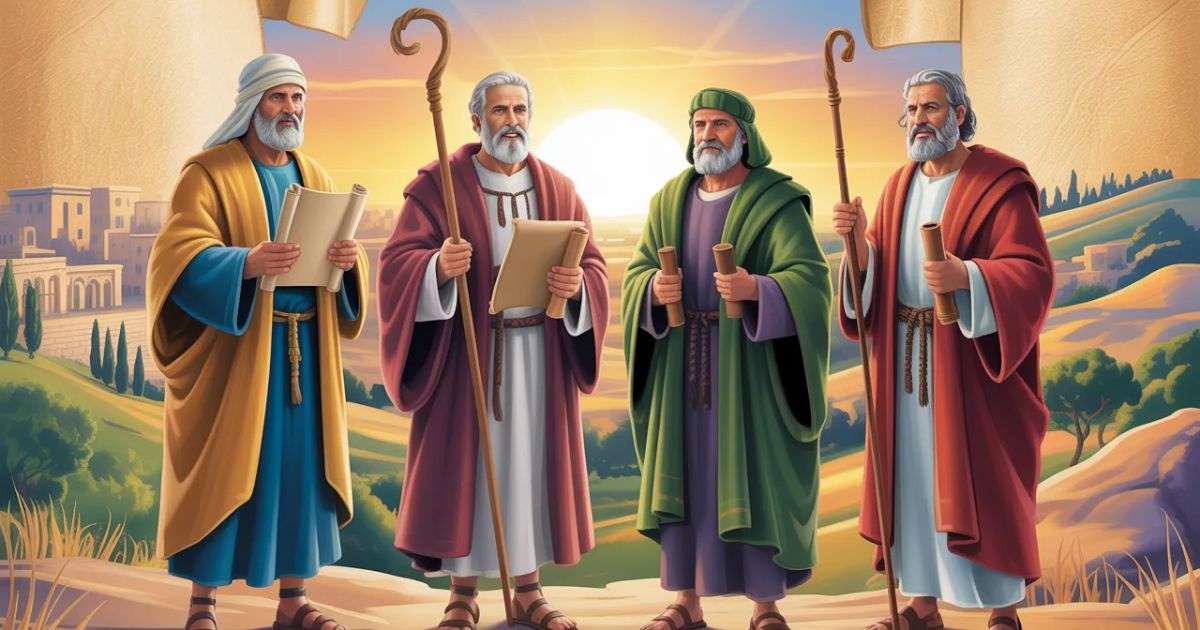
Throughout biblical history, prophets in the Bible served as God’s messengers, delivering divine warnings and spiritual guidance to nations teetering on moral collapse. These extraordinary individuals didn’t choose their calling they were chosen. Their stories reveal timeless lessons about faithfulness to God, justice, and redemption in the Bible that still resonate today.
What is a Prophet?
A prophet isn’t just someone who predicts future events. The Hebrew word “navi” means spokesman someone who speaks on behalf of another. Biblical prophets received messages of God directly through visions, dreams, or divine instruction. They communicated God’s holiness, called people to repentance in the Bible, and provided moral guidance during spiritually dark times.
True prophets demonstrated specific characteristics. They spoke only what God revealed. They often faced persecution for delivering unpopular truths. Their prophecies came to pass with remarkable accuracy. Unlike false prophets who told people what they wanted to hear, genuine prophets confronted sin head-on, regardless of consequences.
Different prophetic ministries existed throughout Scripture. Some prophets wrote books that became Scripture. Others delivered oral messages never recorded. Prophetesses like Deborah and Anna played crucial roles too. Prophetic schools trained young men in spiritual discernment. Each served the same God with unique callings.
Purpose of Prophets and Modern Lessons
In ancient Israel, prophets served multiple purposes. They warned against idolatry when nations worshiped false gods. They spoke out against social injustice when the powerful oppressed the vulnerable. They foretold messianic prophecy, pointing toward humanity’s ultimate redemption. They called kings and commoners alike back to covenant faithfulness.
Today’s believers can learn profound lessons from these courageous voices. Prophets demonstrated that speaking truth matters more than popularity. Amos championed social justice for the marginalized. Habakkuk wrestled honestly with God’s justice when circumstances made no sense. Jonah learned that God’s mercy extends beyond our prejudices. These aren’t ancient stories they’re blueprints for faithful living in complex times.
Major Prophets of the Bible
The term “major prophets” refers to the length of their written works, not their importance. These four prophetic books contain extensive messages about Israel’s faith and future.
Isaiah stands as the messianic prophet. His 66 chapters overflow with prophecies about Christ’s coming. Isaiah 53 describes Jesus’ suffering with stunning precision written 700 years before crucifixion was invented. Isaiah prophecy addressed both immediate national crises and distant future hope. His name means “salvation of Yahweh,” perfectly matching his message.
Jeremiah the weeping prophet ministered during Jerusalem’s darkest hours. He warned Judah about impending exile for decades. Nobody listened. He watched Babylon destroy the temple and carry his people into captivity. Yet Jeremiah prophesied the new covenant God writing His law on human hearts rather than stone tablets. His tears flowed from genuine love for rebellious people.
Ezekiel received mind-bending visions while exiled in Babylon. Ezekiel visions included wheels within wheels, living creatures, and God’s glory departing the temple. He performed bizarre symbolic acts lying on his side for 390 days, shaving his head, cooking with dung. These dramatic illustrations communicated spiritual truths to hardened hearts. His valley of dry bones vision promised national resurrection.
Daniel served in foreign royal courts while maintaining unwavering faithfulness. Daniel dreams interpretation revealed successive world empires. His prophecies about the end times still spark scholarly debate. Daniel faced lions rather than compromise. He prayed publicly despite death threats. His integrity in pagan environments challenges modern believers navigating secular workplaces.
Minor Prophets of the Bible
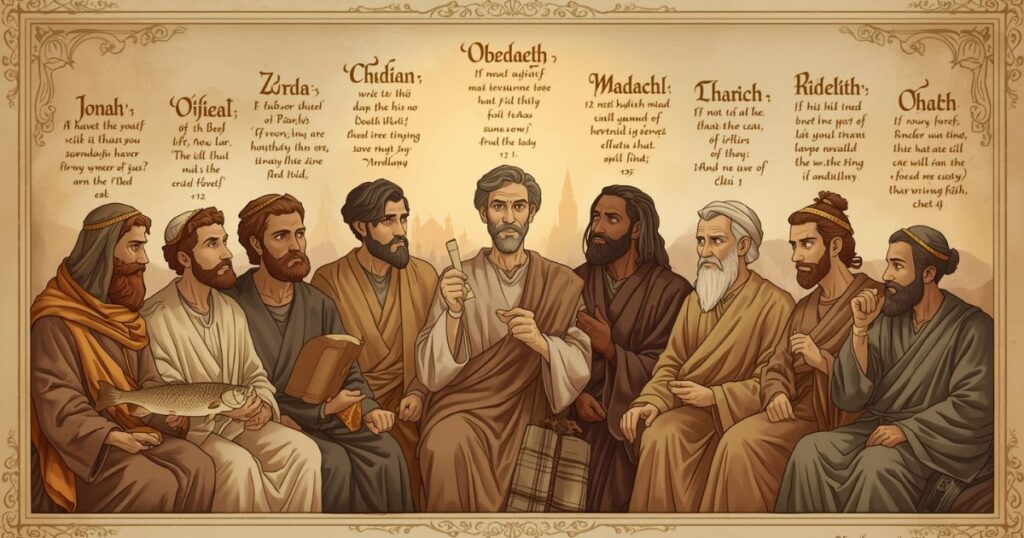
The twelve minor prophets pack powerful messages into shorter books. Don’t let “minor” fool you their importance matches any major prophet.
Hosea lived out painful symbolism. God told him to marry an unfaithful woman representing Israel’s spiritual adultery. Hosea love symbolism demonstrated God’s relentless pursuit of wayward people. Despite repeated betrayal, Hosea kept loving Gomer. This breathtaking picture of divine grace still moves readers today.
Joel warned about the Day of the Lord God’s coming judgment. A devastating locust plague illustrated spiritual devastation. But Joel also prophesied the Holy Spirit’s outpouring on all people. Peter quoted Joel on Pentecost when this promise found fulfillment.
Amos wasn’t a professional prophet just a shepherd and fig farmer. Yet his message about social justice thundered with divine authority. Amos condemned Israel’s wealthy elite for exploiting the poor while maintaining religious appearances. True worship requires justice and righteousness, not empty rituals.
Jonah ran from God’s call to preach repentance in Nineveh. After a detour through a fish’s belly, he obeyed reluctantly. When Nineveh actually repented, Jonah got angry. He wanted judgment, not mercy. Jonah repentance Nineveh demonstrates God’s compassion for all nations even Israel’s enemies.
Micah prophesied the Messiah’s birthplace Bethlehem. Micah Messiah birthplace prediction came true centuries later. He also summarized true religion beautifully: “Act justly, love mercy, walk humbly with your God.”
The remaining minor prophets each contributed vital messages. Nahum predicted Nineveh’s destruction after they returned to wickedness. Habakkuk wrestled with God’s justice, concluding “the just shall live by faith.” Zephaniah warned about judgment restoration cycles. Haggai motivated temple rebuilding after exile. Zechariah received messianic visions about Christ’s return. Malachi closed the Old Testament challenging covenant faithfulness.
Other Significant Prophets
Beyond the writing prophets, several towering figures shaped biblical history through prophetic ministry.
Moses received the Ten Commandments and led Israel out of Egypt. He spoke with God face-to-face. Deuteronomy established the prophetic standard true prophets speak only what God commands. Moses himself was the ultimate prophet until Christ came.
Samuel transitioned Israel from judges to monarchy. Samuel anointed kings like Saul and David. He established prophetic schools training future prophets. From childhood, Samuel demonstrated faithful service and spiritual discernment.
Elijah confronted Baal worship head-on. Elijah miracles included fire from heaven, raising the dead, and controlling rain. His Mount Carmel showdown with false prophets remains Scripture’s most dramatic confrontation. Elijah ascended to heaven without dying.
Elisha, Elijah’s successor, received a double portion of his mentor’s spirit. Elisha performed twice as many recorded miracles. His ministry emphasized God’s compassionate provision healing lepers, multiplying food, purifying water.
Nathan served as David’s court prophet. Nathan confronted David about his sin with Bathsheba through a brilliant parable. This took extraordinary courage speaking truth to absolute power. Nathan’s honesty saved David’s soul.
Deborah, both prophetess and judge, led Israel to military victory. Her example shatters claims that women can’t exercise spiritual authority. She demonstrated wisdom, courage, and faithful leadership.
Who are the 17 Prophets in the Old Testament
The number 17 represents a traditional Jewish counting of prophets recognized in the Tanakh. This enumeration appears in ancient rabbinic literature and reflects specific criteria for prophetic status.
Jewish tradition identifies these 17 prophets: Moses, Joshua, Samuel, Nathan, Gad, Ahijah, Iddo, Elijah, Elisha, Jonah, Isaiah, Jeremiah, Ezekiel, Hosea, Amos, Micah, and Habakkuk. Notice this list combines both writing prophets and those whose ministries were primarily oral.
The counting methodology matters significantly. Jewish scholars counted prophets who either wrote canonical books or played pivotal roles in Israel’s spiritual history. They distinguished between “navi” (prophet) and “roeh” (seer), though both received divine revelation.
Different religious traditions use varying enumeration systems. Some counts include only writing prophets those whose messages became Scripture. Others incorporate every individual Scripture explicitly calls a prophet. This explains why numbers differ across theological traditions.
Understanding these distinctions helps clarify biblical history. The 17-prophet count focuses on prophetic office holders rather than everyone who prophesied. Many faithful Israelites received prophetic words without holding the formal prophetic office.
Who are the 23 Prophets in the Bible
Expanding beyond the traditional 17, the count of 23 prophets includes additional figures from both Old Testament and New Testament Scripture. This broader enumeration reflects a more inclusive definition of prophetic ministry.
The 23-prophet list typically adds: Joel, Obadiah, Nahum, Zephaniah, Haggai, and Zechariah from the minor prophets. It also includes John the Baptist, whose role as forerunner prophet bridges both testaments.
This counting system recognizes written prophetic books as primary qualification. All twelve minor prophets produced Scripture, establishing their prophetic credentials. The messages of prophets in these shorter books carry equal authority to the major prophetic books.
Qualification criteria become crucial here. Does prophetic status require writing Scripture? Must someone perform miracles? Should we count only those explicitly labeled “prophet”? Different criteria produce different totals.
Consider these biblical figures who prophesied: Abraham received divine revelation. Aaron spoke for Moses. Miriam led prophetic worship. Seventy elders prophesied in the wilderness. Yet not all appear in formal prophet counts.
The 23-prophet enumeration balances inclusivity with specificity. It acknowledges both major contributors to biblical prophecy while maintaining clear standards. This list encompasses the primary voices through whom God communicated His covenant faithfulness to Israel and the nations.
Modern readers benefit from understanding these different counting systems. They’re not contradictory merely reflecting different organizational approaches to the same biblical material.
Who are the 24 Prophets in the Bible
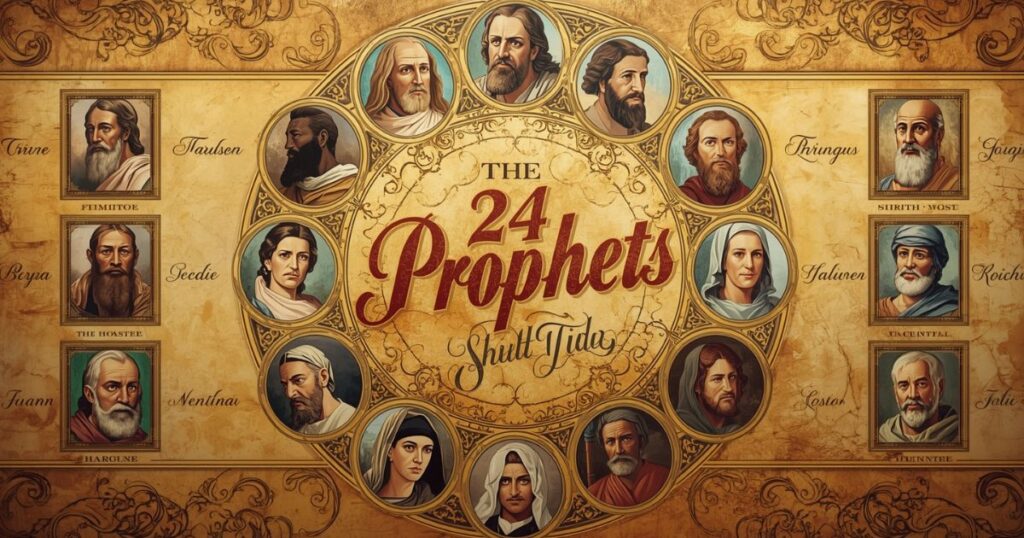
The most comprehensive count reaches 24 prophets, representing the fullest catalog of biblical prophetic figures. This enumeration includes every person Scripture explicitly identifies as holding prophetic office.
This expanded list adds Deborah, the prophetess and judge who led Israel to victory. Her inclusion highlights that prophetic calling transcended gender in biblical times. Deborah prophetess and judge demonstrates God’s willingness to use anyone for His purposes.
Anna, the elderly prophetess who recognized Jesus in the temple, often completes the 24-prophet count. Anna prophetess temple represents faithful expectation of messianic fulfillment. Her decades of prayer and fasting exemplify devoted spiritual service.
Some counts also include Huldah, the prophetess who authenticated the Book of the Law discovered during Josiah’s reign. King Josiah consulted her rather than Jeremiah, indicating her respected prophetic authority. Huldah’s ministry influenced nationwide religious reformation.
The number 24 holds symbolic significance in Scripture. Twenty-four priestly divisions served in the temple. Revelation describes 24 elders worshiping before God’s throne. This number suggests completeness and divine order.
Why does the precise count matter? It reveals how seriously Scripture takes prophetic ministry. God raised up numerous voices across centuries, ensuring His people never lacked spiritual guidance. From Moses leading the exodus to John Baptist preparing Christ’s way, prophets marked every crucial juncture in biblical history.
This comprehensive count also demonstrates prophetic diversity. Young and old. Men and women. Priests and shepherds. Royalty and commoners. God’s messengers came from every background, united by faithful obedience to divine calling.
Understanding the 24-prophet enumeration provides complete perspective on biblical prophecy. These weren’t random individuals they formed a continuous chain of witnesses testifying to God’s holiness, justice, and redemptive purposes.
How Many Prophets are in the Bible and Their Names
The total number of prophets depends on counting methodology, but Scripture contains substantial prophetic representation across both testaments. Let’s examine comprehensive totals with complete name lists.
Old Testament Writing Prophets (16):
- Major Prophets: Isaiah, Jeremiah, Ezekiel, Daniel
- Minor Prophets: Hosea, Joel, Amos, Obadiah, Jonah, Micah, Nahum, Habakkuk, Zephaniah, Haggai, Zechariah, Malachi
Old Testament Non-Writing Prophets (15+):
- Moses, Aaron, Miriam, Deborah, Samuel, Gad, Nathan, Ahijah, Elijah, Elisha, Huldah, Shemaiah, Iddo, Azariah, Hanani
New Testament Prophets (5+):
- John the Baptist, Jesus Christ, Agabus, Anna, Judas and Silas
The Old Testament alone contains over 30 identified prophets. When including every person Scripture calls prophet or prophetess, totals exceed 40 individuals. Some prophets appear only briefly mentioned once or twice. Others dominate entire biblical books.
Counting methodology varies by criteria. Do we count only canonical book authors? Everyone explicitly titled “prophet”? Those who prophesied occasionally? Each approach yields different totals, but all recognize the central role of prophetic ministry throughout biblical history.
Complete Alphabetical Prophet List:
| # | Prophet Name | # | Prophet Name | # | Prophet Name |
|---|---|---|---|---|---|
| 1 | Aaron | 15 | Gad | 29 | Micah |
| 2 | Agabus | 16 | Habakkuk | 30 | Miriam |
| 3 | Ahijah | 17 | Haggai | 31 | Moses |
| 4 | Amos | 18 | Hanani | 32 | Nahum |
| 5 | Anna | 19 | Hosea | 33 | Nathan |
| 6 | Asaph | 20 | Huldah | 34 | Obadiah |
| 7 | Azariah | 21 | Iddo | 35 | Oded |
| 8 | Balaam | 22 | Isaiah | 36 | Samuel |
| 9 | Daniel | 23 | Jeremiah | 37 | Shemaiah |
| 10 | David | 24 | Joel | 38 | Uriah |
| 11 | Deborah | 25 | John the Baptist | 39 | Zechariah |
| 12 | Elijah | 26 | Jonah | 40 | Zephaniah |
| 13 | Elisha | 27 | Joshua | ||
| 14 | Ezekiel | 28 | Malachi |
This list demonstrates how thoroughly God communicated with His people. Prophets appeared in every generation, delivering divine warnings and spiritual guidance precisely when needed most.
Names of Prophets in the Bible and Their Meanings
Hebrew names carried profound significance in biblical culture. Parents chose names reflecting circumstances, character hopes, or spiritual truths. Prophetic names often foreshadowed their ministries, creating powerful connections between identity and calling.
| Prophet Name | Hebrew Origin | Meaning | Ministry Connection |
|---|---|---|---|
| Isaiah | Yesha’yahu | Yahweh is salvation | Proclaimed messianic salvation |
| Jeremiah | Yirmeyahu | Yahweh exalts/establishes | Elevated God’s word despite opposition |
| Ezekiel | Yechezkel | God strengthens | Strengthened exiles in Babylon |
| Daniel | Daniyyel | God is my judge | Received visions of divine judgment |
| Hosea | Hoshea | Salvation | Demonstrated God’s saving love |
| Joel | Yo’el | Yahweh is God | Proclaimed God’s sovereignty |
| Amos | Amos | Burden bearer | Carried God’s justice message |
| Obadiah | Ovadyah | Servant of Yahweh | Faithful prophetic service |
| Jonah | Yonah | Dove | Brought peace message to Nineveh |
| Micah | Mikhah | Who is like Yahweh? | Highlighted God’s incomparability |
| Nahum | Nachum | Comfort/consolation | Comforted Judah about Nineveh’s fall |
| Habakkuk | Chavaqquq | Embrace/wrestle | Wrestled with God’s justice |
| Zephaniah | Tzephanyah | Yahweh has hidden | Protected remnant theology |
| Haggai | Chaggai | Festive/my feast | Celebrated temple rebuilding |
| Zechariah | Zekharyah | Yahweh remembers | Reminded of covenant promises |
| Malachi | Mal’akhi | My messenger | Final Old Testament messenger |
The connection between names and ministries wasn’t coincidental. Isaiah’s name proclaimed salvation centuries before Christ came. Jeremiah’s name predicted God would establish His word despite human rejection. Ezekiel needed divine strength to endure exile’s hardships.
Consider lesser-known prophets too. Nathan means “he gave” fitting for someone who gave King David hard truth about sin. Elijah means “Yahweh is my God,” perfectly matching his confrontation with Baal worship. Elisha means “God is salvation,” continuing his mentor’s redemptive ministry.
Even prophetesses bore meaningful names. Deborah means “bee,” suggesting industrious leadership. Huldah means “weasel” or “mole,” possibly indicating her ability to uncover hidden truth when authenticating discovered Scripture.
Understanding these name meanings enriches Bible study. They reveal how deeply intentional God was in choosing and preparing His messengers. Names reinforced messages, creating memorable associations for ancient audiences.
Modern believers can learn from this pattern. Our identities should align with our callings. Like the prophets, we’re called to embody the messages God entrusts to us. Character and calling merge into authentic witness.
Bible Prophets Names
A comprehensive alphabetical reference helps readers quickly locate specific prophets and their scriptural contexts. This organizational approach makes biblical study more accessible.
Complete Alphabetical Reference Guide:
A
- Aaron – Moses’ brother, spoke for him (Exodus 7:1)
- Agabus – Predicted famine and Paul’s arrest (Acts 11:28, 21:10)
- Ahijah – Prophesied kingdom division (1 Kings 11:29-39)
- Amos – Shepherd prophet, championed justice (Book of Amos)
- Anna – Elderly prophetess, recognized baby Jesus (Luke 2:36-38)
B-D
- Balaam – Foreign prophet, blessed Israel (Numbers 22-24)
- Daniel – Interpreted dreams, survived lions’ den (Book of Daniel)
- Deborah – Judge and prophetess, led military victory (Judges 4-5)
E
- Elijah – Called fire from heaven, opposed Baal (1-2 Kings)
- Elisha – Performed numerous miracles (2 Kings 2-13)
- Ezekiel – Visionary prophet during exile (Book of Ezekiel)
G-H
- Gad – David’s seer and adviser (1 Samuel 22:5, 2 Samuel 24:11)
- Habakkuk – Questioned God’s justice (Book of Habakkuk)
- Haggai – Motivated temple rebuilding (Book of Haggai)
- Hosea – Married unfaithful woman symbolically (Book of Hosea)
- Huldah – Authenticated discovered Law Book (2 Kings 22:14-20)
I-J
- Isaiah – Major prophet, messianic prophecies (Book of Isaiah)
- Jeremiah – Weeping prophet, warned of exile (Book of Jeremiah)
- Joel – Prophesied Spirit’s outpouring (Book of Joel)
- John the Baptist – Prepared way for Christ (Gospels)
- Jonah – Reluctant missionary to Nineveh (Book of Jonah)
M
- Malachi – Final Old Testament prophet (Book of Malachi)
- Micah – Predicted Messiah’s birthplace (Book of Micah)
- Miriam – Moses’ sister, led worship (Exodus 15:20)
- Moses – Lawgiver, led exodus from Egypt (Exodus-Deuteronomy)
N
- Nahum – Prophesied Nineveh’s destruction (Book of Nahum)
- Nathan – Confronted David about sin (2 Samuel 12)
O-S
- Obadiah – Shortest prophetic book (Book of Obadiah)
- Samuel – Last judge, first prophet, anointed kings (1-2 Samuel)
Z
- Zechariah – Messianic visions and prophecies (Book of Zechariah)
- Zephaniah – Warned of judgment day (Book of Zephaniah)
This alphabetical organization reveals the breadth of prophetic ministry across Scripture. Some prophets ministered for decades; others appear briefly. All faithfully delivered God’s messages to their generations.
The Prophetic Role in the New Testament

The arrival of the Holy Spirit fundamentally transformed prophetic ministry. What changed between old and new covenants? Everything and nothing simultaneously.
Old Testament prophets received occasional divine communications. The Spirit came upon them temporarily for specific tasks. They spoke to nations, kings, and entire populations. Their prophecies often addressed national crises, foreign policy, and covenant violations.
New Testament prophecy operates differently. At Pentecost, the Spirit indwelled all believers permanently. Peter quoted Joel’s prophecy: “Your sons and daughters will prophesy.” Prophecy democratized no longer limited to special offices but available as spiritual gifts.
Key Differences in Prophetic Function:
Old Testament Prophets:
- Spoke to nations and kings
- Received visions and dreams
- Often predicted future events
- Carried absolute authority
- Required perfect accuracy (Deuteronomy 18:20-22)
New Testament Prophets:
- Speak primarily within church communities
- Focus on edification, exhortation, comfort
- Build up believers spiritually
- Subject to testing and discernment
- Operate as one spiritual gift among many
Paul’s instructions in 1 Corinthians 12-14 establish prophetic guidelines. Prophecy should edify the church. Multiple prophets can speak in order. Others should evaluate prophetic messages. The gift serves corporate worship, not individual glorification.
The early church valued prophecy highly. Paul commanded, “Do not despise prophecies, but test everything.” Agabus demonstrated New Testament prophecy by warning of famine and Paul’s arrest. His predictions proved accurate, providing practical guidance for church planning.
Yet controversy exists about prophecy’s continuation. Cessationists believe miraculous gifts including prophecy ended with the apostolic age. Continuationists argue spiritual gifts persist until Christ’s return. Scripture supports both perspectives depending on interpretation.
Regardless of theological position, prophecy’s purpose remains constant: revealing God’s heart to His people. Whether through Old Testament warnings or New Testament encouragement, prophetic ministry always points people toward faithfulness to God and redemption in the Bible.
Modern believers can learn from both testaments. We need courageous voices speaking truth like Old Testament prophets. We also need edifying encouragement like New Testament prophetic gifts. Both manifestations serve God’s purposes in different contexts.
The prophetic role will continue until Christ returns. Revelation describes future prophets witnessing during tribulation. The need for divine guidance persists across every generation. How that guidance manifests may vary, but God’s commitment to communicate with His people never wavers.
List of Prophets in the New Testament
New Testament prophets operated differently than their Old Testament counterparts. The Holy Spirit’s arrival changed prophetic dynamics.
John the Baptist prepared the way for the Messiah. John the Baptist repentance and baptism ministry called Israel back to God. He fearlessly confronted religious hypocrisy and political corruption. Jesus called him the greatest prophet born of women.
Anna the prophetess recognized infant Jesus as the Messiah. This elderly widow spent decades in the temple, fasting and praying. Her prophetic insight confirmed Simeon’s testimony about Christ.
Agabus warned of coming famine, prompting the early church to send relief. Later, Agabus famine prediction warned Paul about arrest in Jerusalem. These New Testament prophecies demonstrated continuing prophetic gifts.
The early church recognized prophecy as a spiritual gift. Paul instructed believers to eagerly desire prophetic gifts for building up the church. Unlike Old Testament prophets who spoke to nations, early church prophecy focused on edification, exhortation, and comfort within believing communities.
Summary Table of Major Biblical Prophets
| Prophet | Testament | Key Message | Notable Prophecy | Role |
|---|---|---|---|---|
| Isaiah | Old | Messianic hope | Suffering servant | Written prophet |
| Jeremiah | Old | New covenant | 70-year exile | Written prophet |
| Ezekiel | Old | God’s glory | Valley of dry bones | Written prophet |
| Daniel | Old | Future kingdoms | End times | Written prophet |
| Hosea | Old | Faithful love | Israel’s return | Written prophet |
| Amos | Old | Social justice | Day of darkness | Written prophet |
| Jonah | Old | Divine mercy | Nineveh’s repentance | Written prophet |
| Micah | Old | True worship | Bethlehem birth | Written prophet |
| Moses | Old | Law and covenant | Prophet like me | Lawgiver |
| Elijah | Old | God’s power | Fire from heaven | Miracle worker |
| John Baptist | New | Prepare the way | Behold the Lamb | Forerunner |
The Enduring Prophetic Voice
This comprehensive exploration of Bible prophets reveals consistent themes across centuries. Whether major prophets like Isaiah or minor prophets like Obadiah, each delivered messages of God calling people toward faithfulness. Their prophetic warnings challenged complacency. Their hope sustained believers through exile. Their courage inspires modern Christians facing pressure to compromise.
The role of prophets in the Bible extends beyond foretelling the future. They provided spiritual guidance for navigating moral complexity. They demonstrated that biblical prophecy serves God’s redemptive purposes, not human curiosity about tomorrow.
Understanding biblical prophets and their messages equips believers today. We face different circumstances than ancient Israel, but human nature hasn’t changed. Pride, injustice, idolatry, and spiritual apathy persist. The prophetic call to repentance and redemption remains eternally relevant.
Study these remarkable lives. Let their faithfulness challenge your compromises. Allow their messages to examine your heart. Biblical prophets still speak if we’ll listen.