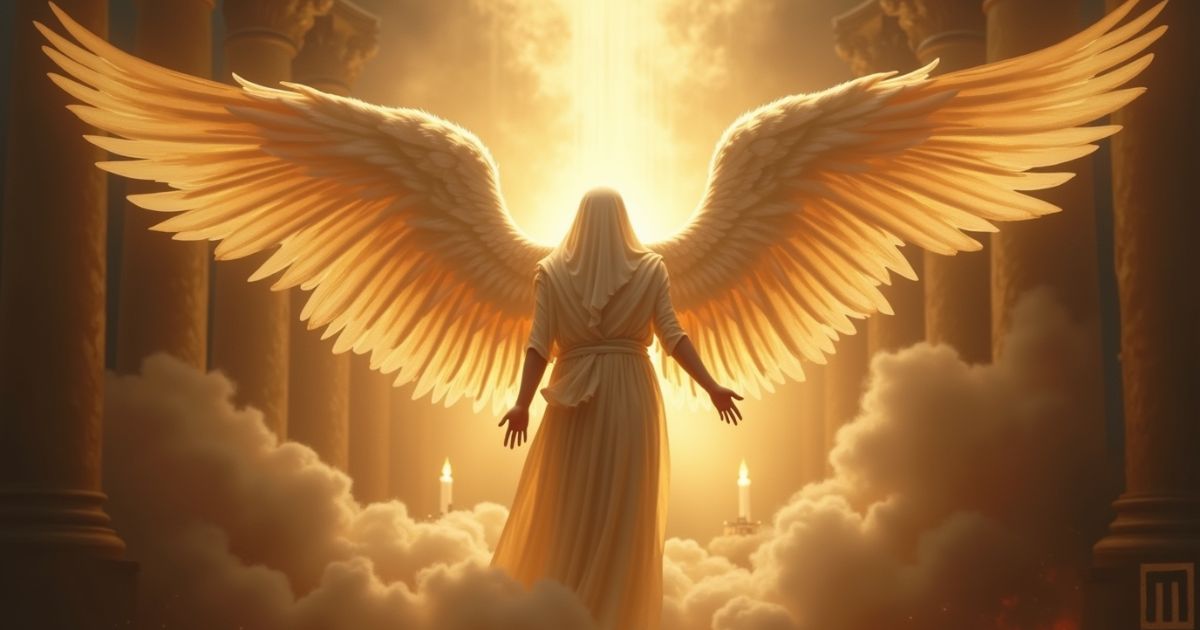
Few biblical images strike with more force than Isaiah’s throne room vision. Smoke filling a temple, a voice shaking the foundations, and towering six-winged beings crying “Holy, holy, holy” it’s one of the most vivid scenes in all of Scripture. But what exactly are these creatures? What does the Bible actually say about a seraphim angel, and why does it matter?
Let’s dig in.
What Is a Seraphim Angel? A Look at the Etymology and the Origins
The word seraphim comes from the Hebrew root śārāf, which means “to burn.” Seraph (singular) literally translates as “burning one.” The plural? Seraphim a standard Hebrew plural form.
Here’s where it gets interesting. The same Hebrew word śārāf appears in Numbers 21:6, where God sends “fiery serpents” (nehashim seraphim) among the Israelites as judgment. So the term has an ancient, pre-angelic association with fire and serpents in Israelite theology which connects to the broader Ancient Near East religious symbolism around the Egyptian uraeus serpent, the cobra on the Pharaoh’s crown.
Scholars like T. N. D. Mettinger and Joseph Blenkinsopp have noted these cultural overlaps. The Israelite theology surrounding seraphim likely evolved from Canaanite and Mesopotamian traditions involving winged, serpentine guardian figures though Israel’s theology transformed them into something unique: divine throne attendants who proclaim God’s holiness rather than guard pagan temples.
“The seraphim are not simply angels. They are the burning presence of divine majesty itself.” A. S. Herbert, Commentary on Isaiah
Is a Seraphim an Angel?
Technically? Yes and no. That’s not a dodge it’s a genuine theological distinction worth understanding.
The Hebrew word for angel, mal’akh, means “messenger.” Seraphim are never called mal’akh in the Hebrew Bible. They don’t deliver messages. They don’t speak to humans. Their role in Isaiah 6 is entirely liturgical they worship, they guard, they purify. They’re heavenly beings, but their function differs from standard angelic messengers.
That said, within Judeo-Christian tradition, they’ve been broadly categorized under biblical angelology as a distinct class of angelic beings members of the celestial hierarchy. Think of it this way: not every member of a symphony plays the same instrument, but they’re all musicians. Seraphim are part of the heavenly ensemble, just playing a very specific role.
Seraphim Spiritual Meaning
The spiritual meaning of seraphim centers on three things: holiness, fire, and proximity to God.
Fire in the Bible consistently symbolizes divine presence think Exodus 19:18, where Sinai blazes as God descends, or the burning bush in Exodus 3. Seraphim embody that same biblical symbolism of fire: consuming, purifying, overwhelming.
Their perpetual cry “Holy, holy, holy is the Lord of hosts” mirrors what theologians call heavenly liturgy. Cyril of Jerusalem, in his Mystagogical Catechesis, used this image to anchor early Christian worship in the divine throne room. Their song isn’t decoration. It’s the very fabric of heaven’s existence.
St. Augustine likewise wrote that angelic beings exist in constant orientation toward divine holiness and seraphim represent that orientation at its most intense.
Read More: The Meaning of Orange in the Bible
Seraphim Angels Names
Here’s a surprising truth: the Bible names no individual seraphim. Zero. Not one. Unlike the archangels, seraphim appear as a collective, unnamed group in Scripture.
Popular culture from Dan Brown’s Angels and Demons to various apocryphal texts sometimes assigns names like Seraphiel to these beings. But those names come from intertestamental angel traditions and extra-biblical literature, not from canonical Scripture. If you’re looking for named seraphim in the Bible, you simply won’t find them.
Seraphim Names in the Bible
To be clear: no seraphim are individually named in the Bible. The term appears collectively in Isaiah 6 and nowhere else with that specific designation. Any named “seraphim angel” you encounter in devotional literature, novels, or online traces back to sources outside the Hebrew Bible or New Testament.
Cherubim and Seraphim in the Bible
| Feature | Cherubim | Seraphim |
|---|---|---|
| Meaning | “Guardian” or “intercessor” | “Burning one” |
| Wings | Four wings (Ezekiel) | Six wings (Isaiah) |
| Location | Eden, Ark of Covenant, Ezekiel’s vision | Isaiah’s throne room |
| Function | Guard sacred space | Worship and purify |
| Key Passage | Genesis 3:24, Ezekiel 1 & 10 | Isaiah 6:1–7 |
Both appear as sacred space guardians near God’s presence. But their roles diverge sharply. Cherubim in Genesis 3:24 block the way back to Eden with a flaming sword they’re sentinels. Seraphim, by contrast, stand before the throne, constantly worshipping. Ezekiel 1 gives us the most elaborate cherubim vision, complete with wheels and living creatures imagery that overlaps with Revelation 4’s four living creatures.
Where Do Seraphim Appear in the Bible? Function and Meaning
The primary seraphim passage is Isaiah 6:1–7 the only place in all of Scripture where these beings are explicitly called seraphim. Here’s what happens:
The Setting: Isaiah sees a vision following the death of King Uzziah (cross-reference 2 Chronicles 26:21). The timing matters political instability prompts a vision of divine stability.
The Description: Each seraphim has six wings. Two cover the face (reverence before divine glory). Two cover the feet (humility “feet” may be a euphemism). Two are used for flight. This covering of face and feet symbolism communicates that even these blazing divine beings cannot bear the full weight of God’s presence uncovered.
The Action: They cry “Holy, holy, holy is the LORD of hosts; the whole earth is full of his glory” (Isaiah 6:3). The threefold repetition a Hebrew superlative declares God’s holiness at maximum intensity. The temple shakes. Smoke fills the room. Isaiah collapses in terror.
The Purification: A seraphim takes a burning coal from the altar and touches Isaiah’s lips, declaring his sin atoned. This act of purification by fire commissions Isaiah for prophecy. The sin and atonement symbolism is immediate and dramatic fire cleanses what human effort cannot.
This is the entire seraphim account in canonical Scripture. Everything else is theological inference, tradition, or extra-biblical speculation.
FAQ: Questions About Seraphim Angels
What Is the Difference Between an Angel and a Seraphim?
Angels (mal’akhim) are messengers sent to deliver divine communication to humans. Seraphim are throne room worshippers they exist in permanent proximity to God, praising his holiness. Different job descriptions entirely. Ellen Muehlberger, in Angels in Late Ancient Christianity, traces how early Christians gradually merged these categories, but the biblical text keeps them distinct.
Are Seraphim Good or Bad?
Good. Completely and unambiguously. In Isaiah 6, seraphim serve God directly, facilitate prophetic commissioning, and perform an act of divine atonement on Isaiah. Nothing in Scripture suggests any seraphim fell or turned evil. They’re not morally ambiguous figures they’re wholly oriented toward divine holiness.
What Is the Biblical Definition of Seraphim?
The seraphim definition in Scripture: fiery, six-winged heavenly beings who surround God’s throne in Isaiah 6, worship continuously, and serve as agents of purification. Beyond that chapter, the Bible doesn’t elaborate further on them as a class.
What Bible Verse Describes Seraphim?
The primary verse is Isaiah 6:2–3:
“Above him were seraphim, each with six wings: With two wings they covered their faces, with two they covered their feet, and with two they were flying. And they were calling to one another: ‘Holy, holy, holy is the LORD Almighty; the whole earth is full of his glory.'”
That’s your seraphim Bible verse the clearest, most direct description in all of Scripture.
What Did Seraphim Do in the Bible?
Three things, based on Isaiah 6:
- They worshipped crying “Holy, holy, holy” in continuous heavenly worship
- They guarded standing in the throne room of God as divine attendants
- They purified one seraphim cleansed Isaiah with a burning coal from the altar, enabling his prophetic mission
How Are the Seraphim Angel Described in the Bible?
Six wings. Fiery presence. Thunderous voice. Isaiah describes them as towering figures above God’s throne, capable of flight, and possessing voices powerful enough to shake a building. Their appearance merges the imagery of fire, serpentine form (from the Hebrew root), and angelic grandeur. No other physical details are given.
Are Seraphim Stronger Than Archangels?
The Bible never establishes a formal angelic hierarchy that ranks seraphim against archangels. The term “archangel” appears only twice 1 Thessalonians 4:16 and Jude 1:9 always referring to Michael. The seraphim vs archangels debate belongs to theological speculation, not biblical text.
That said, positionally? Seraphim stand directly before God’s throne, while archangels function as messengers sent away from that throne. If closeness to divine presence equals rank, seraphim hold a remarkable position. But the Bible doesn’t frame it as a competition.
Who Are the “Four Seraphim Angels”?
This phrase doesn’t come from the Bible. It likely conflates seraphim with the four living creatures in Revelation 4 which some scholars connect to seraphim-like beings based on their worship function and proximity to God’s throne. But Revelation 4 never calls them seraphim. The “four seraphim” concept is popular in devotional culture and fiction but lacks direct scriptural support.
How Are Seraphim Different From Cherubim?
Cherubim guard. Seraphim worship. That’s the sharpest distinction. Cherubim appear at thresholds Eden’s gate in Genesis 3:24, the Ark of the Covenant, the visions of Ezekiel 1 and 10. They prevent unauthorized access to sacred space. Seraphim, by contrast, exist inside that sacred space, perpetually in God’s presence, praising his glory.
Structurally, cherubim have four wings in Ezekiel’s vision; seraphim have six wings in Isaiah. Cherubim are associated with God’s mobility (the divine chariot in Ezekiel); seraphim are associated with God’s holiness (the throne room liturgy in Isaiah).
Conclusion
Seraphim are among the most theologically rich and least understood beings in all of Scripture. They appear only once, in a single blazing chapter of the Book of Isaiah, yet that appearance is dense with meaning: fire, holiness, worship, and cleansing.
The seraphim angel meaning points beyond the beings themselves toward the God they surround. Their six wings, their burning nature, their continuous cry of “Holy, holy, holy” all of it exists to magnify divine majesty. Isaiah didn’t leave that vision unchanged, and neither should we.
Whether you’re approaching this from a biblical theology perspective, exploring Judeo-Christian tradition, or simply curious what the Bible actually says the seraphim deserve serious attention. They’re not background decoration in Isaiah’s vision. They’re the living, burning testimony that God’s holiness is real, weighty, and transformative.
Sources referenced: Isaiah 6:1–7, Numbers 21:6, Genesis 3:24, Ezekiel 1 & 10, Revelation 4, 1 Thessalonians 4:16, Jude 1:9, 2 Chronicles 26:21. Scholarly works: T. N. D. Mettinger, Joseph Blenkinsopp’s Commentary on Isaiah, A. S. Herbert’s Commentary on Isaiah, Ellen Muehlberger’s Angels in Late Ancient Christianity, Cyril of Jerusalem’s Mystagogical Catechesis.