Green isn’t just another color in Scripture. It pulses with life, whispers of divine favor, and carries profound theological weight across both Testaments. From Eden’s lush garden to the apocalyptic visions in Revelation, green threads through biblical narrative as a covenant sign pointing toward God’s provision and the promise of resurrection.
Understanding the spiritual meaning of green in the Bible opens doors to deeper insights about flourishing under God, spiritual vitality, and the Creator’s sustaining hand.
Hebrew and Greek Terms for Green
Ancient languages reveal layers of meaning modern translations sometimes miss.
The Hebrew term raanan (רַעֲנָן) describes something “lush,” “fresh,” or “flourishing.” You’ll find it describing fruitful trees in Psalm 92:14 and Jeremiah 17:8. This isn’t just botanical description it’s covenant language. When Scripture calls something raanan, it signals divine blessing and abundant life.
Greek offers chloros (χλωρός), which means “green” but carries dual significance. In Mark 6:39, chloros describes the green grass where Jesus seated crowds before multiplying loaves and fish. Yet in Revelation 6:8, the same word describes the pale horse of death a sickly, yellowish-green suggesting decay rather than vitality.
| Language | Term | Meaning | Usage |
|---|---|---|---|
| Hebrew | Raanan (רַעֲנָן) | Lush, fresh, flourishing | Psalm 92:14, Jeremiah 17:8 |
| Greek | Chloros (χλωρός) | Green or pale green | Mark 6:39, Revelation 6:8 |
This linguistic duality matters. Green can symbolize life and growth or fragility and mortality, depending on context.
Agriculture and the Ancient Near East
Ancient Israel’s agricultural rhythms shaped theological understanding profoundly.
Palestine’s seasonal cycles meant green pastures weren’t permanent fixtures. They appeared after winter rains, transforming brown hillsides into temporary paradises. This seasonal greening made verdant landscapes symbols of divine favor and rain as covenant blessing.
Deuteronomy 11:14–15 connects obedience with seasonal rains that produce grass for livestock. Leviticus 26:4–5 promises agricultural abundance trees bearing fruit, abundant harvests as covenant blessings for faithfulness.
The absence of green carried equal weight. Numbers 11:5–6 captures Israelite complaints during wilderness wanderings: “We remember the cucumbers and melons… but now our strength is dried up, and there is nothing at all but this manna.” The absence of green symbolized testing, divine discipline, and longing for provision.
Green as a Symbol of Life and Flourishing
Scripture consistently links green with thriving spiritual conditions.
Psalm 23:2 – Green Pastures and Divine Provision
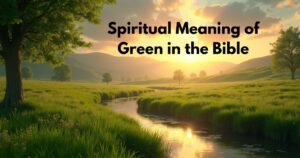
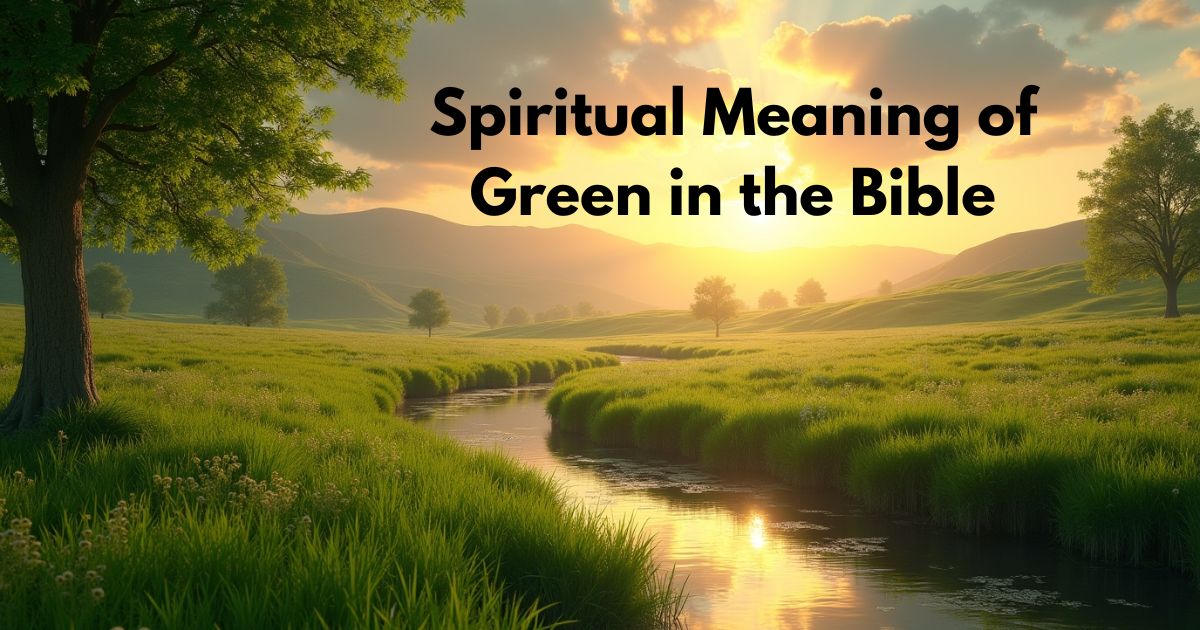
“He makes me lie down in green pastures.” This iconic image doesn’t merely describe pleasant scenery. It portrays God as shepherd providing exactly what sheep need fresh grass, safe rest, abundant life. The green pasture becomes shorthand for complete divine provision.
David understood this viscerally. As a shepherd himself, he knew green grass meant careful planning, knowledge of seasonal patterns, and protective vigilance. Transferring this to Yahweh elevated trust beyond circumstance.
Jeremiah 17:8 – Spiritual Rootedness
“He is like a tree planted by water, that sends out its roots by the stream, and does not fear when heat comes, for its leaves remain green.”
Notice the condition: spiritual rootedness near constant water sources. This tree doesn’t panic during drought because deep roots access hidden reserves. The perpetually green leaves signal resilience, not invincibility the person trusts divine resources beyond visible circumstances.
Hosea 14:8 – God as the Evergreen Source
“I am like an evergreen cypress; from me comes your fruit.”
Here God self-identifies with evergreen imagery. Unlike deciduous trees that shed leaves seasonally, the cypress maintains verdant foliage year-round. This represents God’s unchanging nature as the source of flourishing and fruitfulness regardless of circumstance.
The Levant’s climate made evergreens particularly striking symbols of longevity and divine favor.
Read More: Hailey Name Meaning
Green and Covenant and Creation Theology
Eden and the Wholeness of Creation
Genesis 2 describes Eden bursting with vegetation, trees “pleasant to the sight and good for food.” This wasn’t decorative landscaping it revealed God’s shalom, the complete wholeness where humanity, creation, and Creator existed in perfect harmony.
Genesis 1:30 specifies green herbs as food for every living creature, establishing creation’s flourishing as God’s original design. Genesis 9:3 later expands this to include all moving things, showing covenant progression through Scripture.
Edenic imagery becomes the benchmark. Prophets describing restoration consistently return to garden language Ezekiel 36:35 envisions devastated land becoming “like the garden of Eden.”
Prophetic Imagery of Renewal
Isaiah 35:1–2 promises the desert will “blossom abundantly” and “rejoice with joy and singing.” This prophetic renewal reverses curse conditions, pointing toward ultimate restoration and hope.
The vision isn’t merely spiritual it encompasses physical creation. This matters for understanding biblical environmental theology and creation care. God’s redemptive plan includes verdant earth.
Read More: What Does the Name “Dylan” Mean
Green and Divine Provision
Torah: Rain, Grass, and Faithfulness
Leviticus 26:4–5 establishes the pattern clearly: “I will give you your rains in their season, and the land shall yield its increase, and the trees of the field shall yield their fruit.”
Covenant blessings manifest tangibly through agricultural abundance. The Talmud (Ta’anit 7a) later develops this, comparing Torah study to rain that makes vegetation flourish linking spiritual and physical nourishment.
Wilderness Wanderings: The Absence of Green
Israel’s forty-year desert experience demonstrated what life without green meant spiritually.
The brown, barren landscape became classroom for dependence. Numbers 11:5–6 shows Israelites remembering Egypt’s cucumbers, melons, and leeks with longing. They craved green herbs representing normal provision.
Yet God sustained them supernaturally with manna. The wilderness testing taught that divine provision transcends agricultural cycles. Green isn’t ultimate God is.
Green and Judgment in Revelation
The Pale Horse – Revelation 6:8
“And I looked, and behold, a pale horse! And its rider’s name was Death.”
The Greek chloros here suggests sickly yellowish-green, the color of disease and decay. This inverts green’s usual life symbolism, showing how the same term can carry dual meaning blessing or curse, vitality or death.
Ralph L. Smith notes this apocalyptic reversal connects to prophetic warnings where once-flourishing branches face divine retribution for unfaithfulness.
Dual Meaning: Blessing or Decay
Scripture’s sophisticated use of green encompasses both poles. Job 15:32 describes the wicked as having branches that “will not be green” vitality withdrawn as judgment.
Meanwhile, Psalm 92:14 promises the righteous “still bear fruit in old age; they are ever full of sap and green.” Same color, opposite meanings based on covenant relationship.
This tension reminds us: external appearance doesn’t determine spiritual reality. Blessing vs decay depends on rootedness in God.
Green in Christian Tradition and Liturgy
Ordinary Time and Spiritual Growth
The Western Church calendar designates Ordinary Time with green vestments and altar cloths, stretching between major feast seasons. This isn’t “ordinary” as mundane it’s from Latin ordinalis meaning “counted time.”
Green here symbolizes ongoing spiritual maturation, the steady growth between dramatic moments. The Anglican Book of Common Prayer and Roman Missal both prescribe green for these periods, teaching that most Christian life happens in sustained faithfulness rather than constant crisis.
Patristic Symbolism – Veriditas
Hildegard of Bingen (1098–1179), German Benedictine abbess and visionary, developed the concept of veriditas “greening power” or “greenness.”
For Hildegard, veriditas represented divine energy flowing through creation, animating growth and renewal. She wrote: “There is a power that has been since all eternity, and that force and potentiality is green!”
Saint Augustine also employed green imagery, connecting it to hope and resurrection. In City of God, he described the faithful as evergreen trees rooted in divine promises.
Theological Themes Behind the Color Green
Hope and Resurrection
First Corinthians 15:20 proclaims Christ “the firstfruits of those who have fallen asleep.” Agricultural metaphors saturate resurrection theology Jesus as the initial green shoot guaranteeing full harvest.
Romans 8:19–22 describes creation groaning, waiting for redemption. Paul envisions new creation where everything flourishes under renewed conditions. Green becomes eschatological promise.
This hope isn’t escapist. It grounds believers in tangible expectation of restored shalom encompassing all creation.
Creation Care and Ecological Theology
Pope Francis’ 2015 encyclical Laudato Si’ draws heavily on Scripture’s creation theology, arguing that environmental stewardship constitutes moral obligation.
Biblical stewardship principles appear throughout Torah. Humans as image-bearers bear responsibility for keeping creation flourishing. Green serves as visual reminder of this mandate.
The prophetic vision of renewed earth Isaiah’s blossoming deserts, Ezekiel’s Eden-like restoration models God’s intentions. Christian ecological theology recovers this vision against purely utilitarian views of nature.
Green in Biblical Dreams and Visions
Prophetic Symbolism in Zechariah
Zechariah 1:8 records a night vision: “I saw in the night, and behold, a man riding on a red horse! He was standing among the myrtle trees in the glen, and behind him were red, sorrel, and white horses.”
Myrtle trees, evergreen shrubs common in Palestine, symbolize divine favor and restoration imagery. Their presence in this 519 BCE vision signaled hope during post-exilic rebuilding.
Zechariah 6:1–8 continues with colored horses emerging between bronze mountains. Scholars debate precise meanings, but the apocalyptic framework connects to end times theology and ultimate restoration and hope.
Apocalyptic Imagery in Daniel and Revelation
Daniel 4 recounts Nebuchadnezzar’s dream of an enormous tree “whose leaves were beautiful and its fruit abundant.” This flourishing tree represented his kingdom until divine judgment reduced it to a stump.
The green imagery of abundant leaves and fruit symbolized earthly power and provision. Its cutting demonstrated God’s sovereignty over kingdoms.
Revelation 9:4 instructs locusts not to harm “the grass of the earth or any green plant or any tree.” Even in judgment, green represents what deserves protection those sealed by God.
Dreams and Spiritual Insight
Biblical dreams frequently employ nature symbolism for divine messages. Green appearing in dreams often signals healing and divine initiative, promise amid judgment, or coming renewal.
The prophetic symbolism consistently points beyond immediate circumstance toward God’s larger purposes.
Quick Biblical References to the Color Green
Creation & Provision
- Genesis 1:30 – Green herbs given as food
- Psalm 23:2 – Green pastures as divine provision
- Deuteronomy 11:14–15 – Rain producing grass
Symbol of Fragility or Mortality
- Psalm 37:2 – Wicked fade like green herb
- Isaiah 37:27 – People like grass, green herb
- 2 Kings 19:26 – Inhabitants like grass of field
Peace, Blessing, & God’s Provision
- Jeremiah 17:8 – Green leaves despite drought
- Hosea 14:8 – God as evergreen cypress
- Proverbs 11:28 – Righteous flourish like green leaf
New Testament References
- Mark 6:39 – Jesus feeds thousands on green grass
Applying the Symbolism of Green to Christian Life
What does all this mean practically?
Spiritual vitality requires rootedness. Like Jeremiah’s tree by water, believers need deep connection to divine resources. Surface-level faith withers under pressure.
Thriving under God doesn’t mean avoiding hardship. The evergreen symbolism promises sustained fruitfulness through seasons, not immunity from drought.
Trust in God becomes the differentiator. The same circumstances that cause some to wither allow others to remain verdant. Rootedness determines outcome.
Creation care emerges as spiritual discipline, not political position. Stewarding earth reflects understanding of God’s intentions for flourishing creation.
Hope and resurrection anchor Christian identity. Green’s association with firstfruits and new creation reminds us that present struggle isn’t final reality.
The spiritual meaning of green in the Bible ultimately points beyond color to Character God as the evergreen source of life, provision, blessing, and ultimate renewal. Every green pasture, every flourishing tree, every blade of grass whispers this invitation: root yourself deeply in the One who never fades, never fails, never stops bringing life from death.
That’s the resurrection promise green carries through Scripture. That’s the provision believers can trust absolutely.